Information
Landmark: Santa Clara PuebloCity: Albuquerque
Country: USA New Mexico
Continent: North America
Santa Clara Pueblo, Albuquerque, USA New Mexico, North America
Santa Clara Pueblo is a Tewa-speaking Native American community located in northern New Mexico, USA. It is situated along the Rio Grande River.
Visual Characteristics
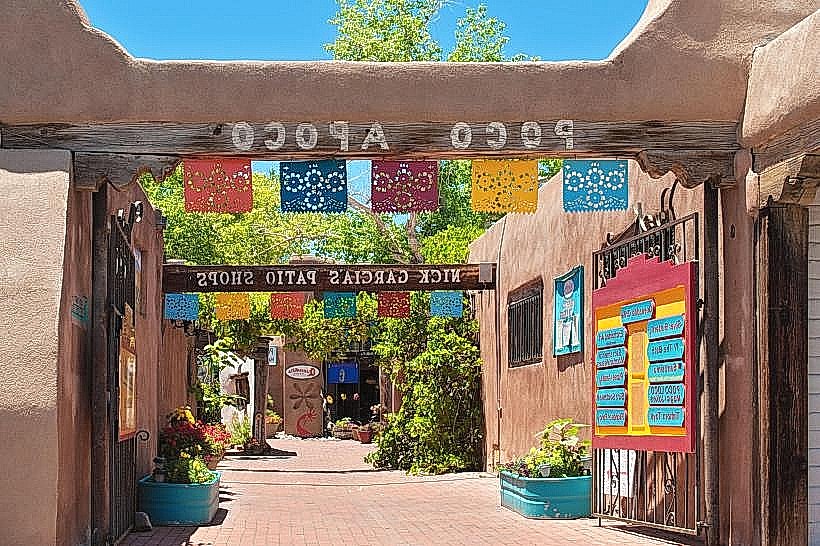
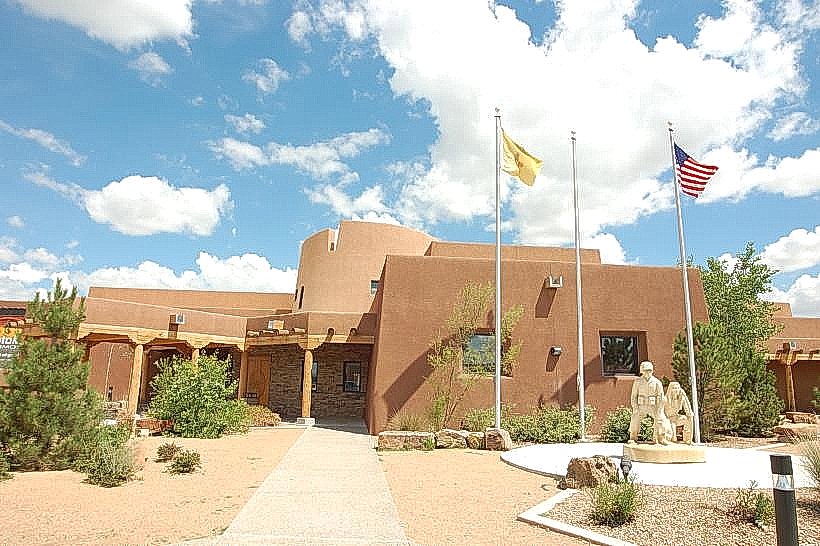
The pueblo architecture consists of adobe structures, primarily multi-story buildings constructed from earth and straw. The exterior walls are typically a natural earth tone, ranging from light brown to reddish-brown, with some sections whitewashed. The buildings are arranged in plazas and compounds. The surrounding landscape features arid terrain with sparse vegetation, including piñon pine and juniper trees.
Location & Access Logistics
Santa Clara Pueblo is located approximately 40 kilometers (25 miles) north of Albuquerque, New Mexico. Access is via Interstate 25 North, exiting onto New Mexico State Road 502 West. The pueblo is situated directly off SR 502. Parking is available at designated visitor areas within the pueblo. Public transport options directly to the pueblo are limited; visitors typically travel by private vehicle.
Historical & Ecological Origin
Santa Clara Pueblo has been inhabited continuously for over 700 years. Its origins are tied to the ancestral Pueblo peoples who migrated to this region. The pueblo's location along the Rio Grande provided access to water for agriculture in an otherwise arid environment. The architecture reflects traditional building techniques passed down through generations.
Key Highlights & Activities
Visitors can observe traditional Tewa pottery making, a craft for which Santa Clara Pueblo is renowned. Demonstrations and sales of pottery are often available. Walking through the historic pueblo plazas provides insight into the community's layout and architecture. Cultural events and feast days occur throughout the year, though access may be restricted during certain ceremonies.
Infrastructure & Amenities
Restrooms are available at the visitor center and designated public areas. Shade is provided by the structures themselves and some covered areas. Cell phone signal (4G/5G) is generally available within the main pueblo area. Food vendors are not consistently present; visitors may find local food offerings during specific events or at the visitor center.
Best Time to Visit
The best time of day for photography is generally mid-morning or late afternoon when the sun angle creates defined shadows on the adobe structures. The most favorable months for visiting are April through October, avoiding the colder winter temperatures and potential snow. There are no tide-dependent activities.
Facts & Legends
Santa Clara Pueblo is particularly known for its highly polished black-on-black pottery, a technique perfected by artists like Margaret Tafoya. A local legend speaks of the pueblo's founding by people emerging from a subterranean world, a common theme in many Pueblo origin stories.
Nearby Landmarks
- 0.8km Southwest: Santa Clara Canyon Trailhead
- 3.5km Southeast: Ohkay Owingeh Pueblo
- 15km Southwest: Española, NM (City Center)
- 20km Northwest: Bandelier National Monument Entrance