Information
Landmark: Hornstrandir Nature ReserveCity: Westfjords
Country: Iceland
Continent: Europe
Hornstrandir Nature Reserve, Westfjords, Iceland, Europe
Hornstrandir Nature Reserve is a remote, uninhabited protected area located on the northernmost peninsula of the Westfjords region in Iceland. It is characterized by its dramatic cliffs, deep fjords, and Arctic tundra.
Visual Characteristics
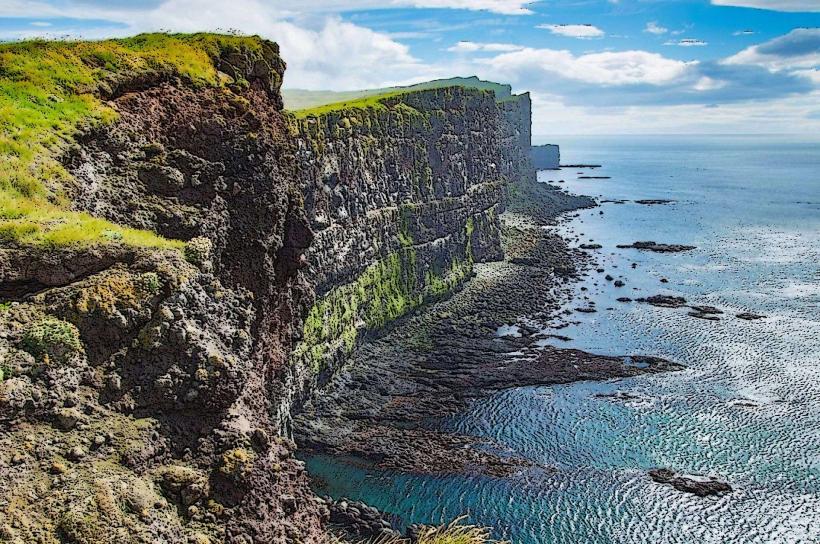
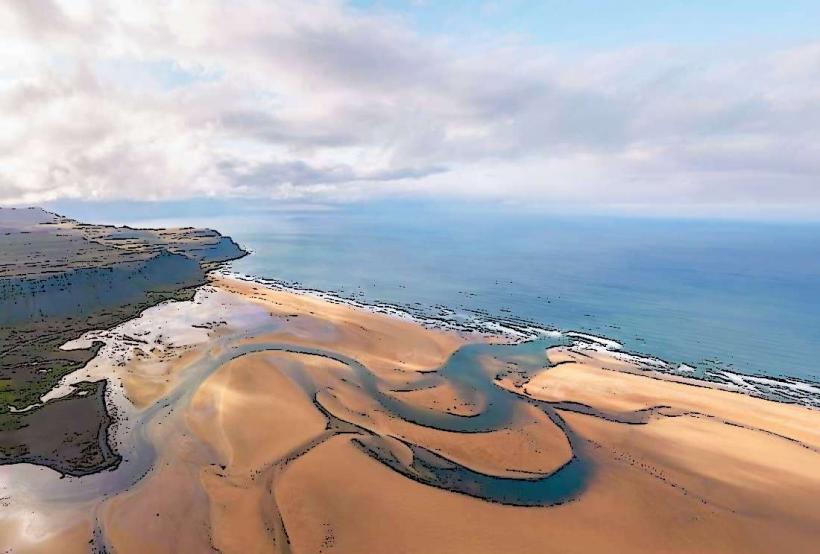
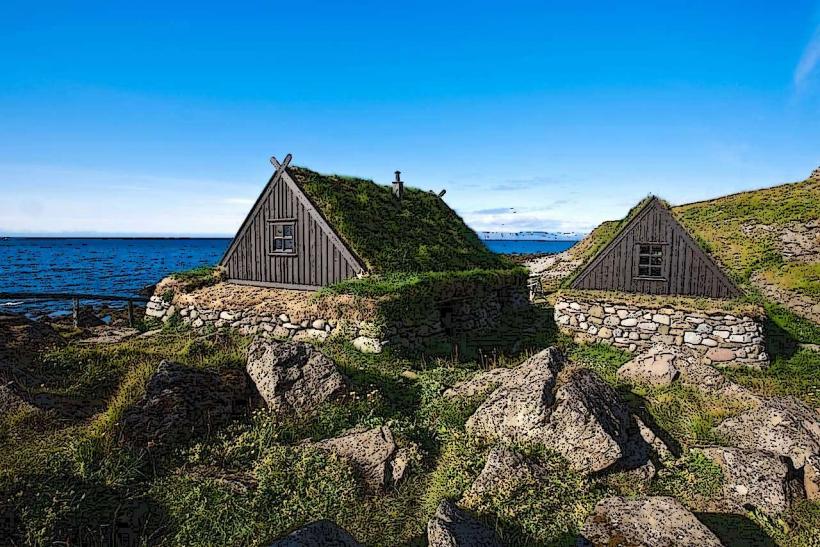
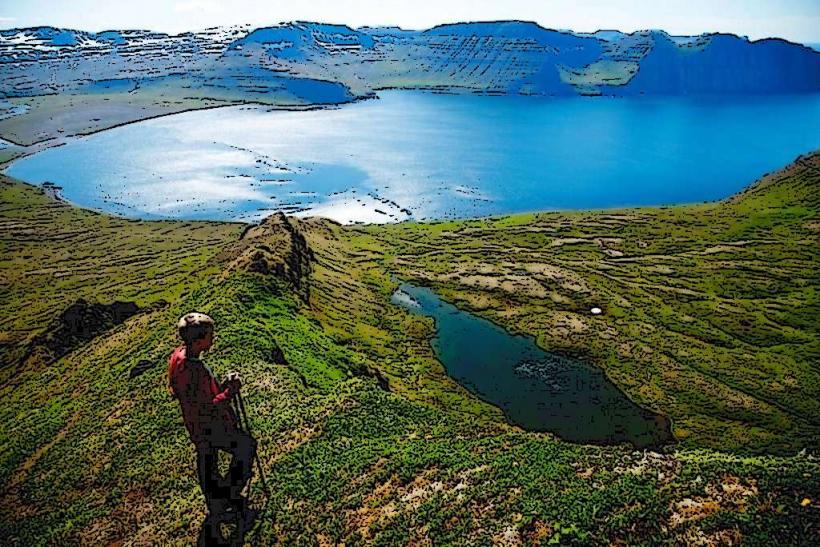
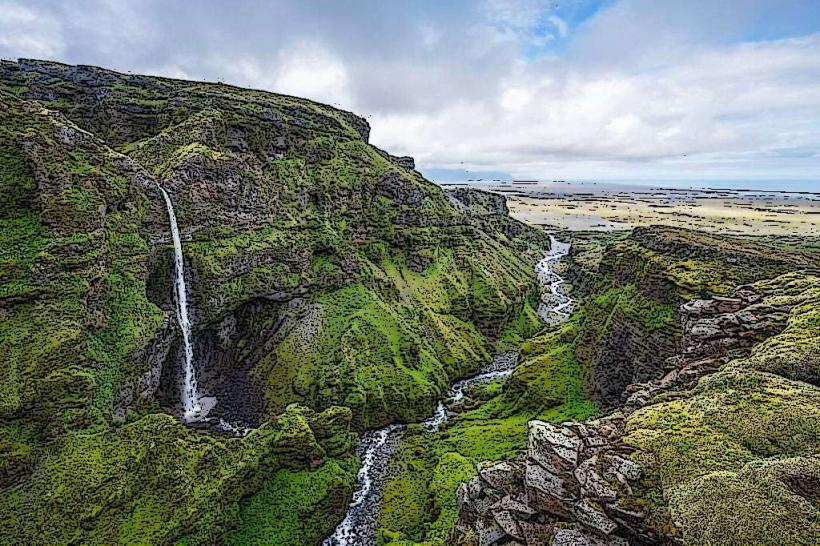
The reserve features steep, basaltic cliffs, some exceeding 500 meters in height, which descend directly into the North Atlantic Ocean. The landscape is dominated by low-lying Arctic tundra, mosses, lichens, and hardy grasses, with a complete absence of trees. Waters are typically cold and clear, exhibiting deep blue or grey hues. Glacial erosion has shaped U-shaped valleys, narrow fjords, and rocky beaches throughout the area.
Location & Access Logistics
Hornstrandir is situated on the northern tip of the Westfjords peninsula. No public roads extend into the reserve. Access is primarily by boat from Ísafjörður or Bolungarvík during the summer months (June-August). Scheduled boat services transport visitors to various points, including Hesteyri, Hornvík, and Veiðileysufjörður. Boat journey times from Ísafjörður typically range from 1.5 to 3 hours, depending on the destination within the reserve. Parking is available at the departure points in Ísafjörður or Bolungarvík. There is no public transport within the reserve itself; movement is by foot or private boat.
Historical & Ecological Origin
Hornstrandir is classified as an Arctic tundra and coastal marine ecosystem. Its geological formations consist of ancient basalt lava flows, which were extensively carved by glacial activity during the last ice age, resulting in the characteristic fjords and steep valleys. The area was declared a nature reserve in 1975. The last permanent residents departed in the 1950s, establishing it as one of Europe's most significant wilderness areas.
Key Highlights & Activities
Extensive multi-day hiking is a primary activity, with popular routes traversing between former settlement sites like Hesteyri and Hornvík. Wildlife observation focuses on the dense populations of Arctic foxes and numerous seabird colonies, particularly on cliffs such as Hornbjarg. Photography opportunities are abundant for landscapes and wildlife. Guided sea kayaking tours are available through specialized operators. Designated camping areas are present at locations like Hornvík and Hesteyri.
Infrastructure & Amenities
Infrastructure within Hornstrandir is minimal. Basic composting toilets may be found at former settlement sites like Hesteyri or Hornvík during the peak season. Natural shade is scarce due to the lack of trees. Cell phone signal (4G/5G) is extremely limited or non-existent across most of the reserve; sporadic signal might occur near Hesteyri or on elevated points. There are no food vendors or shops within the reserve; visitors must carry all provisions.
Best Time to Visit
The optimal period for visiting is June, July, and August, offering the most stable weather conditions and regular boat access. September is also feasible but with reduced boat frequency and cooler temperatures. For photography, early morning or late evening light provides softer illumination for landscapes and wildlife. Tidal conditions are not a critical factor for general access, though some coastal hiking may be more accessible at low tide.
Facts & Legends
The Arctic fox population in Hornstrandir is protected and exhibits a notable lack of fear towards humans, a consequence of the absence of hunting and permanent human habitation. This characteristic allows for unique close-up wildlife encounters not commonly found elsewhere.
Nearby Landmarks
- Hesteyri Old Whaling Station Ruins: 0.1km East
- Hesteyri Lighthouse: 1.5km North-West
- Hesteyri Church: 0.2km South-West
- Sæból Farm Ruins: Approximately 3km South-East