Information
Landmark: Huayna PotosíCity: La Paz
Country: Bolivia
Continent: South America
Huayna Potosí, La Paz, Bolivia, South America
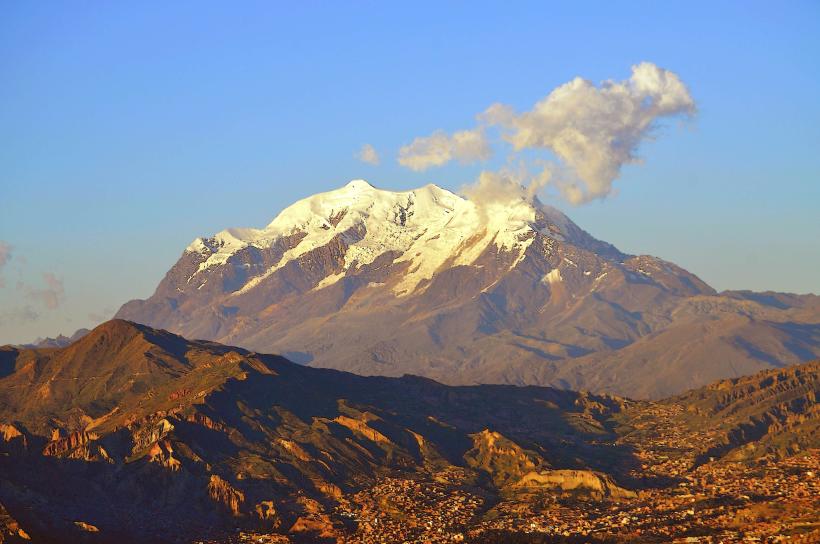
Huayna Potosí is a stratovolcano located in the Cordillera Real mountain range, 25 kilometers north of La Paz, Bolivia.
Visual Characteristics
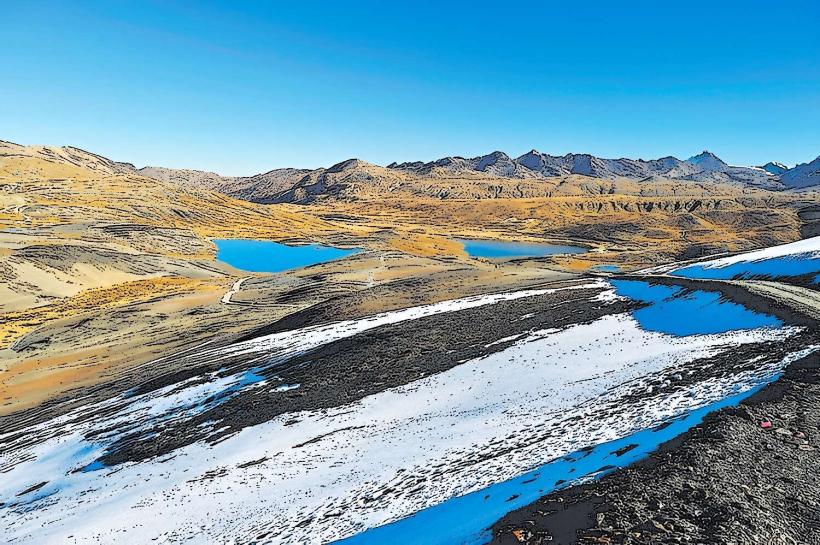
This snow-capped peak reaches an elevation of 6,088 meters (19,974 feet). Its slopes are characterized by glaciers, rock faces, and scree fields. The summit is permanently covered in snow and ice.
Location & Access Logistics
Access to Huayna Potosí is primarily via the road connecting La Paz to the Chacaltaya Ski Resort. The turn-off for the Huayna Potosí base camp is approximately 25 kilometers from La Paz. The final section of the road to the base camp (4,700 meters) is unpaved and can be rough, requiring a 4x4 vehicle or a guided tour with appropriate transport. Public transport does not reach the base camp. Parking is available at the base camp, managed by local guides or the park authorities.
Historical & Ecological Origin
Huayna Potosí is a stratovolcano formed by volcanic activity. Its current glaciated state is a result of its high altitude and consistent sub-zero temperatures. The mountain is part of the larger Andean geological formation.
Key Highlights & Activities
The primary activity is mountaineering, with ascents to the summit requiring technical climbing skills and acclimatization. Guided ascents typically involve a two-day itinerary from the base camp. Shorter hikes to viewpoints below the main summit are also possible. Ice climbing on the lower glaciers is an option for experienced individuals.
Infrastructure & Amenities
The Huayna Potosí base camp (Refugio Huayna Potosí) offers basic accommodation, including dormitories and private rooms, and a dining area. Restrooms are available at the base camp. Cell phone signal is intermittent and generally unreliable at higher elevations. Food vendors are not present on the mountain itself; meals are typically provided at the base camp or by tour operators.
Best Time to Visit
The dry season, from May to September, offers the most stable weather conditions for climbing. Mornings generally provide clearer skies and better visibility for photography. Temperatures at the base camp range from -5°C to 10°C, dropping significantly at higher altitudes.
Facts & Legends
Local Aymara legends associate Huayna Potosí with a powerful mountain spirit. It is said that the mountain can influence weather patterns and is a guardian of the region. A specific tip for visitors is to dedicate at least two days to acclimatization in La Paz before attempting any ascent to mitigate altitude sickness.
Nearby Landmarks
- Refugio Chacaltaya (0.8km Southwest)
- Laguna Jankho Kkota (2.5km West)
- Cerro Ventana (3.1km Northwest)
- Laguna Ajwani (4.2km South)