Information
Landmark: Hundertwasser VillageCity: Vienna
Country: Austria
Continent: Europe
Hundertwasser Village, Vienna, Austria, Europe
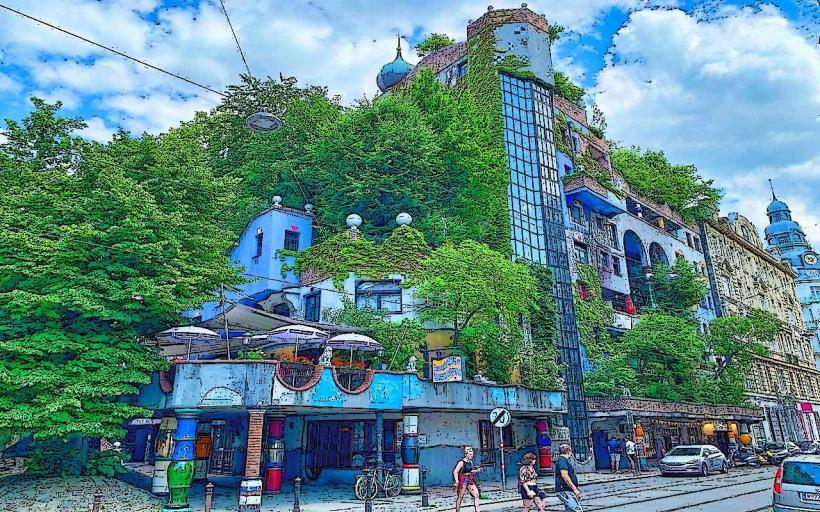
Hundertwasser Village is a commercial complex and art installation located in the Landstraße district of Vienna, Austria. It was converted from a former tire factory between 1990 and 1991 to serve as a public-access shopping and gallery space based on the designs of artist Friedensreich Hundertwasser.
Visual Characteristics
The exterior features asymmetrical windows, undulating floor surfaces, and a facade decorated with multicolored ceramic tiles and irregular plasterwork. The roof is heavily forested with trees and shrubs integrated into the structural design. Inside, the "Baru" bar features a water-filled counter and winding paths made of river stones and broken mosaics, while the flooring throughout avoids straight lines or flat planes.
Location & Access Logistics
The site is located at Kegelgasse 37-39, approximately 2km east of Stephansplatz. Access is provided via Tram Line 1 to the Hetzgasse stop or a 10-minute walk from the Landstraße (U3/U4) U-Bahn station. There is no on-site parking; short-term street parking is limited and strictly regulated by Vienna’s District 3 parking zones.
Historical & Ecological Origin
The facility was designed by Friedensreich Hundertwasser and architect Peter Pelikan, opening to the public in 1991. Its original purpose was to provide a "human-centric" commercial environment that integrates nature and art. The structure follows Hundertwasser’s philosophy of "tree tenants," where vegetation is given space to grow out of the building's windows and roofs.
Key Highlights & Activities
Visitors can walk through the interior bazaar which contains various art galleries and craft shops. The "Modern Art Cafe" screens a documentary about Hundertwasser’s life and architectural philosophy. The "Toilet of Modern Art" is a functional, paid restroom facility designed in the artist's signature mosaic style and is a primary attraction.
Infrastructure & Amenities
The complex contains multiple food vendors, gift shops, and public restrooms. There is 5G cell phone signal throughout the area. Limited seating is available within the cafe sections, and most of the interior provides shade from direct sunlight. The uneven flooring makes certain sections difficult for individuals with mobility aids.
Best Time to Visit
Photography is best during midday when overhead sunlight illuminates the ceramic tiles in the narrow street. May and June are the best months to observe the roof forest in full foliage. To avoid peak tour bus crowds, arrive before 10:00 or after 17:00.
Facts & Legends
Hundertwasser believed that "the straight line is godless" and "atheistic," which is why no two windows in the village are the same size or height. A local tip for visitors is that while the Hundertwasserhaus (apartment building) across the street can only be viewed from the outside, the Village allows full interior exploration of the artist's architectural theories.
Nearby Landmarks
Hundertwasserhaus – 0.05km North
Kunst Haus Wien (Museum Hundertwasser) – 0.4km North
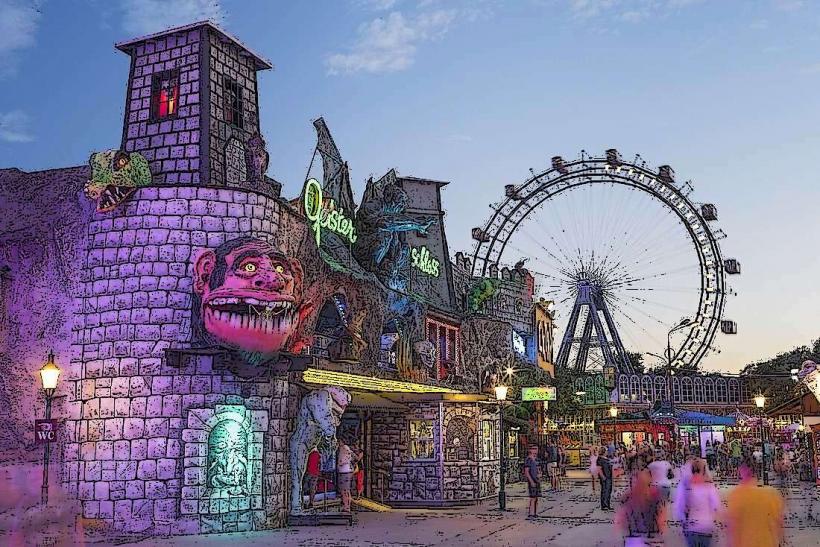
Prater Park (Riesenrad) – 1.2km Northeast
St. Othmar unter den Weißgerbern – 0.3km East
Stadtpark – 1.1km Southwest