Information
Landmark: Imperial Treasury (Schatzkammer)City: Vienna
Country: Austria
Continent: Europe
Imperial Treasury (Schatzkammer), Vienna, Austria, Europe
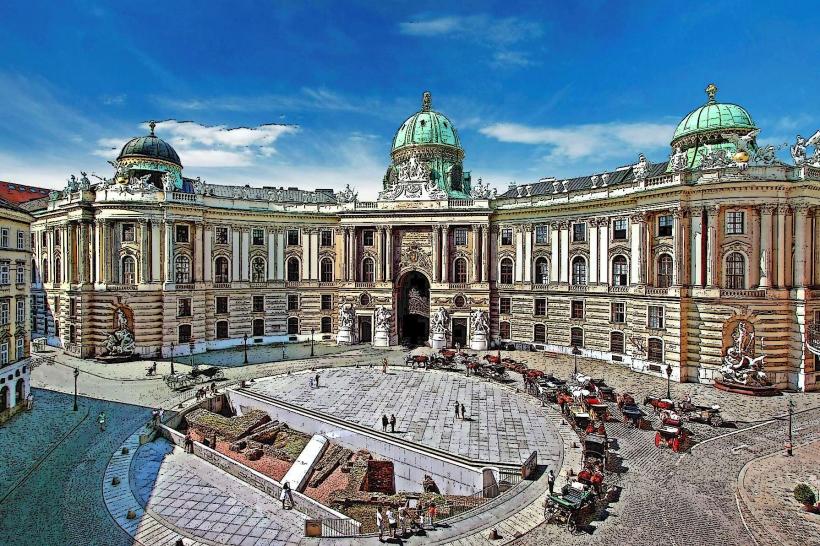
The Imperial Treasury (Kaiserliche Schatzkammer Wien) is a museum located in the Schweizerhof (Swiss Court) of the Hofburg Palace. It houses one of the world's most significant collections of secular and ecclesiastical regalia, spanning over 1,000 years of European history.
Visual Characteristics
The treasury is housed in a series of 21 high-security, climate-controlled rooms characterized by subdued lighting to protect delicate textiles. The display cases feature dark wood and velvet linings, designed to contrast with the high-reflectivity of the gold, enamel, and gemstones. The architectural layout follows a chronological and thematic progression from the Middle Ages to the 19th century.
Location & Access Logistics
Address: Hofburg, Schweizerhof, 1010 Wien, Austria.
Entrance: Accessed via the Schweizertor (Swiss Gate) in the oldest part of the Hofburg.
Public Transport: U-Bahn line U3 (Herrengasse) or U1/U3 (Stephansplatz). Tram lines 1, 2, 71, D (Burgring).
Hours: Daily 09:00–17:30; closed on Tuesdays.
Access: Fully wheelchair accessible via an elevator located at the entrance.
Historical Origin
The collection originated from the Habsburg family’s private assets and the state treasures of the Holy Roman Empire. The physical treasury at this location was established in the 16th century by Emperor Ferdinand I. It was significantly reorganized during the reign of Maria Theresa and survived multiple wars, including the Napoleonic era and WWII, through temporary evacuations to secure locations.
Key Highlights & Artifacts
Imperial Crown of the Holy Roman Empire: An octagonal crown dating back to the late 10th century, used in the coronation of the Holy Roman Emperors.
Austrian Imperial Crown: Crafted in 1602 for Rudolf II, featuring high-quality enamel work and a massive sapphire.
The Holy Lance: An 8th-century Carolingian wing spear once believed to contain a nail from the Cross of Christ.
The Imperial Sword: Used during coronation ceremonies.
Order of the Golden Fleece: The treasury contains the most significant collection of insignia and liturgical vestments from this prestigious chivalric order.
The "Ainkhürn": A massive narwhal tusk once believed to be the horn of a unicorn.
Infrastructure & Amenities
Audio Guides: Available in multiple languages, providing detailed historical context for each room.
Museum Shop: Located at the exit, specializing in historical replicas and jewelry.
Security: Professional security personnel and surveillance are present throughout.
Connectivity: 5G signal is stable near the entrance, though signal strength may decrease inside the reinforced vault areas.
Best Time to Visit
Crowds: Weekday afternoons typically see fewer group tours than mornings.
Duration: Allow 1.5 to 2 hours for a comprehensive viewing.
Combined Tickets: Often purchased as part of a "Hofburg Combo" or "Treasury & Kunsthistorisches Museum" pass for cost efficiency.
Facts & Legends
The Agate Bowl, once thought to be the Holy Grail, is a 4th-century vessel carved from a single piece of agate. A local legend asserts that an inscription "B.XRISTO.RI.XXPP" (referring to Christ) can be seen within the natural grain of the stone under specific lighting conditions. Historically, the Holy Roman Empire regalia was kept in Nuremberg but was moved to Vienna in 1796 to prevent it from falling into the hands of Napoleon’s advancing troops.
Nearby Landmarks
Swiss Gate (Schweizertor): 0.1 km (Immediate entrance)
Sisi Museum: 0.2 km West
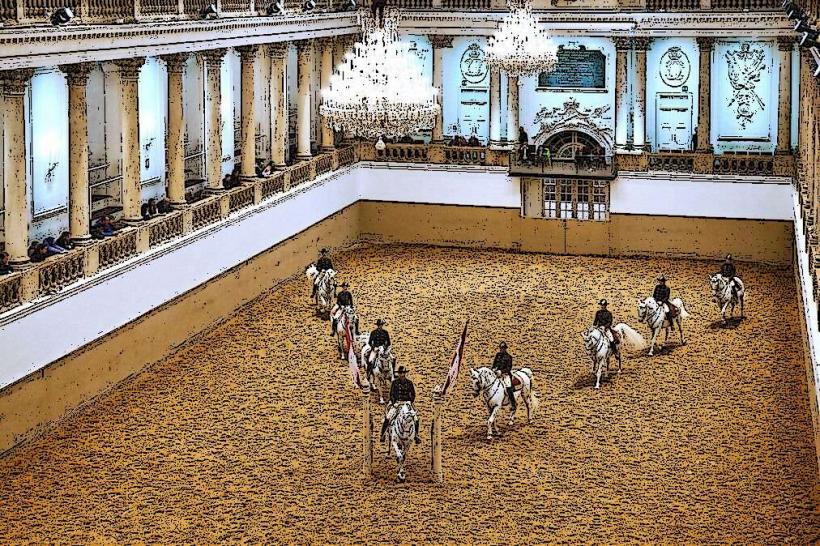
Spanish Riding School: 0.2 km North
Augustinian Church: 0.1 km South
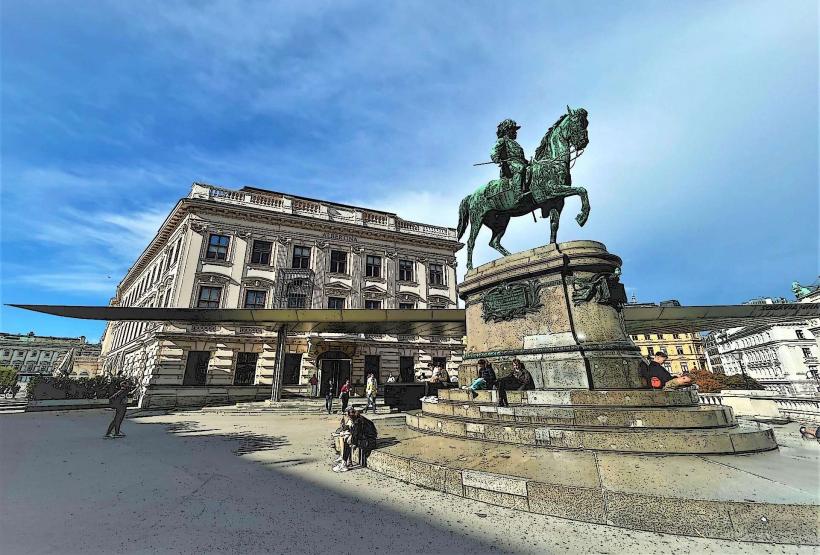
Albertina Museum: 0.3 km South