Information
Landmark: Museum of Fine ArtsCity: Vienna
Country: Austria
Continent: Europe
Museum of Fine Arts, Vienna, Austria, Europe
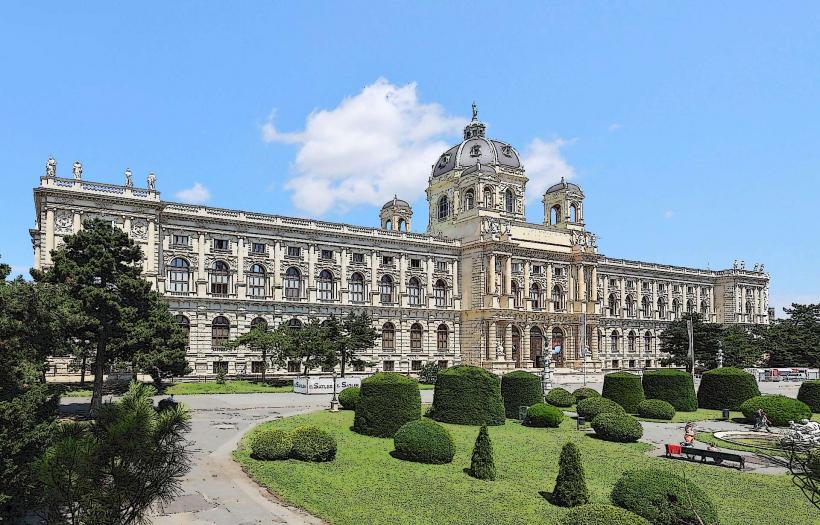
The Kunsthistorisches Museum (Museum of Fine Arts) is one of the world's foremost art institutions, located on the Maria-Theresien-Platz along the Ringstraße in Vienna.
Visual Characteristics
The museum is a monumental Neo-Renaissance structure characterized by its 60-meter-high octagonal dome. The exterior features a facade of sandstone decorated with sculptures of historical figures and artists. The interior is defined by extreme opulence, particularly the Grand Staircase, which features frescoes by Gustav Klimt and a marble sculpture group by Antonio Canova. The halls are lined with multicolored marble columns, gold-leaf stuccowork, and elaborate mosaic floors.
Location & Access Logistics
Address: Maria-Theresien-Platz, 1010 Wien, Austria.
Public Transport: U-Bahn lines U2 and U3 (Station: Volkstheater) or U2 and U1 (Station: Museumsquartier). Tram lines 1, 2, 71, and D stop at "Burgring."
Access: The museum is fully wheelchair accessible. Entrance is via the main portal facing Maria-Theresien-Platz.
Hours: Daily 10:00–18:00; Thursdays extended until 21:00. Closed on certain Mondays in the winter season.
Historical Origin
Commissioned by Emperor Franz Joseph I to house the extensive art collection of the Habsburgs, the museum was built between 1871 and 1891. It was designed by architects Gottfried Semper and Karl von Hasenauer. The museum was intended to be part of a larger "Imperial Forum" that was never fully realized. It opened to the public on October 17, 1891.
Key Highlights & Activities
Picture Gallery: Contains one of the world's most important collections of 16th and 17th-century paintings, including the world's largest collection of works by Pieter Bruegel the Elder (The Tower of Babel).
Kunstkammer (Chamber of Art and Wonders): Reopened in 2013, this section houses rare and exotic objects from the Middle Ages to the Renaissance, including the famous Saliera (salt cellar) by Benvenuto Cellini.
Egyptian and Near Eastern Collection: One of the most significant collections of Egyptian antiquities in the world.
Cupola Hall Café: A legendary café located under the central dome, known for its architecture and Thursday evening gourmet dinners.
Infrastructure & Amenities
The facility includes a professional cloakroom, a large museum shop, and the aforementioned café-restaurant. 5G cellular signal is strong throughout the building. Audio guides are available in multiple languages.
Best Time to Visit
Photography: The grand staircase and the view from the Cupola Hall are primary subjects.
Crowds: Thursday evenings (after 18:00) provide a quieter atmosphere and a unique lighting experience.
Efficiency: Start at the top floor (Picture Gallery) and work downwards to manage energy levels.
Facts & Legends
The museum is an exact mirror image of the Natural History Museum (Naturhistorisches Museum) located directly across the square; the two buildings are identical in exterior design to maintain the symmetry of the Imperial Forum. A local legend involves the 2003 theft of the Saliera; the piece was missing for nearly three years before being recovered from a buried box in a forest north of Vienna.
Nearby Landmarks
Natural History Museum: 0.1 km (Across the square)
Hofburg Palace: 0.2 km East
MuseumsQuartier: 0.2 km West
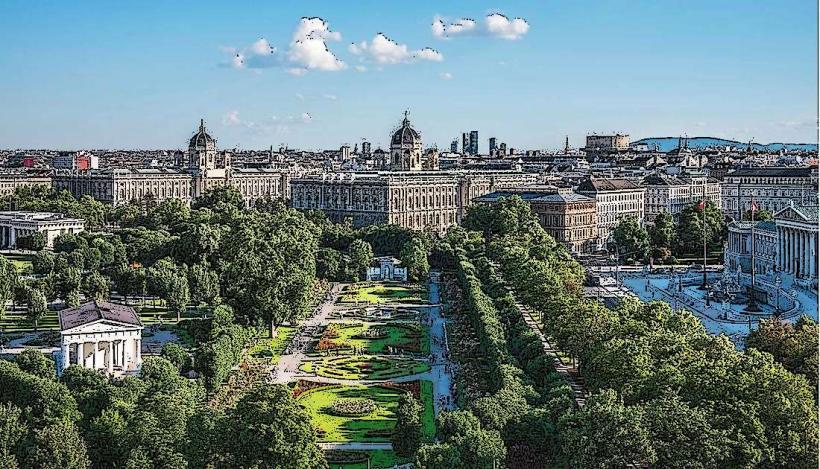
Volksgarten: 0.3 km North
Austrian Parliament Building: 0.5 km North