Information
Landmark: Idaho State Capitol BuildingCity: Boise
Country: USA Idaho
Continent: North America
Idaho State Capitol Building, Boise, USA Idaho, North America
The Idaho State Capitol Building, located in downtown Boise, stands as the symbolic and political heart of the state. Rising above Capitol Boulevard with its grand neoclassical dome, it reflects both Idaho’s natural beauty and civic ideals through its architecture, craftsmanship, and materials sourced from within the state. Constructed primarily from 1905 to 1920, the Capitol remains one of Idaho’s most admired landmarks-a blend of elegance, history, and enduring public purpose.
Architecture and Design
The Capitol’s design follows a Classical Revival style, inspired by the U.S. Capitol in Washington, D.C., yet distinguished by local materials and a distinctly Idahoan character. Designed by architects John E. Tourtellotte and Charles Hummel, the building embodies symmetry, order, and grandeur through its use of domes, columns, and detailed ornamentation.
The exterior is built primarily from sandstone quarried near Boise, giving it a warm golden hue that changes subtly with the light. The central dome, rising 208 feet high, is capped with a bronze eagle, a symbol of freedom and vigilance. Inside, the rotunda glows with natural light that filters through skylights and glass panels, illuminating the soft tones of marble and brass throughout the interior.
The building’s wings-added between 1919 and 1920-house the Idaho Senate and House of Representatives, completing its balanced form and functional layout.
Interior and Materials
The Capitol’s interior design showcases a meticulous attention to detail and craftsmanship. Four different types of marble-sourced from Georgia, Alaska, Vermont, and Italy-decorate the floors, columns, and staircases. Yet, local materials remain central: the sandstone exterior and native silver, zinc, and lead incorporated into ornamentation reflect Idaho’s mining heritage.
Entering the main rotunda, visitors are greeted by massive marble columns, high arched ceilings, and an open view upward to the dome’s interior, painted in pale cream and gold. Light floods through clerestory windows, giving the space an almost ethereal atmosphere.
Each legislative chamber features coffered ceilings, period lighting fixtures, and wooden desks that recall early 20th-century design. Murals, sculptures, and historical displays throughout the building celebrate Idaho’s formation, geography, and cultural evolution.
Symbolism and Features
Every element of the Capitol carries symbolic intent. The central dome represents the unity of government and people; the grand staircase embodies ascension toward knowledge and justice. Carved eagles, rosettes, and wreaths appear throughout as motifs of liberty and statehood.
A notable feature is the Capitol’s geothermal heating system, which was groundbreaking for its time. Using naturally heated water from the Boise geothermal aquifer, the system has warmed the building since 1982, making it one of the first state capitols in the U.S. to operate on renewable energy-a reflection of Idaho’s innovative spirit.
Restoration and Preservation
Between 2007 and 2010, the Capitol underwent a comprehensive restoration and expansion to preserve its historical integrity while updating it for modern use. Craftsmen restored decorative plasterwork, marble floors, and chandeliers, while two underground wings were added for offices and public gathering spaces. The renovation revived the building’s early 20th-century grandeur while integrating 21st-century accessibility and safety features.
The restoration also emphasized sustainability, improving lighting efficiency and maintaining the geothermal system, ensuring the building continues to represent Idaho’s balance of tradition and progress.
Surroundings and Setting
The Idaho State Capitol sits within a spacious, landscaped plaza at the north end of Capitol Boulevard, a visual anchor for Boise’s civic core. Lawns, flowerbeds, and shaded walkways surround the structure, and statues and memorials on the grounds commemorate veterans, pioneers, and key moments in the state’s history. The view southward down Capitol Boulevard opens dramatically toward the Boise foothills, linking the city’s natural and political landscapes.
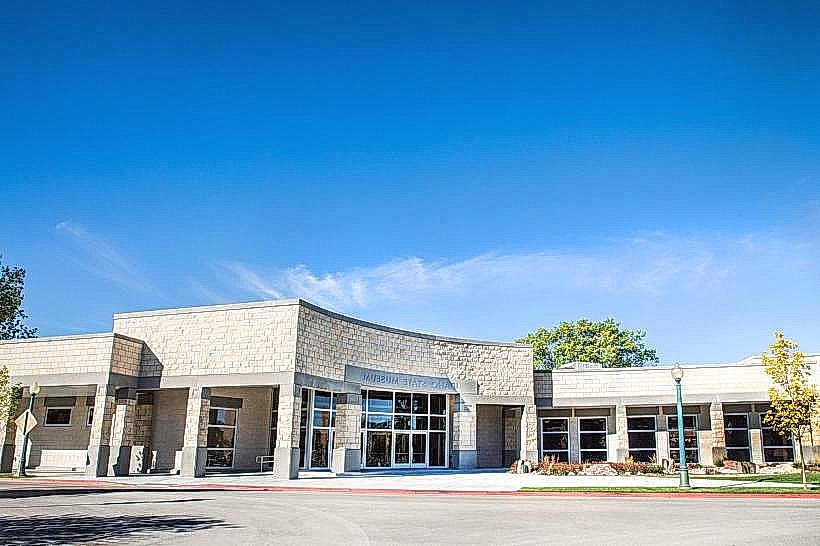
Nearby landmarks include the Idaho State Museum, Julia Davis Park, and Boise River Greenbelt, creating a network of cultural and historical destinations within walking distance.
Visitor Experience
Stepping inside the Capitol offers a sense of both grandeur and accessibility. Visitors can wander freely through public corridors, viewing the rotunda, chambers, and historical exhibits. The Capitol Gift Shop offers locally made items and publications on Idaho’s history. During legislative sessions, guests can quietly observe the Senate or House in session from public galleries.
The echo of footsteps on marble floors, the faint scent of polished wood and stone, and the filtered light through the dome combine to create a timeless atmosphere. Docent-led tours provide context on the building’s art, architecture, and political life, making each visit both educational and inspiring.
Legacy and Significance
The Idaho State Capitol Building stands as a living monument to the state’s democratic values and natural heritage. Its design connects Idaho’s civic identity to the land itself, with materials drawn from the region and a structure that mirrors both classical ideals and frontier resilience.
More than a seat of government, the Capitol serves as a gathering place-a symbol of unity and continuity, where citizens, lawmakers, and visitors all share the same open, light-filled space beneath the dome. It remains not only the architectural heart of Boise but also the spiritual center of Idaho’s public life, representing the strength, independence, and enduring beauty of the Gem State.