Information
Landmark: Iglesia de la Virgen de CotocaCity: Santa Cruz de la Sierra
Country: Bolivia
Continent: South America
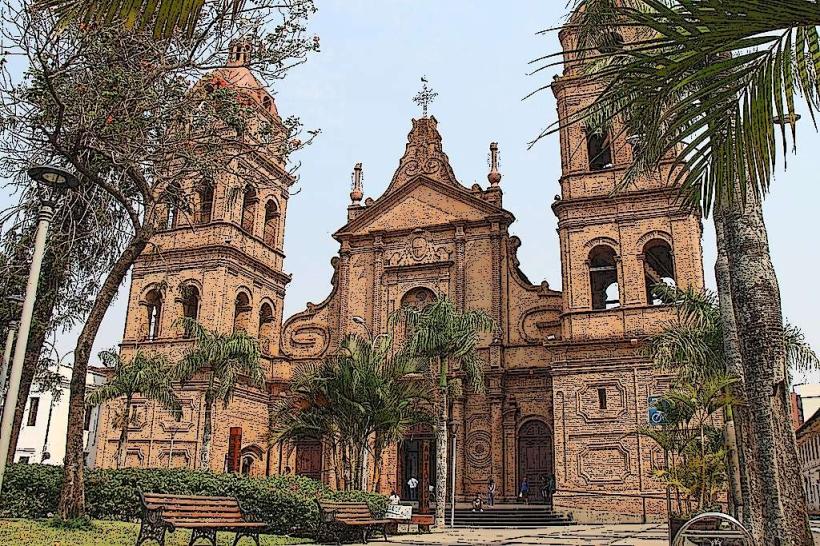
Iglesia de la Virgen de Cotoca, Santa Cruz de la Sierra, Bolivia, South America
The Iglesia de la Virgen de Cotoca is a Roman Catholic church located in Cotoca, a municipality within the Santa Cruz department of Bolivia.
This religious site serves as a pilgrimage destination and a significant cultural landmark for the region.
Visual Characteristics
The church features a central nave constructed primarily from brick and concrete, painted a pale yellow. Its facade is characterized by a prominent bell tower with a simple, square base and a pyramidal roof. The main entrance is a large, arched doorway. The interior is functional, with tiled floors and plain white walls, punctuated by religious iconography.
Location & Access Logistics
The church is situated in the town of Cotoca, approximately 20 kilometers east of Santa Cruz de la Sierra. Access is via the Ruta Nacional 4 (RN4) highway. Travelers can drive directly to Cotoca, where street parking is generally available in the vicinity of the church. Public transportation options include local buses (microbuses) that depart from the main bus terminal in Santa Cruz de la Sierra, with "Cotoca" as their destination.
Historical & Ecological Origin
The current structure of the Iglesia de la Virgen de Cotoca dates back to the mid-20th century, with significant renovations and expansions occurring in the late 1980s. It was built to house and venerate the image of the Virgen de Cotoca, a revered religious icon in Bolivian Catholicism. The site itself is located on relatively flat terrain within the dry Chaco ecoregion.
Key Highlights & Activities
Visitors can attend mass services, which are held daily. The primary activity is veneration of the Virgen de Cotoca image. Pilgrims often engage in prayer and reflection within the church. The annual feast day of the Virgen de Cotoca, celebrated on December 8th, draws large numbers of devotees.
Infrastructure & Amenities
Restrooms are available within the church complex. Limited shade is provided by the church structure itself. Cell phone signal (4G/5G) is generally reliable in Cotoca. Basic food vendors and small shops are located in the immediate vicinity of the church, particularly on market days.
Best Time to Visit
For photography, early morning or late afternoon light offers softer illumination on the facade. The months of May through October generally provide drier weather conditions. The period leading up to and including December 8th is the busiest due to the feast day.
Facts & Legends
A local legend states that the image of the Virgen de Cotoca was found by a shepherd boy in the 18th century. The church is a focal point for the annual pilgrimage, which involves many walking long distances to reach Cotoca.
Nearby Landmarks
- 0.2km West: Plaza Principal de Cotoca (Main Square)
- 1.5km Southwest: Mercado Municipal de Cotoca (Municipal Market)
- 18km West: Biocentro Güembé (Nature Reserve)
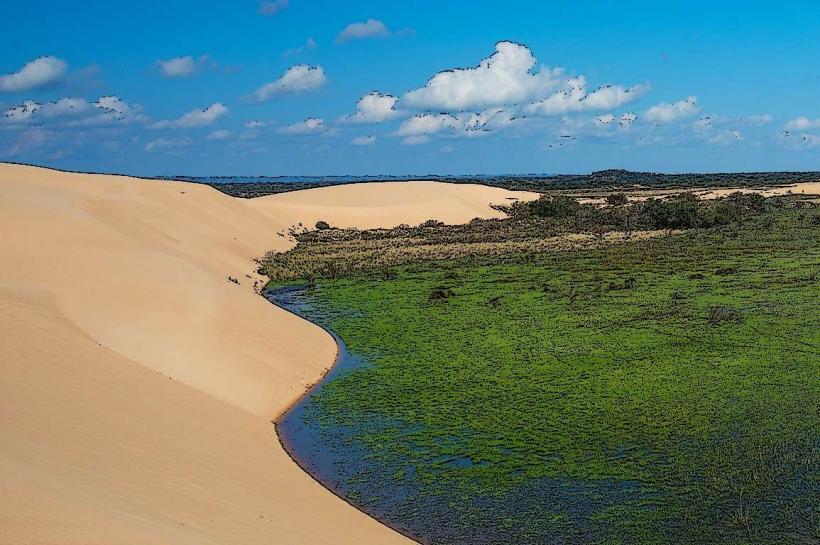
- 22km West: Parque Regional Lomas de Arena (Sand Dunes Park)