Information
Landmark: Parque Lomas de ArenaCity: Santa Cruz de la Sierra
Country: Bolivia
Continent: South America
Parque Lomas de Arena, Santa Cruz de la Sierra, Bolivia, South America
Parque Lomas de Arena is a protected area located south of Santa Cruz de la Sierra, Bolivia. It is characterized by extensive sand dunes and a unique ecosystem.
Visual Characteristics
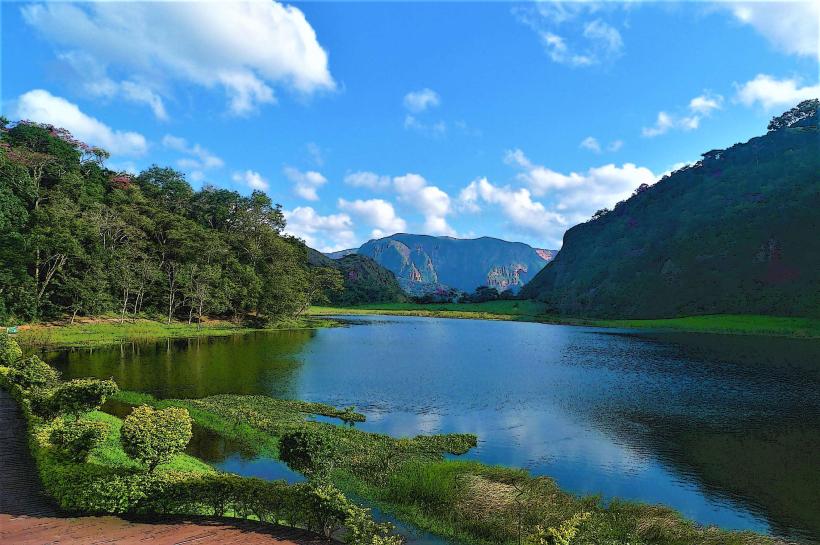
The park's primary feature is its large, undulating sand dunes, composed of fine, light-colored sand. Vegetation is sparse, consisting mainly of drought-resistant grasses, shrubs, and scattered trees adapted to arid conditions. The landscape is open, with clear visibility across the dune fields.
Location & Access Logistics
Parque Lomas de Arena is situated approximately 18 kilometers south of Santa Cruz de la Sierra. Access is via the Carretera a Camiri (National Route 9). The turn-off to the park is clearly marked. The final approach involves a dirt road, approximately 5 kilometers in length, which is generally passable for standard vehicles during the dry season. Parking is available at the park's entrance area. Public transport options directly to the park are limited; however, local buses operate along Carretera a Camiri, requiring a subsequent taxi or pre-arranged transport for the final segment.
Historical & Ecological Origin
The sand dunes of Lomas de Arena are believed to be of aeolian origin, formed by wind deposition over thousands of years. The area is classified as a dry forest ecosystem, a transition zone between the Chaco region and the Amazon basin, supporting a specific range of flora and fauna adapted to sandy, arid environments.
Key Highlights & Activities
Activities include hiking across the sand dunes, observing the local flora and fauna, and photography. Designated trails are present for walking. Visitors can experience the unique geological formations and the quiet environment.
Infrastructure & Amenities
Basic infrastructure includes marked trails and some designated rest areas. Restrooms are available at the park entrance. Shade is minimal, primarily found under scattered trees. Cell phone signal (4G/5G) is intermittent within the park. Food vendors are not present within the park itself, but options are available in nearby communities or Santa Cruz de la Sierra.
Best Time to Visit
The best time of day for photography is during the early morning or late afternoon when the sun's angle creates shadows on the dunes. The dry season, from May to October, offers the most favorable weather conditions with less rainfall and lower humidity. High tide or low tide is not a relevant factor for this inland park.
Facts & Legends
A local legend suggests that the sand dunes were created by a giant serpent that burrowed through the earth. Scientifically, the sand originates from eroded sandstone formations in the surrounding region, transported and shaped by prevailing winds.
Nearby Landmarks
- Parque Ecológico y de Fauna "Güembé" (3.5km North)
- Biocentro "La Rinconada" (4.2km North)
- Jardín Botánico Municipal (4.8km North)