Information
Landmark: Kiruna ChurchCity: Kiruna
Country: Sweden
Continent: Europe
Kiruna Church, Kiruna, Sweden, Europe
Kiruna Church is a wooden church located in Kiruna, Sweden. It serves as the parish church for the Kiruna congregation.
Visual Characteristics
The church features a reddish-brown wooden exterior constructed primarily from pine. Its roof is clad in copper. The main tower reaches an approximate height of 40 meters. The architectural style is Art Nouveau, drawing inspiration from traditional Sami goahti structures and Norwegian stave churches. The interior is characterized by its white-painted wooden walls and ceiling.
Location & Access Logistics
The church is situated at Gruvvägen 13, 981 31 Kiruna. It is located approximately 1.5 kilometers east of Kiruna's current temporary city center. Limited parking is available on-site and on adjacent streets. Kiruna local bus lines, such as line 1, 2, and 3, have stops within walking distance of the church.
Historical & Ecological Origin
Kiruna Church was constructed between 1909 and 1912, with its consecration occurring in 1912. The architect responsible for its design was Gustaf Wickman. Its original purpose was to serve the spiritual needs of the rapidly growing mining community in Kiruna.
Key Highlights & Activities
Visitors can attend regular church services according to the parish schedule. The church interior features an altarpiece painted by Prince Eugen. The exterior is adorned with 12 bronze reliefs created by sculptor Christian Eriksson, depicting various human emotions and life stages. Photography is permitted inside, provided it respects ongoing services or events.
Infrastructure & Amenities
Restrooms are available on-site for visitors. Shade is provided by the church structure itself and surrounding trees. Cell phone signal, including 4G and 5G, is generally strong in the area. There are no dedicated food vendors directly at the church; cafes and restaurants are accessible in the main Kiruna City Center, approximately 1.5 kilometers away.
Best Time to Visit
For optimal exterior photography, the morning or late afternoon light is most favorable. The summer months, from June to August, offer milder temperatures and extended daylight hours. Winter months, from December to February, provide a snow-covered landscape but feature colder temperatures and limited daylight. There are no specific tide requirements for visiting.
Facts & Legends
Kiruna Church is currently undergoing a complex relocation process due to ground subsidence caused by mining operations. The entire structure is planned to be moved approximately 3 kilometers east to a new location near the new city center, with the move anticipated to commence around 2025. This makes it one of the largest wooden structures ever to be relocated.
Nearby Landmarks
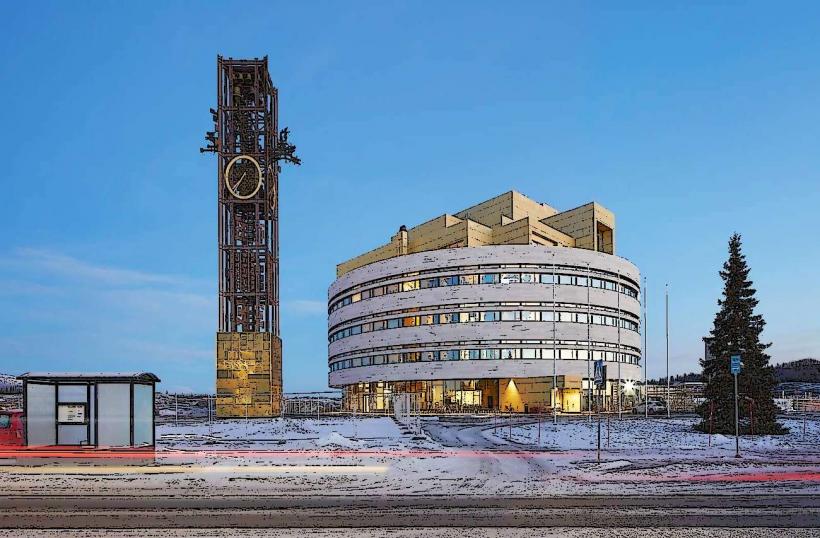
- Kiruna Stadshus (City Hall): 1.5km East
- LKAB Visitor Centre: 2km North-East
- Camp Ripan: 2.5km North
- Kiruna Folkets Hus: 1.7km East