Information
Landmark: Kiruna GlacierCity: Kiruna
Country: Sweden
Continent: Europe
Kiruna Glacier, Kiruna, Sweden, Europe
Visual Characteristics
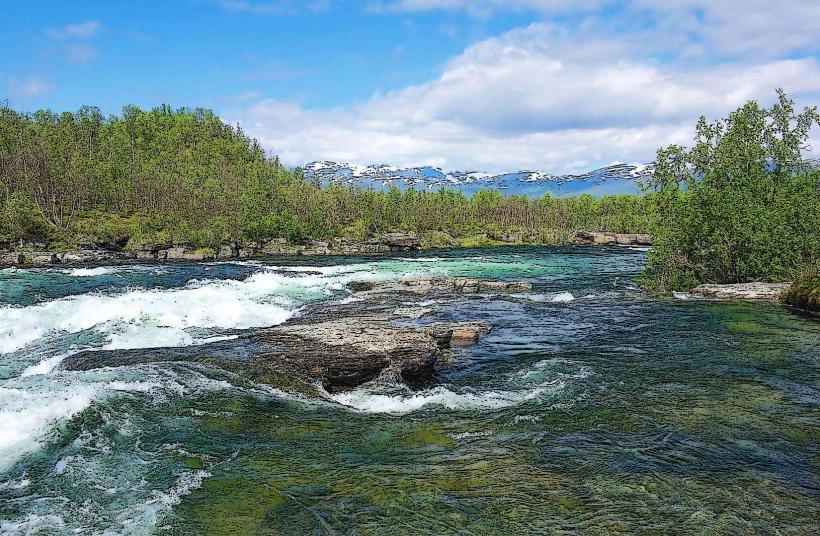
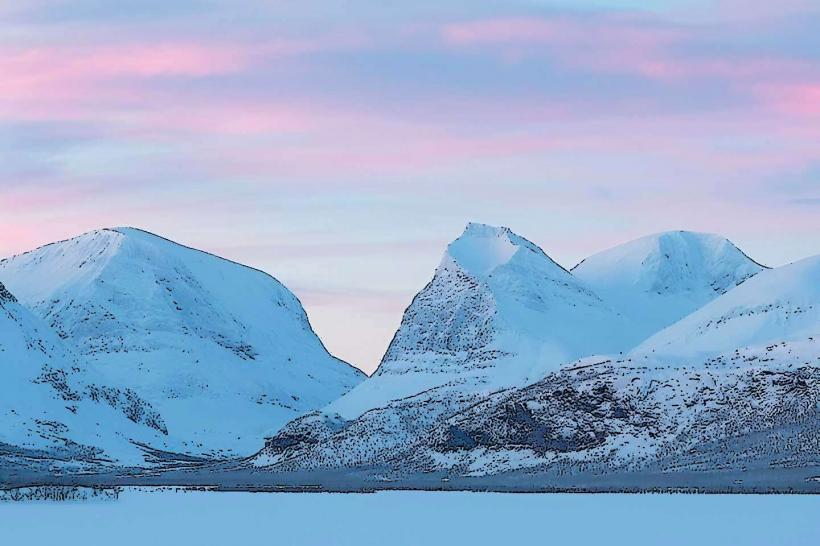
The glacier presents as a large, permanent ice body, predominantly white with visible blue ice sections where compaction is greatest. Its surface is often crevassed and covered by seasonal snow, particularly in winter and spring. Surrounding the glacier are exposed grey and dark metamorphic rock formations, characteristic of the Scandinavian Caledonides. Meltwater streams flow from its snout, often appearing milky due to suspended rock flour. The glacier's elevation varies, but it is situated at high altitudes within the mountain range.
Location & Access Logistics
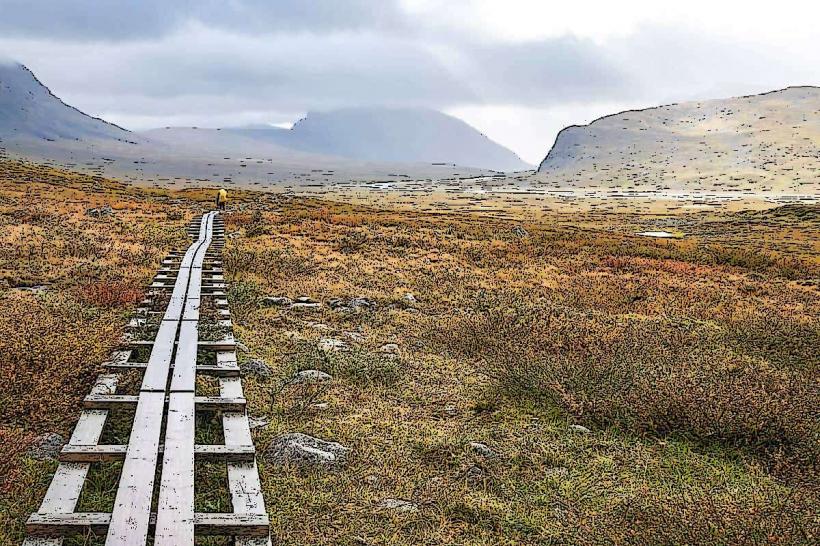
Direct road access to the Kiruna Glacier is not available. The primary access point for the Kebnekaise area is Nikkaluokta, located approximately 66 kilometers west of Kiruna via Road 870. From Nikkaluokta, visitors must undertake a 19-kilometer hike along a marked trail to the Kebnekaise Mountain Station. From the mountain station, the glacier is accessible via further marked hiking trails, typically requiring several hours of strenuous ascent. Parking is available at Nikkaluokta. Public transport to Nikkaluokta from Kiruna is available via bus line 92, operated by Länstrafiken Norrbotten, with services typically running during the summer and winter seasons.
Historical & Ecological Origin
The Kiruna Glacier is a natural geological formation, classified as a cirque glacier. It formed during the last glacial period and has persisted due to high altitude, low temperatures, and sufficient snowfall accumulation. Its existence is a result of glacial erosion and deposition processes over millennia, carving out the cirque basin it occupies. The surrounding geology consists primarily of Precambrian bedrock, including schists, gneisses, and amphibolites, which were uplifted and shaped by tectonic activity and subsequent glacial action.
Key Highlights & Activities
Guided glacier hikes are available from the Kebnekaise Mountain Station, offering an opportunity to traverse the ice with specialized equipment. Mountaineering and alpine climbing are possible on the surrounding peaks, often utilizing the glacier as an approach route. Scientific observation of glacial dynamics and climate change impacts is also conducted in the area. Hiking the trails around the glacier provides views of the ice mass and the Kebnekaise massif.
Infrastructure & Amenities
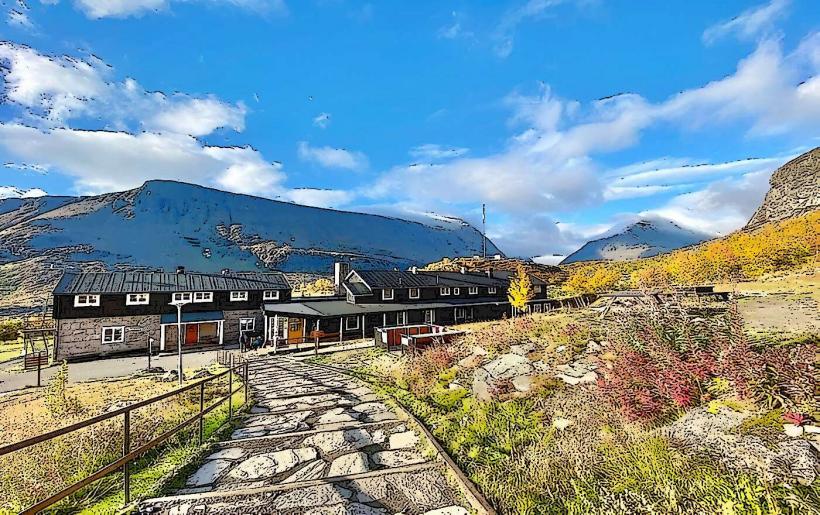
There are no permanent infrastructure or amenities directly at the Kiruna Glacier. Restrooms, shelter, and food services are available at the Kebnekaise Mountain Station, located several kilometers and a significant elevation difference from the glacier. Cell phone signal (4G/5G) is intermittent and unreliable in the immediate vicinity of the glacier due to the remote mountainous terrain. Emergency shelters may be present on some approach routes but are not equipped with services.
Best Time to Visit
The best time to visit the Kiruna Glacier for hiking and glacier tours is during the summer months, typically from late June to early September. During this period, snow cover is reduced, and trails are more accessible. Photography is optimal in the early morning or late afternoon for soft light and dramatic shadows on the ice and rock formations. Winter visits are possible for experienced ski tourers and mountaineers, but require specialized equipment and expertise due to extreme cold, deep snow, and avalanche risk.
Facts & Legends
The Kiruna Glacier, like many glaciers in the Kebnekaise region, has been subject to significant retreat and thinning in recent decades, serving as a visible indicator of climate change. Scientific measurements track its mass balance and movement. A local Sami legend speaks of the mountains as sacred places where spirits reside, and the glaciers are seen as ancient, powerful entities that shape the land and hold the memories of time.
Nearby Landmarks
- Kebnekaise Mountain Station: 5km East
- Kebnekaise South Summit: 3km South
- Tarfaladalen Research Station: 4km North-East
- Nikkaluokta: 24km East