Information
Landmark: Kızlar MonasteryCity: Trabzon
Country: Turkey
Continent: Asia
Kızlar Monastery, Trabzon, Turkey, Asia
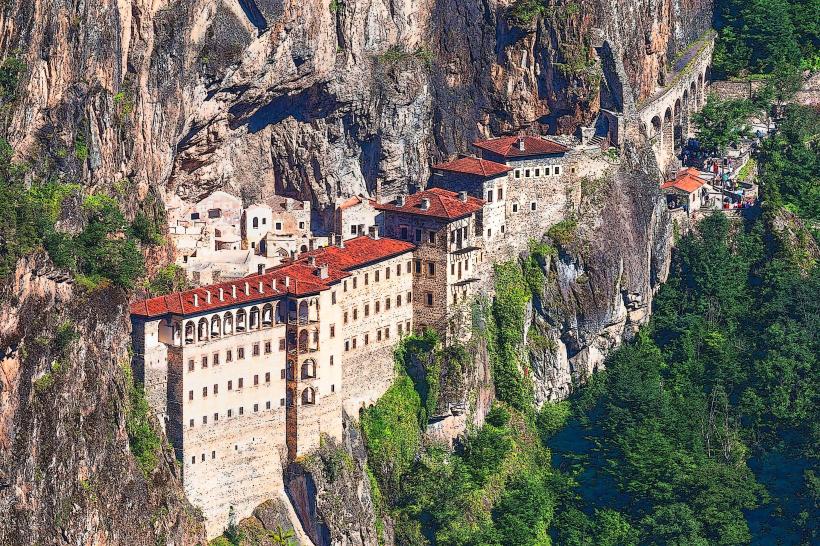
Kızlar Monastery is a historic rock-cut monastery complex situated in the Maçka district of Trabzon, Turkey.
It is located approximately 17 kilometers south of Trabzon city center.
Visual Characteristics
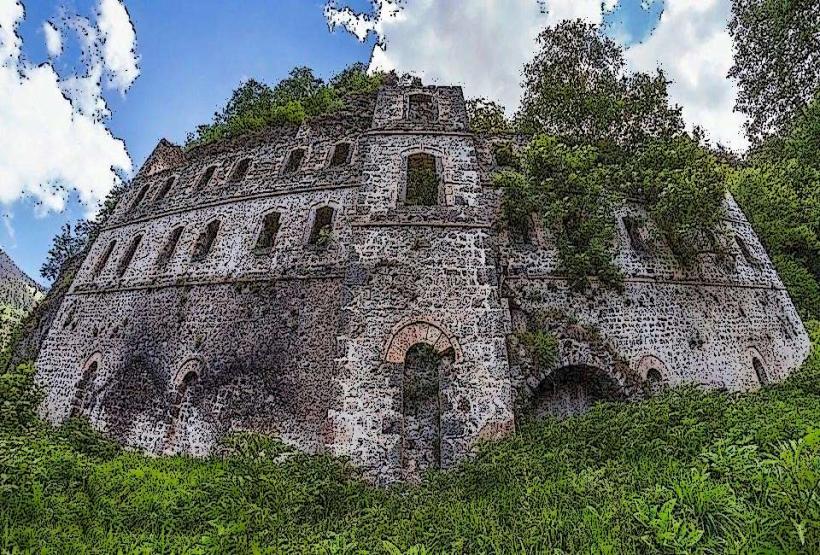
The monastery is carved into a steep cliff face. The primary construction material is local stone, exhibiting a weathered grey and brown coloration. The complex consists of several distinct structures including a church, cells, and refectory, all integrated into the natural rock. The church features a simple, rectangular plan with a barrel-vaulted ceiling. Exterior walls are largely unadorned, emphasizing the integration with the geological formation.
Location & Access Logistics
Access to Kızlar Monastery is via the D.010 state road heading south from Trabzon towards Rize. Turn off onto the D.885 (Maçka-Gümüşhane) road and proceed for approximately 10 kilometers. A signposted turn-off leads to a narrow, paved road that ascends to the monastery. Parking is available at a small lot near the entrance. Public transport options are limited; local buses from Trabzon to Maçka are available, requiring a subsequent taxi or pre-arranged transport for the final ascent.
Historical & Ecological Origin
Kızlar Monastery, also known as Panagia Theoskepastos Monastery, was founded in the 14th century. The exact founder is not definitively recorded, but it is believed to have been established by monks seeking a secluded location for worship. The monastery was carved directly into the limestone cliffs, utilizing the natural geological features for its construction. Its original purpose was as a religious retreat and a center for Orthodox Christian monasticism.
Key Highlights & Activities
Exploration of the rock-cut church, including its surviving frescoes. Examination of the monastic cells and refectory carved into the rock. Observation of the surrounding valley landscape from the monastery's vantage points. Photography of the architectural integration with the natural environment.
Infrastructure & Amenities
Restrooms are available at the visitor entrance area. Limited shade is provided by natural overhangs and the structures themselves. Cell phone signal (4G/5G) is generally weak to non-existent within the immediate monastery complex due to its secluded, cliff-face location. No food vendors are present at the site; visitors should bring provisions.
Best Time to Visit
The best time of day for photography is mid-morning or late afternoon when the sunlight illuminates the rock face and structures. The most favorable months for visiting are from April to October, avoiding the heavier rainfall and colder temperatures of winter. No specific tide requirements are applicable.
Facts & Legends
A notable feature is the surviving fresco depicting the Virgin Mary, which is said to have been miraculously preserved. Local lore suggests the monastery was named "Kızlar" (Girls) due to a legend involving a group of nuns who sought refuge there.
Nearby Landmarks
- Sumela Monastery (3.5km Southwest)
- Altındere Valley National Park (4.0km Southwest)
- Maçka City Center (10.0km Northwest)
- Uzungöl Lake (45.0km Southeast)