Information
Landmark: Koski Mehmed Pasha MosqueCity: Mostar
Country: Bosnia and Herzegovina
Continent: Europe
Koski Mehmed Pasha Mosque, Mostar, Bosnia and Herzegovina, Europe
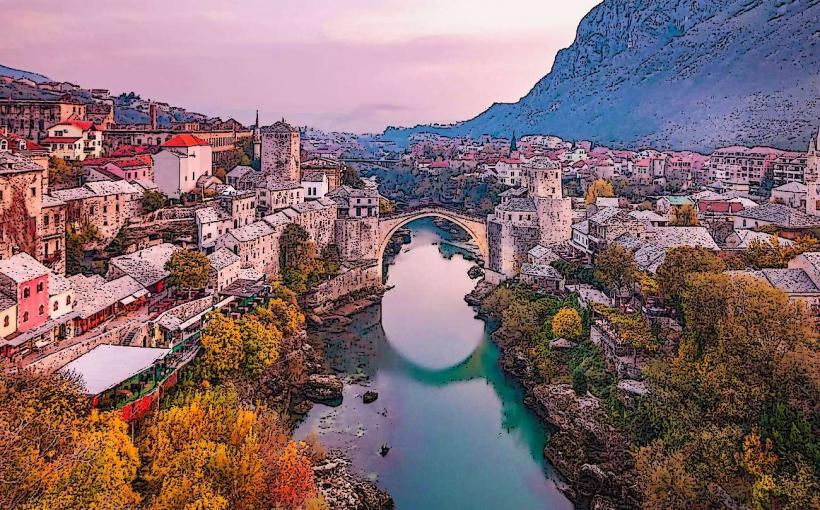
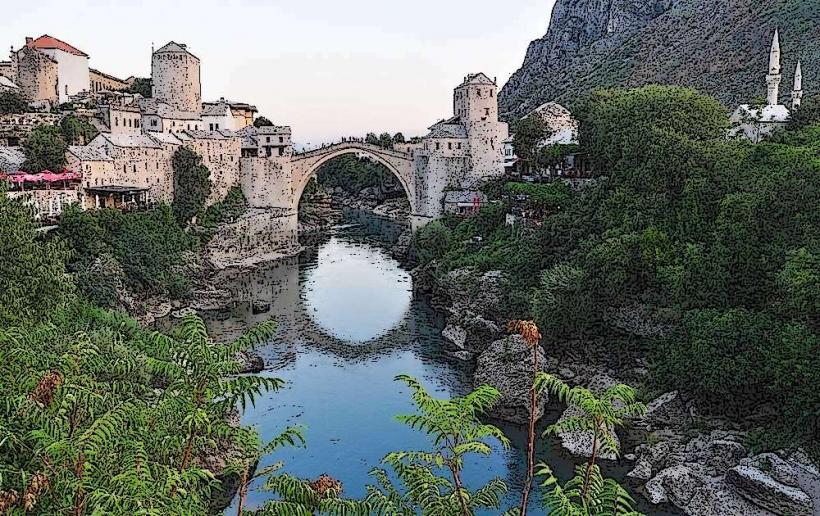
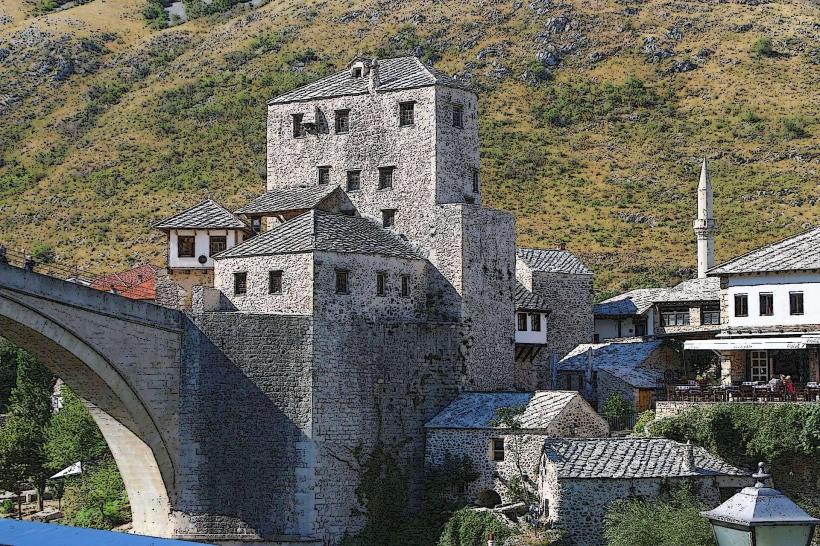
The Koski Mehmed Pasha Mosque is a 17th-century Ottoman landmark situated on the cliffs of the Neretva River in the heart of Mostar's Old Town. It is renowned for offering the most comprehensive panoramic view of the Stari Most (Old Bridge) and the surrounding urban landscape.
Visual Characteristics
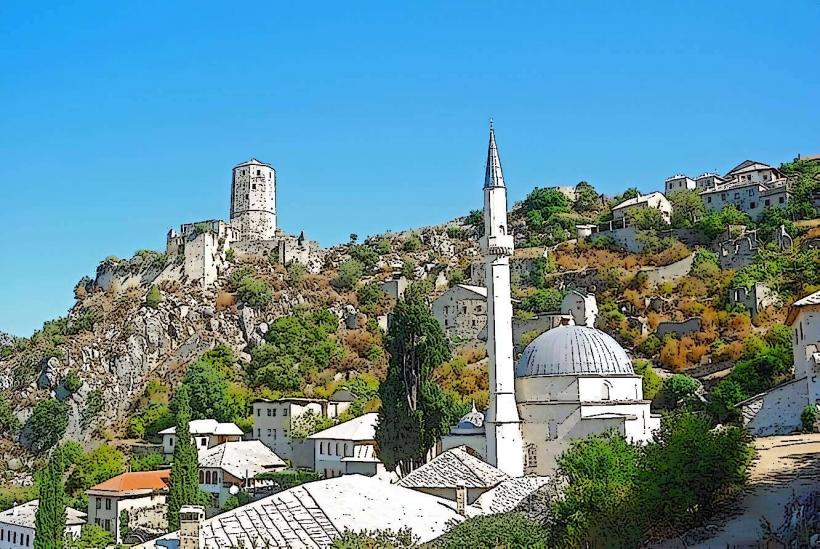
The mosque is a classical Ottoman single-domed structure built from precisely hewn local stone blocks. Its central prayer space is a perfect cube topped by a lead-covered dome that rises over 15 meters. The exterior features a porch with three smaller domes supported by stone columns. The interior is decorated with vibrant botanical motifs on the dome and intricate calligraphy, complemented by multicolored stained-glass windows that diffuse natural light across the prayer hall.
Location & Access Logistics
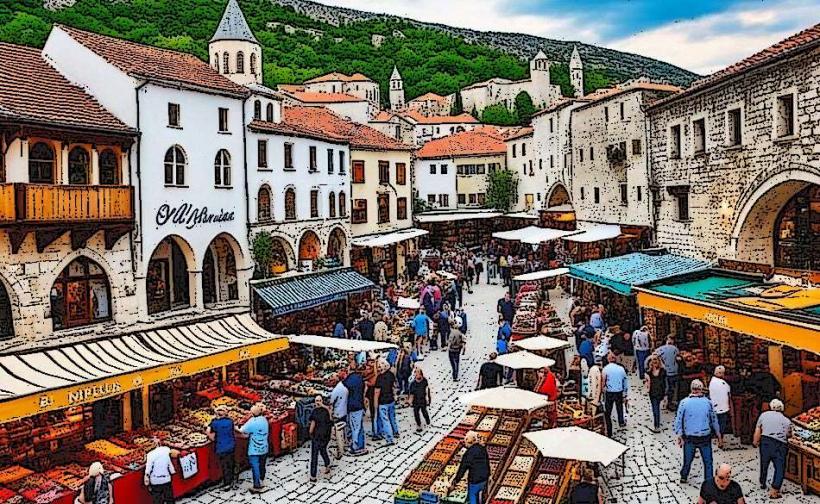
The mosque is located at Mala Tepa 16, approximately 150 meters north of the Stari Most. It is situated within the pedestrian-only Old Bazaar (Kujundžiluk). Visitors must arrive on foot; the nearest vehicle access is at the perimeter of the Old Town, about 5-10 minutes away. Public transport users can take a bus to the Spanish Square (Španski trg) or a train to the Mostar Main Station (1.5km north) and walk toward the river.
Historical & Ecological Origin
Commissioned by Mehmed Koskija-a native of Mostar and chronicler for Grand Vizier Lala Mehmed Pasha Sokolović-the mosque was completed in 1618. It was built on the site of a former sanctuary. Like much of the city, it suffered significant damage during the 1990s conflict but was meticulously restored in the late 1990s. Its location on the high river cliffs was strategically chosen to dominate the skyline alongside the Karadžoz Beg Mosque.
Key Highlights & Activities
Minaret Climb: For a fee (approx. 12 KM / €6), visitors can ascend the 30-meter-high minaret via a narrow, 90-step spiral staircase. The top balcony provides the city's iconic viewpoint of the Old Bridge.
Riverside Courtyard: The garden behind the mosque offers a slightly lower-angle view of the bridge and river, suitable for those who prefer to avoid the tight climb.
Ablution Fountain (Šadrvan): The courtyard contains an original stone fountain used for ritual purification, a classic element of Ottoman religious complexes.
Infrastructure & Amenities
The complex includes a small cafe in the courtyard where visitors can rest. Restrooms are available on-site for a small fee. Modest dress is required (shoulders and knees covered); scarves and wraps are typically provided at the entrance for those who need them. The area is fully covered by 4G/5G cellular signals.
Best Time to Visit
The mosque is generally open from 09:00 to 20:30 (April–September) and 11:00 to 17:00 (October–March). For photography, early morning is ideal to avoid crowds, while the "golden hour" before sunset provides the best lighting on the Old Bridge and the river. Access may be restricted during midday Friday congregational prayers.
Facts & Legends
The founder, Mehmed Koskija, died in 1611 before the mosque's completion, leaving his brother Mahmud to finish the project. An enduring mystery remains regarding the final resting place of the founder, as his grave location in the city is unknown. The mosque is often cited as the "best-positioned" building in the city for its direct visual line to the Stari Most.
Nearby Landmarks
Stari Most (Old Bridge) - 0.15km South
Kujundžiluk (Old Bazaar) - 0.05km East
Karađoz Beg Mosque - 0.4km North
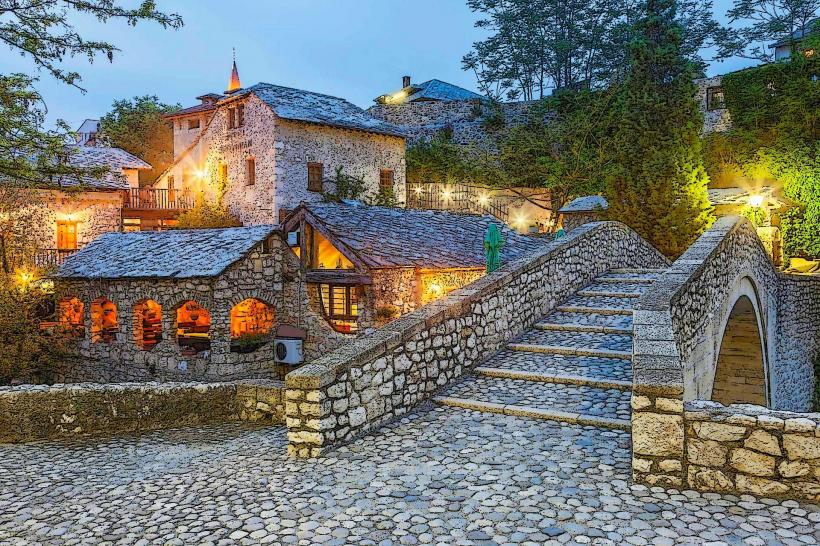
Crooked Bridge (Kriva Ćuprija) - 0.35km Southwest
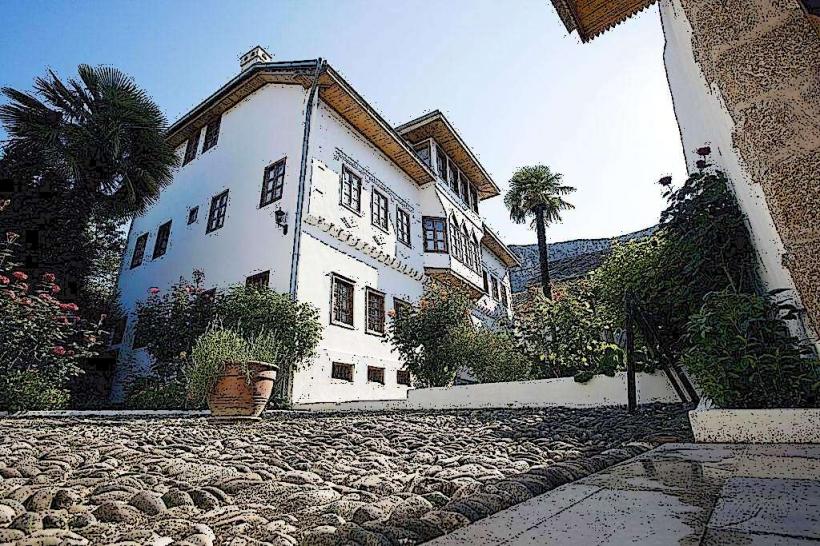
Muslibegović House - 0.6km North