Information
Landmark: Legacy of the Plains MuseumCity: Scottsbluff
Country: USA Nebraska
Continent: North America
Legacy of the Plains Museum, Scottsbluff, USA Nebraska, North America
The Legacy of the Plains Museum is an agricultural history museum located in Scottsbluff, Nebraska. It preserves and interprets the agricultural heritage of the North Platte River Valley.
Visual Characteristics
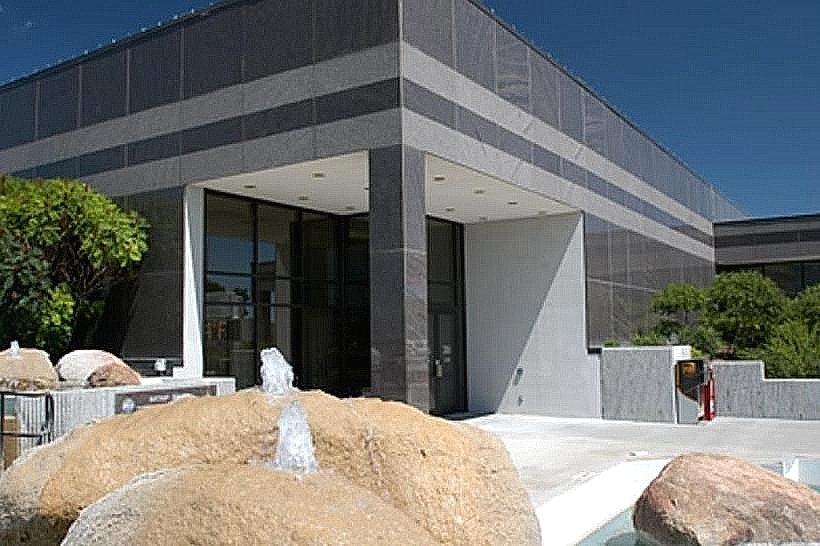
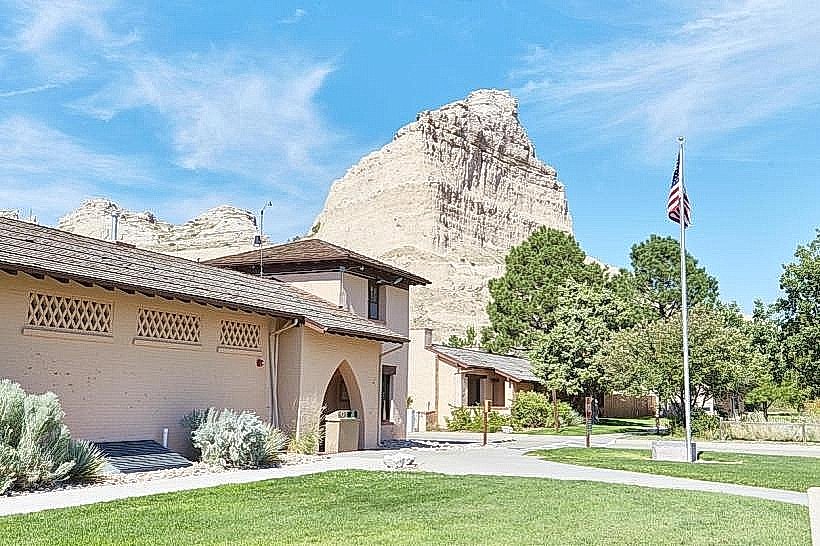
The museum complex consists of several structures. The main building is a single-story, rectangular structure constructed from concrete block with a light-colored, textured finish. It features a low-pitched, gabled roof covered in asphalt shingles. Adjacent to the main building are several smaller, utilitarian outbuildings, including barns and sheds, constructed from wood and corrugated metal, exhibiting a functional, agricultural aesthetic. The grounds are largely flat, with mown grass and gravel pathways.
Location & Access Logistics
The museum is situated at 2930 Old Oregon Trail Road, approximately 4.8 kilometers (3 miles) west of downtown Scottsbluff. Access is via State Highway 92 (West Overland Trail). Turn north onto Old Oregon Trail Road. Ample free parking is available on-site, including designated spaces for buses and RVs. No public transportation directly serves the museum; private vehicle or taxi is required.
Historical & Ecological Origin
The museum was established in 1979 to document the history of agriculture in western Nebraska. The site itself is part of the North Platte River Valley, a region shaped by glacial meltwater and subsequent alluvial deposition, creating fertile plains historically utilized for farming and ranching. The specific buildings on site are either original structures relocated to the museum or constructed to replicate historical agricultural buildings of the late 19th and early 20th centuries.
Key Highlights & Activities
Visitors can explore exhibits detailing the evolution of farming equipment, household items used by early settlers, and the development of irrigation techniques. Demonstrations of historical farming practices are conducted on select dates. The museum also features a collection of antique tractors and farm machinery. Walking the grounds allows for examination of the various outbuildings, including a blacksmith shop and a one-room schoolhouse.
Infrastructure & Amenities
Restrooms are available within the main museum building. Limited shaded areas are provided by trees around the perimeter of the main building and within some of the larger outbuildings. Cell phone signal (4G/5G) is generally available. No on-site food vendors are present; visitors should plan to bring their own food or dine in Scottsbluff.
Best Time to Visit
The best time for photography of the exterior structures is during the morning or late afternoon when the sun angle provides distinct shadows. For optimal weather conditions, the months of May through September offer the warmest temperatures and lowest chance of precipitation. Outdoor demonstrations are typically scheduled during these months.
Facts & Legends
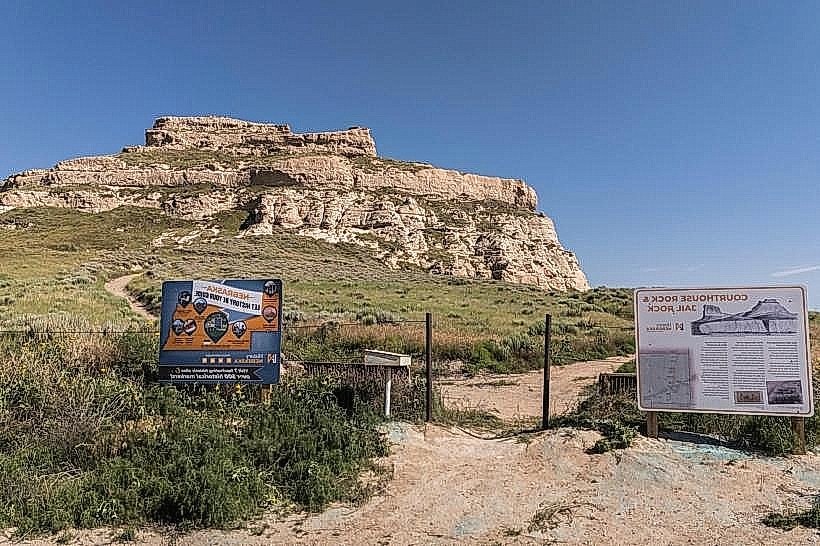
A notable artifact is a fully restored 1917 John Deere Model D tractor, one of the earliest models produced by the company. The museum grounds are also adjacent to a section of the historic Oregon Trail, with interpretive signage detailing its passage through the area.
Nearby Landmarks
- Scotts Bluff National Monument (1.5km West)
- Chimney Rock National Historic Site (24km Southwest)
- Riverside Discovery Center (5km East)
- Scott's Bluff Country Club (3km East)