Information
Landmark: Maspalomas DunesCity: Gran Canaria
Country: Canary Islands
Continent: Europe
Maspalomas Dunes, Gran Canaria, Canary Islands, Europe
Visual Characteristics
The dunes consist of fine, golden-yellow sand, forming undulating ridges and valleys that shift with the wind. Individual dunes can reach heights of up to 10 meters. The landscape transitions from barren sand to areas with sparse vegetation, primarily salt-tolerant plants like sea spurge and sand couch grass, particularly near the lagoon and the periphery of the dune field.
Location & Access Logistics
The Maspalomas Dunes are situated directly adjacent to the resorts of Playa del Inglés and Maspalomas. Access points include the promenade along Playa del Inglés, near the Riu Palace Maspalomas hotel, and from the Faro de Maspalomas (Maspalomas Lighthouse) area. Parking is available in designated lots near these access points, such as the public parking at Avenida de Tirajana in Playa del Inglés or near the lighthouse. Public transport includes several bus lines (e.g., Global Bus lines 30, 50, 66, 90) that serve the Maspalomas and Playa del Inglés areas, with stops within walking distance of the dune entrances.
Historical & Ecological Origin
The Maspalomas Dunes are a geologically active aeolian system, formed over thousands of years by prevailing winds carrying sand inland from the ocean and from the erosion of the island's volcanic rocks. The sand is primarily biogenic, composed of shell fragments and marine organisms. The area was designated a Special Nature Reserve (Reserva Natural Especial de las Dunas de Maspalomas) in 1994 to protect its unique ecosystem, which includes the Charca de Maspalomas (lagoon) and a palm grove.
Key Highlights & Activities
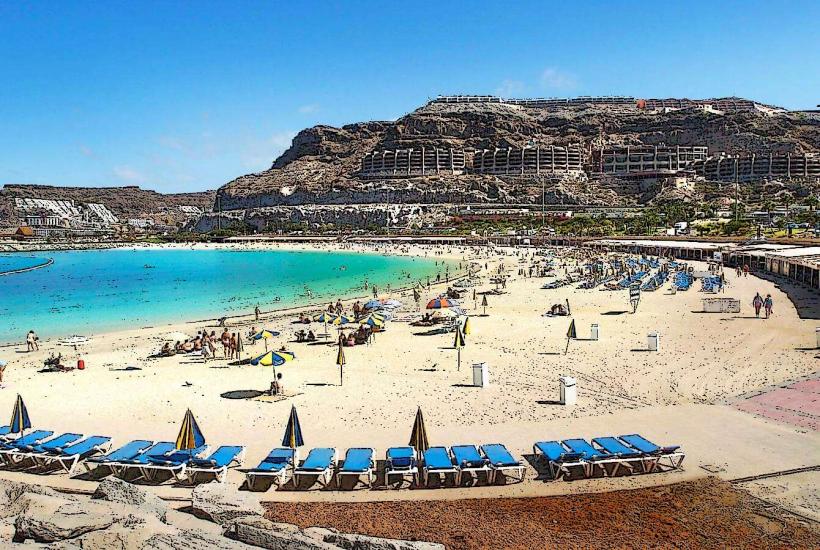
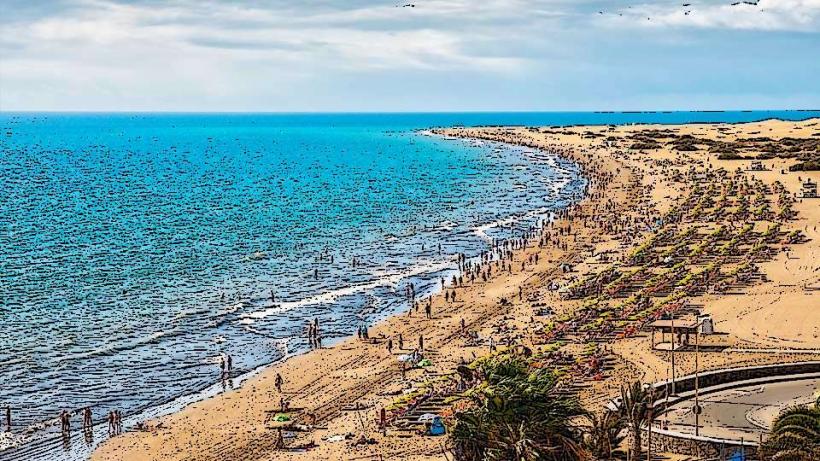
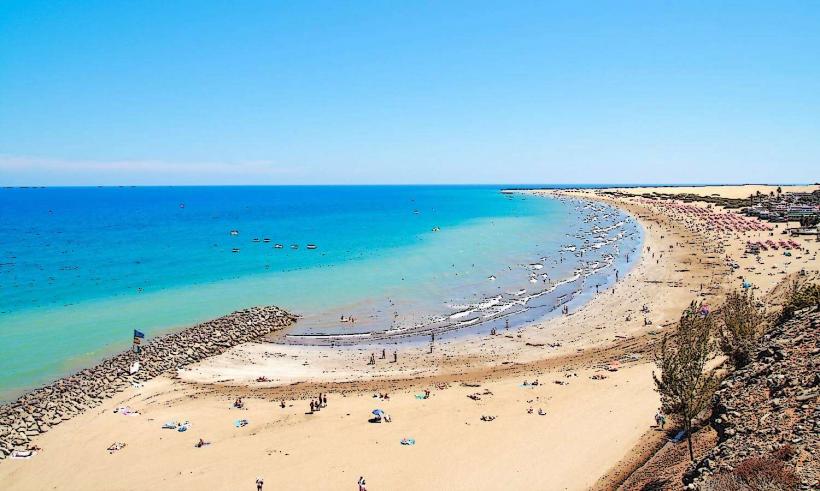
Walking through the designated paths within the dunes is permitted, offering views of the shifting landscape. Birdwatching is possible around the Charca de Maspalomas, particularly during migratory seasons. Sunbathing and swimming are available at the adjacent Maspalomas Beach and Playa del Inglés, which border the dune system.
Infrastructure & Amenities
There are no permanent restrooms or shade structures directly within the dune field itself. Restrooms and food vendors are available at the perimeter, particularly along the promenades of Playa del Inglés and near the Faro de Maspalomas. Cell phone signal (4G/5G) is generally strong throughout the area due to its proximity to developed resort towns.
Best Time to Visit
The early morning (sunrise) or late afternoon (sunset) provides optimal lighting for photography, creating long shadows and enhancing the dune contours. The cooler temperatures during these times are also more comfortable for walking. The months from October to May offer milder weather, avoiding the peak summer heat. No specific tide requirements affect access to the dunes themselves, but the adjacent beaches are affected by tidal cycles.
Facts & Legends
A local belief suggests that the sand of the Maspalomas Dunes was once part of the Sahara Desert, transported across the Atlantic by trade winds. While some Saharan dust does reach the Canary Islands, scientific analysis indicates the dune sand is predominantly local, originating from marine deposits and the island's own geological processes.
Nearby Landmarks
- Faro de Maspalomas (Maspalomas Lighthouse): 0.5km West
- Meloneras Promenade: 1.5km West
- Yumbo Centrum: 3km North
- Playa del Inglés: 0.1km East
- Holiday World Maspalomas: 4km North