Information
Landmark: Mount Moriah CemeteryCity: Deadwood
Country: USA South Dakota
Continent: North America
Mount Moriah Cemetery, Deadwood, USA South Dakota, North America
Origins and Setting
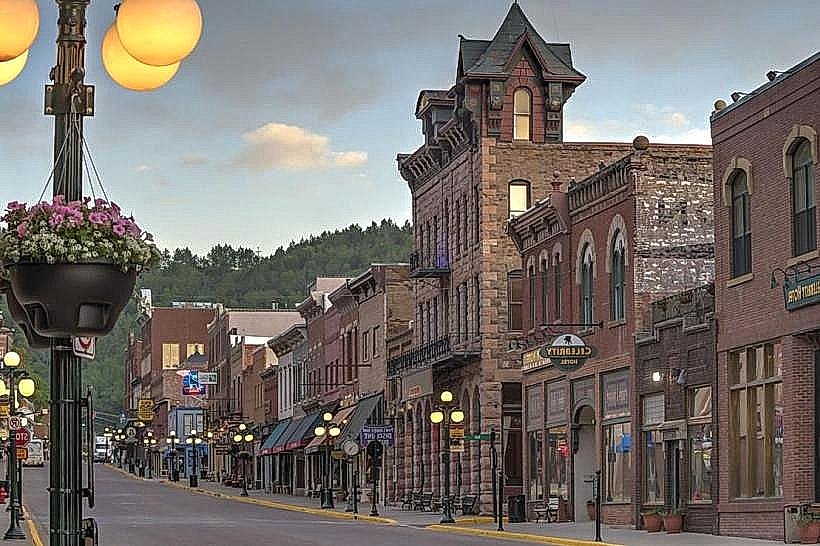
Perched high above the historic streets of Deadwood, Mount Moriah Cemetery is one of the most atmospheric and storied burial grounds in the American West. Established in 1878, it replaced the original Ingleside Cemetery, which had become overcrowded and vulnerable to floods and fires. The city selected this elevated site - set among ponderosa pines and rugged hillsides - to provide a peaceful resting place with commanding views over Deadwood Gulch. The journey up to Mount Moriah, whether by car or a quiet walk along the winding road, feels like a passage from the clamorous gold rush town below to a sanctuary of stillness and memory.
Notable Burials and Legends
Mount Moriah is best known as the final resting place of two frontier legends: Wild Bill Hickok and Calamity Jane. Hickok’s grave, marked by a life-size bronze statue, draws visitors from across the world who come to pay homage to the gambler and gunfighter shot during a poker game in 1876. Just beside him lies Calamity Jane, the daring and eccentric frontierswoman who requested to be buried next to Hickok - a wish honored after her death in 1903. Their adjoining graves, often surrounded by fresh coins, cards, and flowers, have become an enduring symbol of Deadwood’s Wild West lore.
Beyond these iconic figures, the cemetery holds more than 3,400 graves, including those of miners, lawmen, outlaws, and early settlers. Among them are Seth Bullock, the first sheriff of Deadwood and a close friend of Theodore Roosevelt, and W.E. Adams, the philanthropist whose name graces Deadwood’s famed museum. Their headstones, carved from native granite, speak of a time when honor and hardship were inseparable parts of frontier life.
Layout and Atmosphere
Mount Moriah’s layout follows the natural contours of the Black Hills terrain. Narrow, terraced paths wind between weathered markers, iron fences, and clusters of old lilacs that bloom in summer. Each section reflects the cultural mosaic of Deadwood’s early population - Jewish, Chinese, and Masonic plots stand beside the graves of prospectors and pioneers. Interpretive signs guide visitors through these sections, providing context about the people and the times that shaped the town.
The sense of place is powerful. The air carries the scent of pine and sagebrush, and from the higher slopes, one can see the rooftops of Deadwood below framed by the distant ridges of the Black Hills. The cemetery’s quiet is punctuated only by wind through the trees and the occasional chirp of mountain birds - a striking contrast to the rough, bustling streets that once lay below.
Historical Preservation and Visitor Experience
Mount Moriah Cemetery is listed on the National Register of Historic Places and is carefully preserved by the city of Deadwood. Entry requires a small fee that supports ongoing restoration efforts, including maintaining headstones, pathways, and interpretive exhibits. A visitor kiosk near the entrance provides maps highlighting notable burials and short biographies, helping guests navigate the sloped grounds without losing the sense of solemn reflection that defines the site.
Cultural and Symbolic Significance
More than just a cemetery, Mount Moriah serves as a kind of open-air chronicle of the American frontier. It tells the story of a mining camp that rose to fame and infamy, of fortune seekers who lived fiercely and died young, and of a community that gradually turned chaos into permanence. Visiting Mount Moriah feels like stepping into the last chapter of Deadwood’s saga - a quiet place where myth and memory rest side by side beneath the tall pines, overlooking the town that once never slept.