Information
Landmark: Museo de Arte ContemporáneoCity: Lanzarote
Country: Canary Islands
Continent: Europe
Museo de Arte Contemporáneo, Lanzarote, Canary Islands, Europe
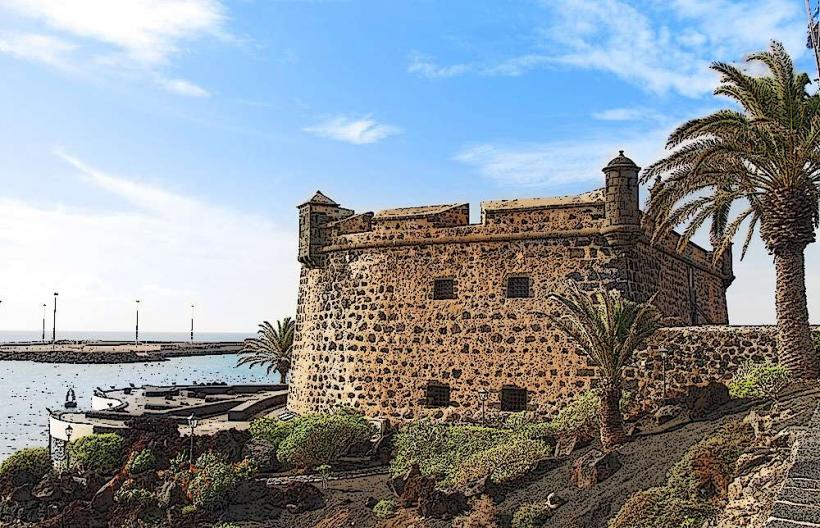
The Museo de Arte Contemporáneo (MIAC) is an art museum housed within the historic Castillo de San José, located on a promontory overlooking the harbor in Arrecife, Lanzarote.
Visual Characteristics
The museum occupies an 18th-century military fortress constructed from dark volcanic stone. Its exterior features thick, defensive walls, battlements, and a functional drawbridge at the entrance, maintaining its original military architecture. The interior spaces have been adapted for art exhibition, contrasting the rugged exterior with modern, minimalist display areas.
Location & Access Logistics
The museum is situated approximately 2.5 km northeast of Arrecife city center, adjacent to the Puerto de los Mármoles. Access is primarily by road via the LZ-1, with a clear turn-off for Calle Castillo de San José. Ample free parking is available directly outside the castle grounds. Public transportation options are limited; a taxi or private vehicle is the most direct method of access.
Historical & Ecological Origin
The Castillo de San José was constructed between 1776 and 1779 under the reign of King Carlos III. Its original purpose was a defensive fortress against pirate incursions and to provide employment for the local population during a period of famine. In 1976, the castle was converted into the Museo Internacional de Arte Contemporáneo (MIAC) by the local artist and architect César Manrique, transforming a military ruin into a cultural institution.
Key Highlights & Activities
Visitors can view a permanent collection of contemporary art, primarily featuring Spanish artists such as Miró, Millares, and Tàpies. The museum also hosts rotating temporary exhibitions. A restaurant, designed by César Manrique, offers panoramic views of the harbor and serves local cuisine.
Infrastructure & Amenities
Restrooms are available on-site within the museum complex. The interior exhibition spaces provide ample shade. Cell phone signal (4G/5G) is generally reliable throughout the area. A restaurant and bar are located inside the museum, offering food and beverage services. There are no external food vendors directly adjacent to the site.
Best Time to Visit
The museum is typically less crowded during the morning hours, shortly after opening. Lanzarote's climate is mild year-round, making any month suitable for a visit. The cooler months from October to May are often preferred by visitors. Natural light enhances some exhibition areas during daylight hours.
Facts & Legends
The castle is historically known as the "Fortress of Hunger" (Fortaleza del Hambre) because its construction provided essential work and sustenance for the local population during a severe drought and famine in the late 18th century. César Manrique's vision transformed this decaying military structure into a significant cultural landmark, integrating art and architecture.
Nearby Landmarks
- Puerto de los Mármoles (0.5km East)
- Arrecife Marina (2.0km Southwest)
- Charco de San Ginés (2.5km Southwest)
- Playa del Reducto (3.0km Southwest)