Information
Landmark: Oia VillageCity: Santorini
Country: Greece
Continent: Europe
Oia Village, Santorini, Greece, Europe
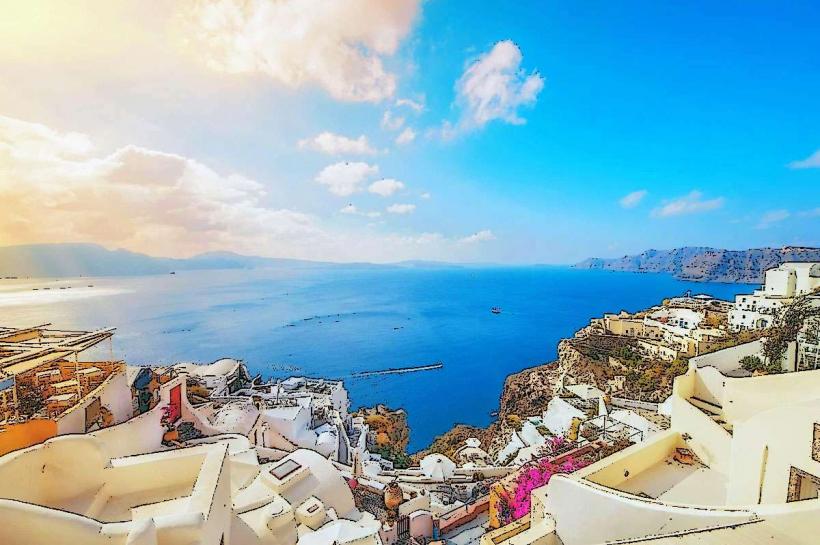
Oia (pronounced "Ee-ah") is a traditional settlement located on the northwestern tip of the island of Santorini (Thira), approximately 150 meters above sea level. It is the most photographed village in the Cyclades, known for its whitewashed architecture built into the steep cliffs of the Caldera.
Visual Characteristics
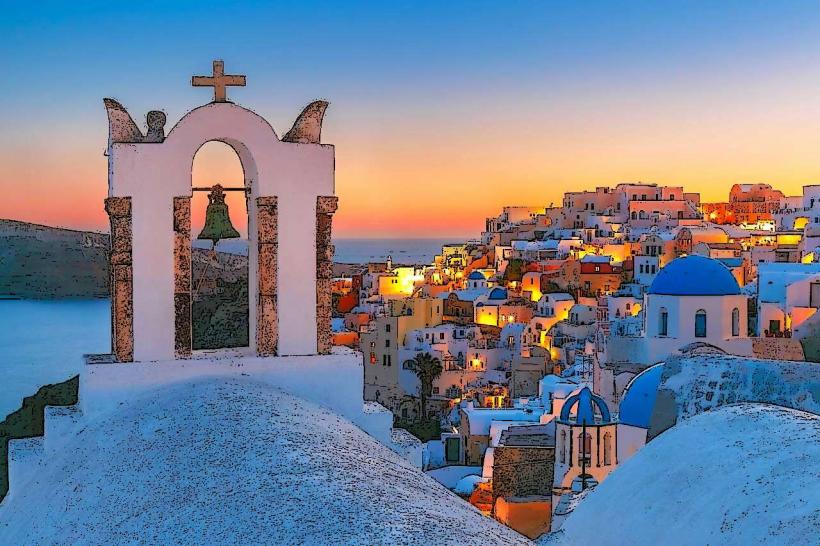
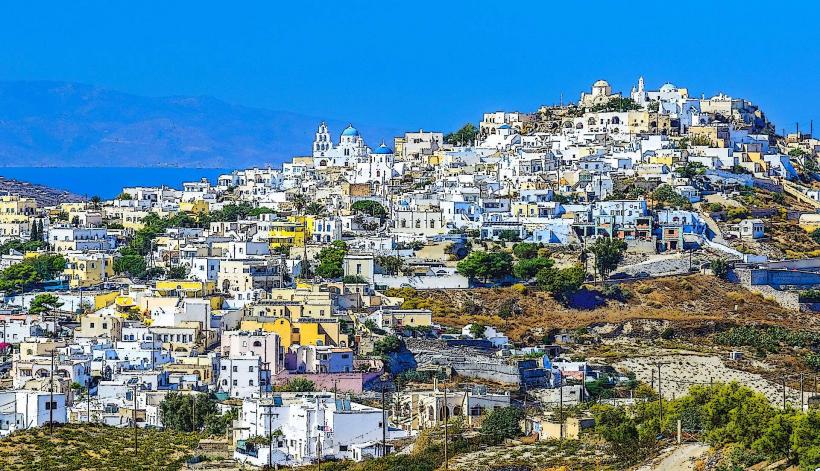
The village is characterized by its "yposkafa" (cave houses) carved into the volcanic rock and "kapetanospita" (captains' mansions) reflecting Venetian influence. The color palette is strictly regulated: white lime-wash dominates, accented by cobalt-blue domes and ochre or terracotta facades. The terrain is a vertical labyrinth of narrow stone paths and stairs, offering views of the submerged volcanic crater.
Location & Access Logistics
Oia is situated at the northern terminus of the island's main road. It is 11km from the capital, Fira, and 17km from Santorini Airport (JTR). Access is via the local KTEL bus (Fira–Oia route) or private vehicle. Due to the high density of pedestrians, the village core is car-free. Public parking is located in designated peripheral lots (e.g., near the Post Office or the Health Center); these reach capacity by 16:00 during peak season.
Historical & Ecological Origin
Oia reached its economic peak in the late 19th and early 20th centuries through its merchant fleet, which traded across the Mediterranean. Much of the village was destroyed by the 1956 Amorgos earthquake, leading to a period of abandonment before it was restored and designated a protected settlement in the 1970s. The ground is composed of reddish-black volcanic ash and pumice.
Key Highlights & Activities
Oia Castle (Londsa): The ruins of a Venetian fortification and the primary gathering point for sunset viewing.
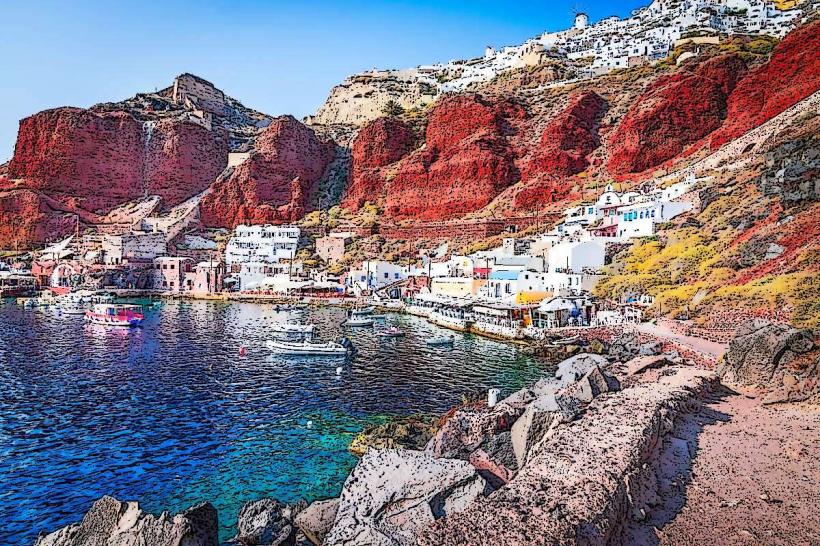
Ammoudi Bay: A small port 278 steps below the village, featuring seafood tavernas and access to swimming areas.
Maritime Museum: Housed in a restored mansion, detailing the island's nautical history.
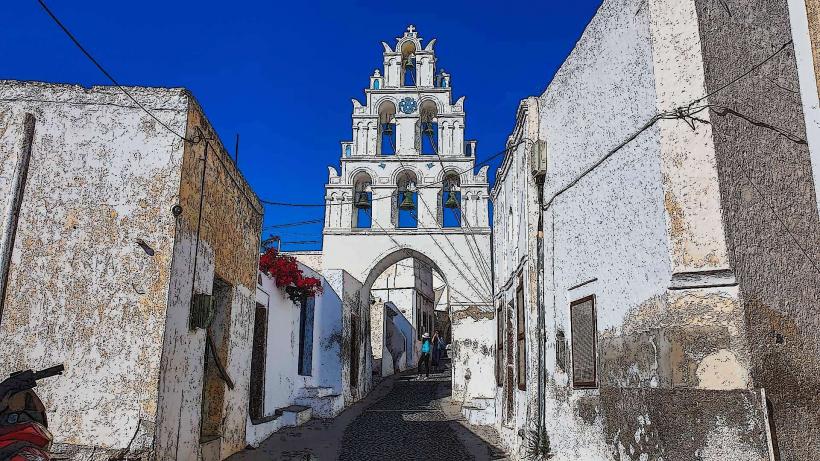
Blue Domed Churches: Specifically the churches of Agios Spyridon and Anastasi, which are central to the village's iconic skyline.
Infrastructure & Amenities
The village contains high-end boutiques, art galleries, and luxury "infinity pool" hotels. Public restrooms are located near the central square (Platsani Church). 5G cellular signal is stable, though data speeds may fluctuate during sunset hours when thousands of users congregate. There is a pharmacy and a local medical clinic at the village entrance.
Best Time to Visit
To avoid extreme overcrowding, explore the village between 07:00 and 10:00. The "Sunset Ritual" at the Castle attracts thousands of tourists simultaneously; visitors seeking a position at the ruins must arrive at least two hours before sundown. From November to March, many businesses close, but the village remains accessible for walking.
Facts & Legends
A verified architectural fact is that the "cave houses" provide natural thermal insulation, staying cool in summer and warm in winter. Local lore suggests that the variety of colors in the captains' houses (unlike the uniform white of the crew houses) was a status symbol to signal the owner's wealth and travels to foreign lands.
Nearby Landmarks
Ammoudi Bay: 0.3km West (downstairs)
Finikia Village: 1.5km East
Imerovigli: 9km Southeast (accessible via the Caldera hiking trail)
Armeni Bay: 0.4km South (accessible by boat or stairs)