Information
Landmark: Parc de la Chute-MontmorencyCity: Quebec City
Country: Canada
Continent: North America
Parc de la Chute-Montmorency, Quebec City, Canada, North America
Parc de la Chute-Montmorency is a provincial park located 13 kilometers east of Quebec City, Canada, featuring a prominent waterfall.
Visual Characteristics
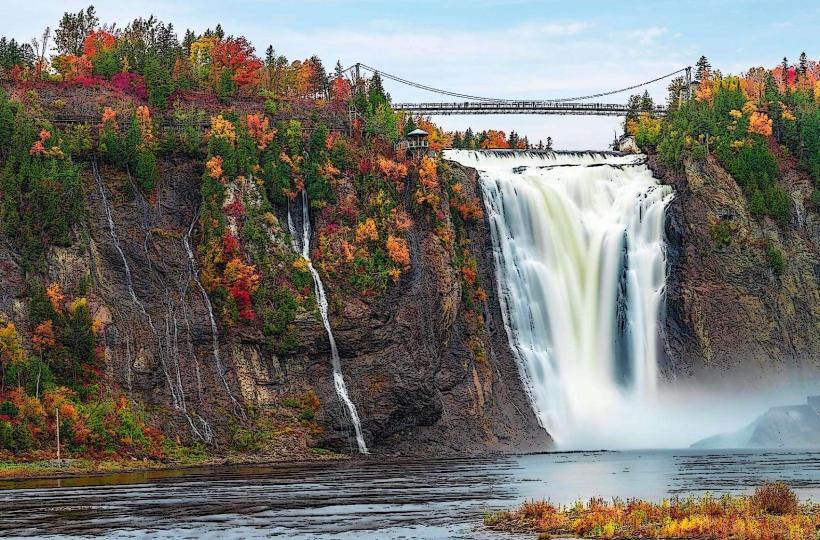
The park's central feature is the Montmorency Falls, a waterfall that drops 83 meters (272 feet) over a cliff face composed of sedimentary rock. The falls are approximately 46 meters (150 feet) wide at their crest. The surrounding vegetation consists of deciduous and coniferous trees. A suspension bridge spans the Montmorency River above the falls.
Location & Access Logistics
The park is accessible via Autoroute 440 East, exiting onto Boulevard Sainte-Anne. It is approximately a 20-minute drive from Quebec City's downtown core. Ample parking is available on-site, with designated areas for cars and buses. Public transport options include the RTC bus line 280, which stops at the park entrance.
Historical & Ecological Origin
The Montmorency Falls are a result of glacial erosion and the geological formation of the St. Lawrence River valley. The park was established to preserve the natural beauty and provide public access to the falls. The area has been a point of interest since the 17th century.
Key Highlights & Activities
Visitors can ascend to the top of the falls via a cable car. A staircase with 300 steps runs alongside the waterfall, providing access to the lower viewing area. The suspension bridge offers views of the falls and the St. Lawrence River. Hiking trails are available throughout the park. Picnicking is permitted in designated areas.
Infrastructure & Amenities
Restrooms are available at the visitor center and near the cable car station. Shade is provided by trees in picnic areas. Cell phone signal (4G/5G) is generally available within the park. Food services, including a restaurant and snack bars, operate seasonally at the base and top of the falls.
Best Time to Visit
For photography, early morning or late afternoon light offers optimal conditions. The best months for visiting are from May to October, when the weather is generally mild and all facilities are operational. In winter, the frozen falls can create ice formations, but access may be limited.
Facts & Legends
During winter, the spray from the falls can freeze, creating a large cone of ice known as the "ice cone." Visitors can climb this formation in certain years when conditions permit. The park was a strategic location during the Battle of Quebec in 1759.
Nearby Landmarks
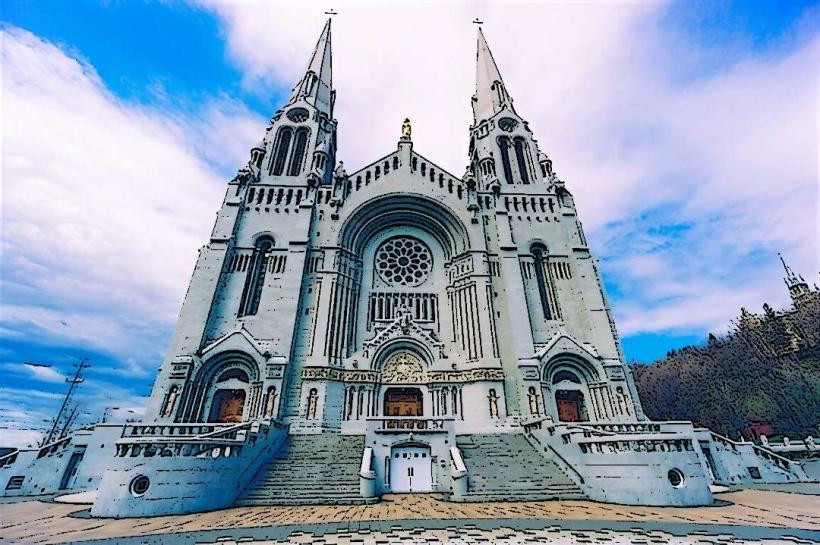
- Basilica of Sainte-Anne-de-Beaupré (3.5km East)
- Île d'Orléans (Access point 2km West)
- Plains of Abraham (12km West)
- Musée de la civilisation (13km West)