Information
Landmark: RådhusparkenCity: Aarhus
Country: Denmark
Continent: Europe
Rådhusparken, Aarhus, Denmark, Europe
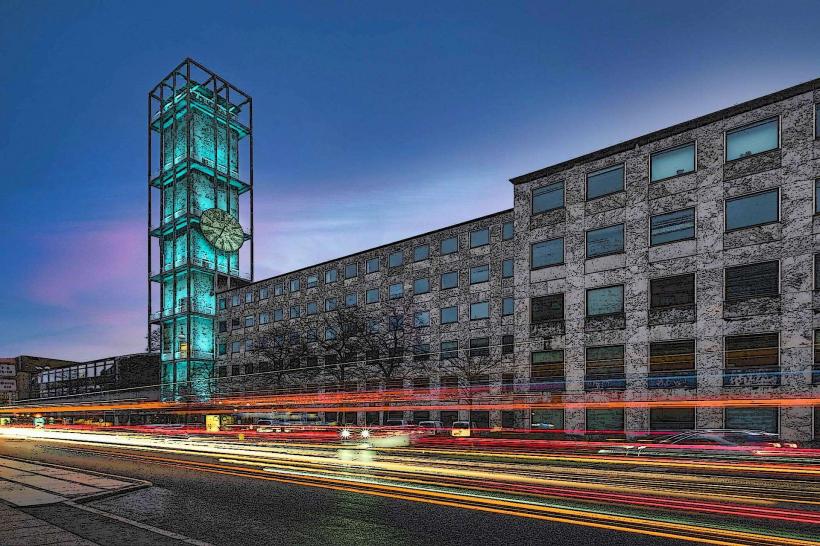
Rådhusparken is a public park situated directly adjacent to Aarhus-city-hall_aarhus" class="underline">Aarhus City Hall in the central district of Aarhus, Denmark. It functions as a green urban space for public use and complements the modernist architecture of the City Hall building.
Visual Characteristics
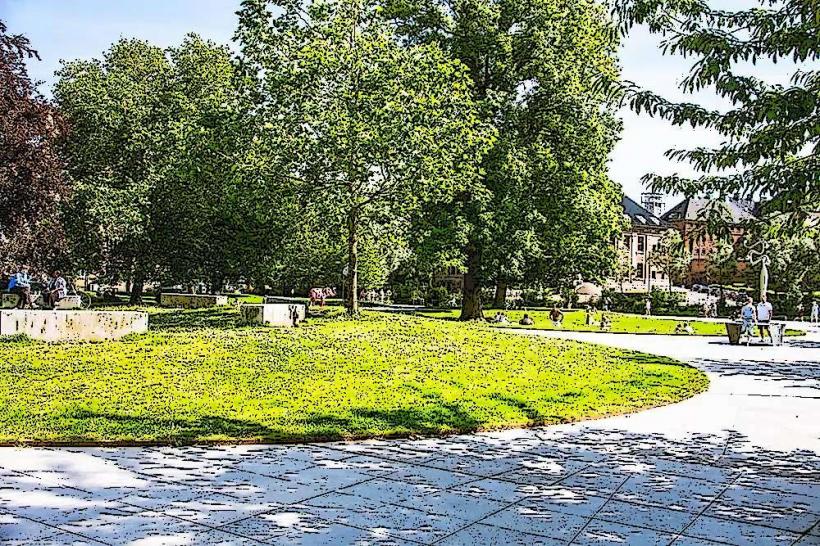
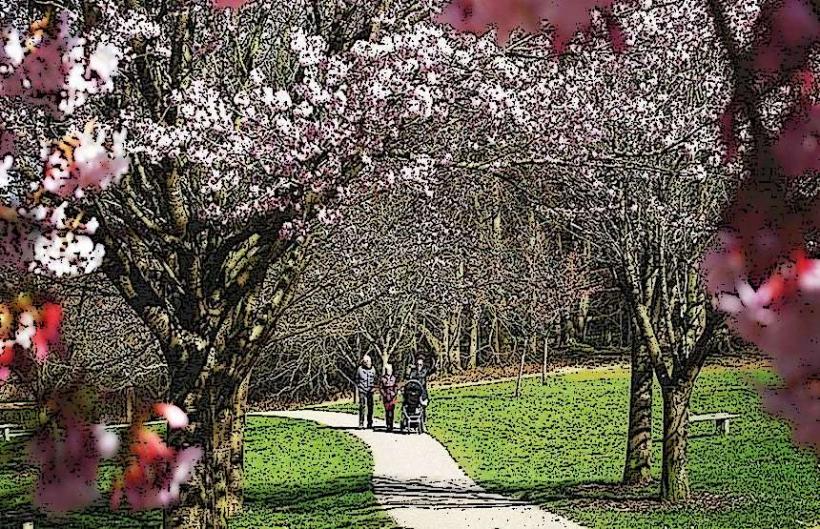
The park features expansive lawn areas, mature trees, and paved pathways. Its design is characterized by clean lines and open spaces, reflecting the functionalist aesthetic of the adjacent City Hall. Key elements include a large rectangular pond with fountains and several sculptures, such as the "Agnete and the Merman" by Johannes Bjerg. The park's elevation is generally flat, providing unobstructed views of the City Hall's distinctive clock tower and copper roof.
Location & Access Logistics
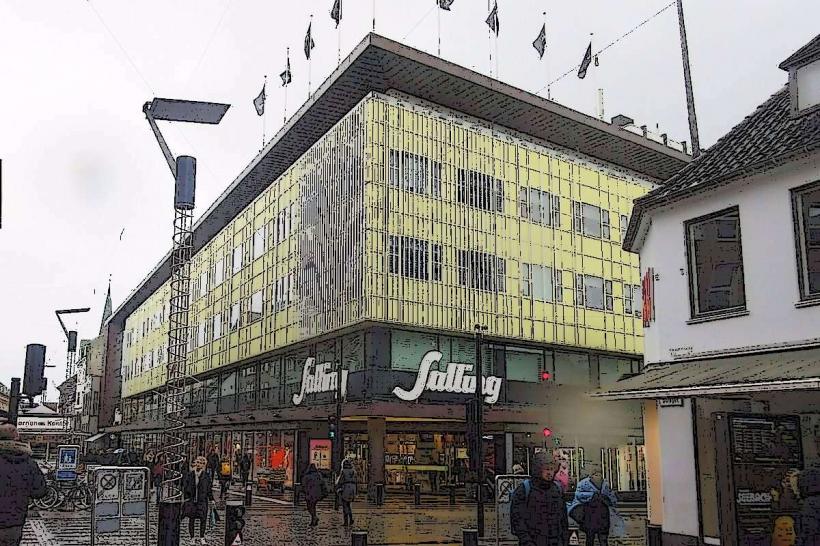
Rådhusparken is centrally located at Rådhuspladsen in Aarhus. It is directly accessible from Park Allé and Sønder Allé. The park is situated immediately next to Aarhus Hovedbanegård (Central Station), making it highly accessible by train. Numerous city bus lines stop at Rådhuspladsen, including lines 1A, 2A, 3A, 4A, 11, 13, 14, 15, 16, 17, 18, 19, and 100. The Aarhus Letbane (light rail) also has a stop at Park Allé, adjacent to the park. Public parking garages, such as those at Salling and Magasin du Nord, are available within a 0.5km radius.
Historical & Ecological Origin
Rådhusparken was established and opened in 1941, concurrently with the completion of the new Aarhus City Hall. The park's design was a collaborative effort between the City Hall architects, Arne Jacobsen and Erik Møller, and landscape architect C.Th. Sørensen. Its original purpose was to provide a formal green space that integrated with and enhanced the architectural presence of the municipal building, offering a public amenity in the city center.
Key Highlights & Activities
Visitors can engage in casual strolls along the park's pathways. Relaxation on the lawns and benches is common. The park is suitable for picnicking during warmer months. Observing the modernist architecture of Aarhus City Hall from various vantage points within the park is a primary activity. The park also hosts occasional public events and gatherings.
Infrastructure & Amenities
Public restrooms are not directly within the park but are available inside the adjacent Aarhus City Hall during opening hours, or in nearby commercial establishments. The park offers natural shade from its mature trees. Cell phone signal (4G/5G) is consistently strong throughout the park due to its central urban location. While no permanent food vendors operate within the park itself, numerous cafes and restaurants are located on the surrounding streets.
Best Time to Visit
The park is accessible year-round. The months of May through September offer the most favorable weather conditions for outdoor enjoyment, with full foliage and blooming plants. Late afternoon provides optimal lighting for photography of the Aarhus City Hall, particularly highlighting its facade and tower. There are no specific tide requirements for visiting the park.
Facts & Legends
The park's design is considered an integral component of the overall modernist masterpiece that is Aarhus City Hall, emphasizing functionality and clean aesthetics. The park features a memorial stone commemorating the liberation of Denmark in 1945. A unique tip for visitors is to observe the subtle integration of art and nature, particularly the sculptures, which are positioned to complement the architectural lines of the surrounding buildings.
Nearby Landmarks
- Aarhus City Hall: 0km (Adjacent)
- Aarhus Hovedbanegård (Central Station): 0.2km South
- Musikhuset Aarhus (Concert Hall): 0.3km West
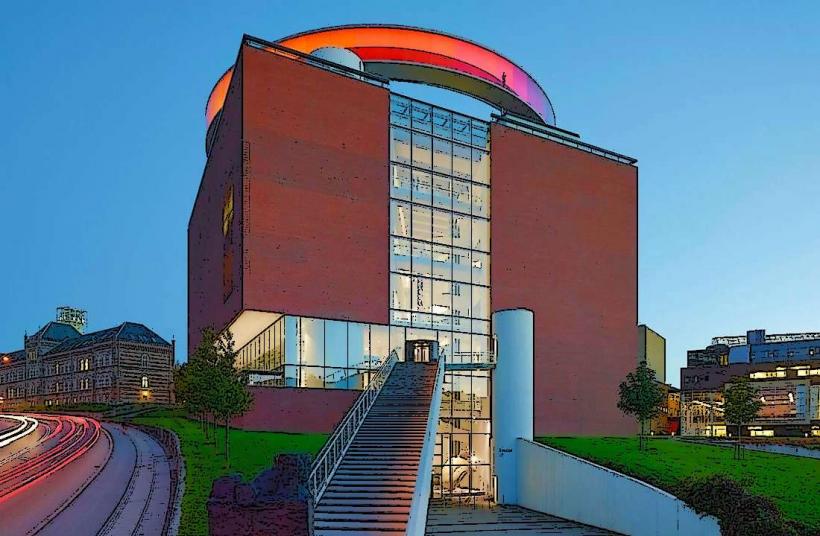
- ARoS Aarhus Art Museum: 0.5km Northwest
- Strøget (Main Shopping Street): 0.1km North