Information
Landmark: Roman MosaicsCity: Constanta
Country: Romania
Continent: Europe
Roman Mosaics, Constanta, Romania, Europe
The Roman Mosaics are an extensive archaeological site featuring well-preserved floor mosaics from the Roman and early Byzantine periods, located in the city of Constanta, Romania.
This complex represents one of the largest and best-preserved mosaic floors discovered in the Balkan region.
Visual Characteristics
The site displays a large, multi-level mosaic floor constructed from small, colored stone tesserae. The patterns include geometric designs, animal figures, and mythological scenes. The exposed sections reveal varying states of preservation, with some areas showing intricate detail and others exhibiting erosion. The colors range from white, black, and red to shades of ochre and blue. The structure is partially covered by a protective canopy.
Location & Access Logistics
The Roman Mosaics are situated in the central-western part of Constanta, approximately 1.5km from the Constanta Port. Access is via Strada Vasile Canarache. Limited street parking is available in the vicinity. Public transport options include bus lines 101 and 102, which stop within a 5-minute walk of the site.
Historical & Ecological Origin
The mosaics date primarily from the 4th century AD, during the Roman Empire's administration of the region. They formed the floor of a large public building, likely a commercial or administrative complex, known as the Edificiu Roman cu Mozaic. The site was excavated in the 20th century.
Key Highlights & Activities
Visitors can observe the exposed mosaic floors, noting the different sections and their thematic content. Interpretive panels provide information on the historical context and the depicted imagery. Walking paths allow for close examination of the tesserae and patterns.
Infrastructure & Amenities
Restrooms are available on-site. Shaded areas are provided by the protective canopy. Cell phone signal (4G/5G) is generally good within the site. No food vendors are located directly at the Roman Mosaics; however, numerous options exist in the surrounding city center.
Best Time to Visit
The best time for photography is during midday when direct sunlight illuminates the tesserae clearly. The site is accessible year-round, but outdoor conditions are most favorable during spring (April-May) and autumn (September-October) due to moderate temperatures.
Facts & Legends
A specific detail of interest is the presence of a section depicting marine life, reflecting Constanta's historical importance as a port city. The sheer scale of the mosaic suggests it was a significant structure within the ancient city of Tomis.
Nearby Landmarks
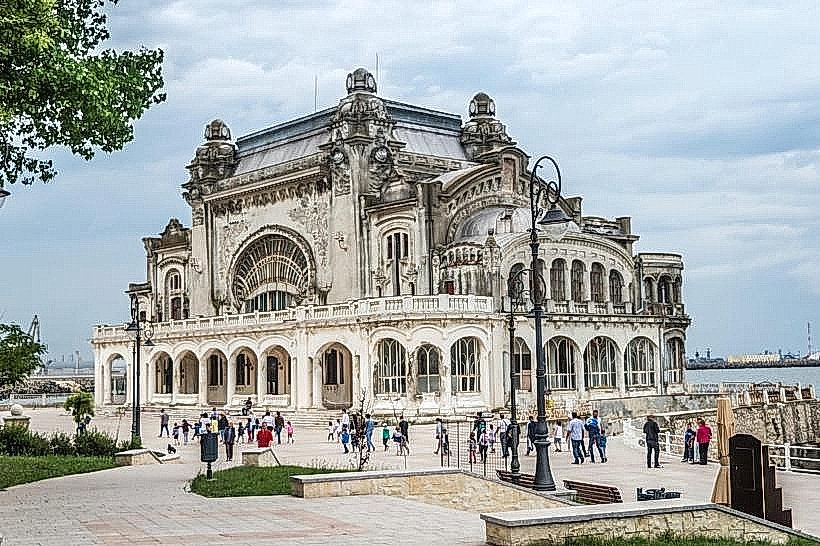
- Constanta Casino (0.8km East)
- Archaeology Museum Constanta (0.6km Southeast)
- Ovid Square (0.7km East)
- Saint Andrew's Cave Monastery (25km Southwest - outside 5km radius, but significant regional site)
- Tomis Port (1.5km East)