Information
Landmark: Salt Lake City Public LibraryCity: Salt Lake City
Country: USA Utah
Continent: North America
Salt Lake City Public Library, Salt Lake City, USA Utah, North America
The Salt Lake City Public Library, formally known as the Main Library of the Salt Lake City Public Library System, is one of the most architecturally celebrated and community-centered buildings in the American West. Located on 200 East and 400 South in downtown Salt Lake City, the library is not only a haven for readers but also a striking example of modern civic design. Its sweeping glass façade, rooftop gardens, and open public spaces make it both a cultural landmark and a gathering place for residents and visitors alike.
Architectural Vision and Design
Completed in 2003, the Main Library was designed by internationally acclaimed architect Moshe Safdie, whose works are known for blending bold geometry with human warmth. His vision for Salt Lake City’s library was simple yet profound: to create a “library without walls,” where knowledge, light, and community flow seamlessly together.
The result is a five-story glass and limestone structure enclosed by a dramatic curved wall that wraps around an open public plaza. The building’s transparency allows natural light to flood nearly every corner, reducing the boundary between interior and exterior. From the outside, the library resembles a luminous arc rising from the earth; from within, it feels like a living organism made of glass, air, and light.
The atrium, which stretches the full height of the building, is the architectural heart of the space. Here, glass elevators glide upward alongside reading terraces, cafés, and art displays. Every level overlooks the open central space, fostering a sense of community and connection.
Interior Spaces and Atmosphere
Stepping inside, visitors are greeted by the scent of paper, coffee, and polished wood, mingling with the soft murmur of voices and the hum of quiet activity. The library houses over 500,000 volumes across its five floors, but it feels more like a civic plaza than a traditional book hall.
The ground floor serves as the social hub, featuring The Library Store, a cozy café, and rotating art exhibits curated by local artists. Ascending through the glass staircases or elevators, one encounters specialized reading areas - from children’s storytelling corners to high-tech computer labs and quiet study nooks that overlook the city. The Technology Center provides 3D printing, podcasting studios, and digital literacy programs, making the library a bridge between the literary and the digital world.
On the fifth floor, the Reading Room stretches beneath high glass panels that capture sunlight from dawn to dusk. The room’s serene silence contrasts beautifully with the vibrant buzz of the lower levels, offering one of the most peaceful spots in Salt Lake City to read or think.
Rooftop Garden and City Views
Perhaps the most unexpected feature of the Salt Lake City Public Library is its rooftop garden, a 360-degree panorama of the city and surrounding mountains. Designed by landscape architect Peter Walker, the rooftop integrates native Utah plants, winding gravel paths, and shaded benches. Visitors can stroll among lavender, sagebrush, and ornamental grasses while gazing toward the Wasatch and Oquirrh ranges. The garden also features solar panels, reflecting the city’s commitment to sustainability.
From this vantage point, the city unfolds in all directions - the Wasatch Mountains rising sharply to the east, the Salt Lake Valley stretching to the west, and the spires of the Salt Lake Temple glinting in the distance.
Public Plaza and Community Life
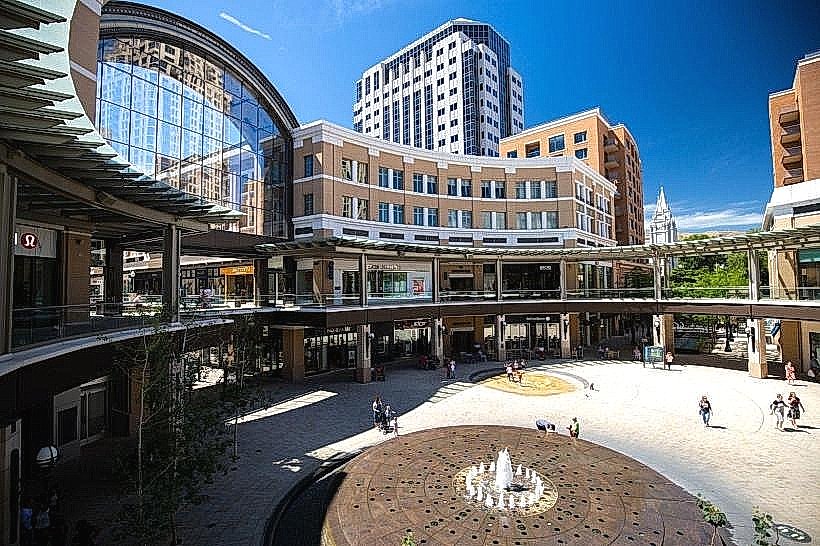
Outside the main structure lies the library plaza, a vibrant urban space designed for year-round activity. The curved limestone wall that defines the plaza doubles as both an architectural statement and a functional promenade. Its broad steps invite people to sit, talk, or watch open-air performances. Small shops, cafés, and art installations line the lower portion of the wall, giving the area a lively, European-style ambiance.
Throughout the year, the plaza hosts farmers’ markets, concerts, author talks, art fairs, and film screenings. In winter, twinkling lights transform the space into a festive gathering spot, while in summer, the plaza buzzes with outdoor yoga sessions and evening music. This blend of civic life and cultural expression fulfills Safdie’s vision of the library as the city’s living room - a democratic space that welcomes everyone.
Art, Light, and Philosophy
Art is woven into the very fabric of the library. Sculptures, installations, and murals by local and international artists occupy niches, walls, and stairwells. The building’s design itself feels like art in motion - at different times of day, sunlight shifts through the glass walls, casting changing patterns across the marble floors.
Moshe Safdie intended the library to evoke both transparency and enlightenment - an architectural metaphor for the pursuit of knowledge. The extensive use of glass symbolizes openness and accessibility, reinforcing the idea that information should be free and visible, not confined or hidden.
Recognition and Awards
Since its opening, the Salt Lake City Public Library has earned wide acclaim. It received the American Institute of Architects (AIA) Honor Award for Architecture and has been listed among the most beautiful libraries in the world by numerous publications. Beyond its aesthetics, it stands as a model of civic engagement, sustainability, and architectural harmony.
Legacy and Experience
The library has become much more than a repository of books - it’s a cultural hub, a community forum, and a symbol of modern Salt Lake City’s identity. On any given day, you might find a poet reading to a small crowd in the atrium, a student studying beneath the skylight, children gathered for storytelling, and photographers capturing reflections off the glass.
To walk through the Salt Lake City Public Library is to move through layers of light, knowledge, and community. It embodies the idea that a library can be both a sanctuary for solitude and a stage for connection - a beacon of openness in a city that continues to balance its pioneer roots with modern innovation.