Information
Landmark: Sea OrganCity: Zadar
Country: Croatia
Continent: Europe
Sea Organ, Zadar, Croatia, Europe
The Sea Organ is an experimental architectural object and musical instrument situated on the northwestern tip of the Zadar peninsula in Croatia. It consists of a series of stone stairs that descend into the Adriatic Sea, concealing a system of polyethylene pipes and a resonant cavity that transform wave energy into sound.
Visual Characteristics
The structure appears as a set of broad, white stone steps extending 70 meters along the coastline, constructed from local Brač marble. Perforations are visible in the vertical rises of the upper steps, which serve as exit ports for the sound. Beneath the water's surface, the sea-facing ends of the pipes are exposed to the movement of the tide and waves, while the visible stone surface is smooth, monochromatic, and integrated into the surrounding promenade.
Location & Access Logistics
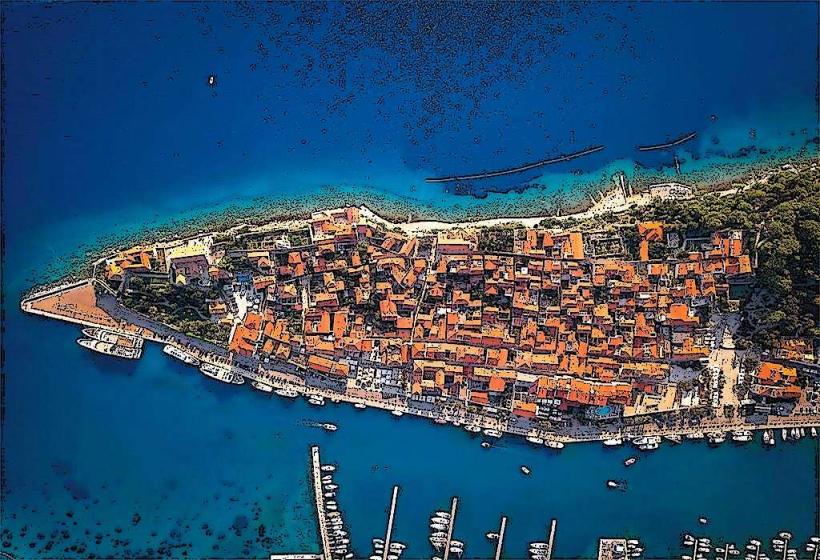
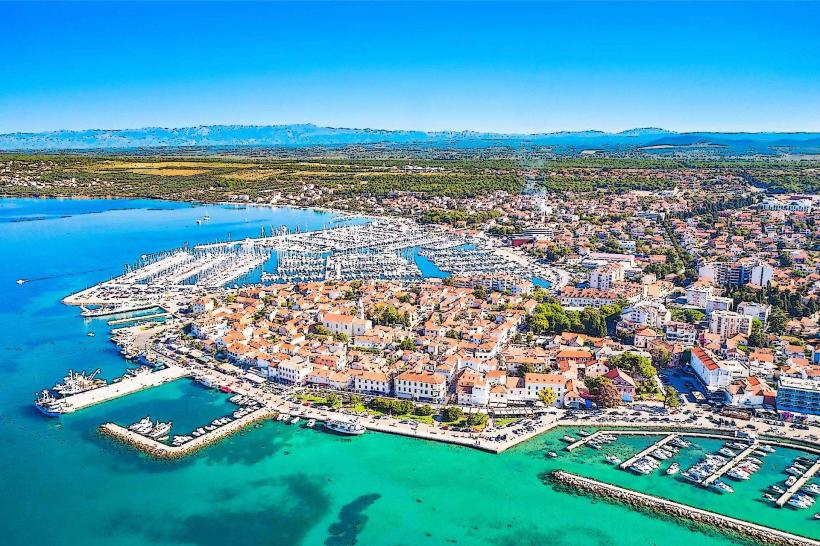
The landmark is located at the end of the Obala kralja Petra Krešimira IV promenade. It is a 10-minute walk (0.8km) from the central Narodni trg (People's Square). The site is accessible via the "Poluotok" pedestrian zone; the nearest public parking is located at the Zadar waterfront (Riva). Local bus lines stop at the main terminal near the city walls, approximately 1.2km away.
Historical & Ecological Origin
Designed by architect Nikola Bašić as part of a project to redesign the city's coastal front (Nova riva), the Sea Organ was completed in 2005. It was built to replace a plain concrete sea wall damaged during World War II. The instrument utilizes the principles of a pipe organ, where the influx of seawater pushes air through 35 tubes of varying lengths and diameters to create harmonic chords.
Key Highlights & Activities
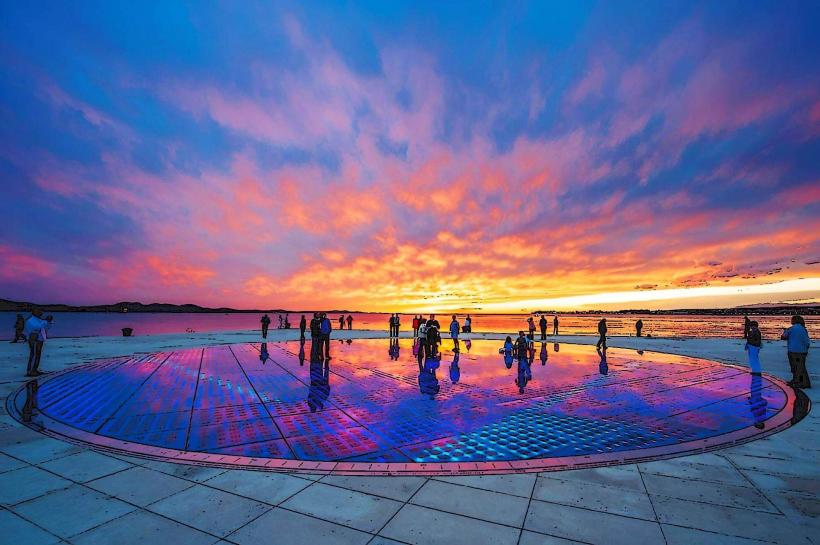
Visitors typically sit on the stone steps to listen to the continuous, wave-driven musical compositions. The site is a primary location for observing the sunset over the Zadar Channel and the islands of Ugljan and Pašman. Walking along the adjacent promenade leads directly to the Greeting to the Sun installation.
Infrastructure & Amenities
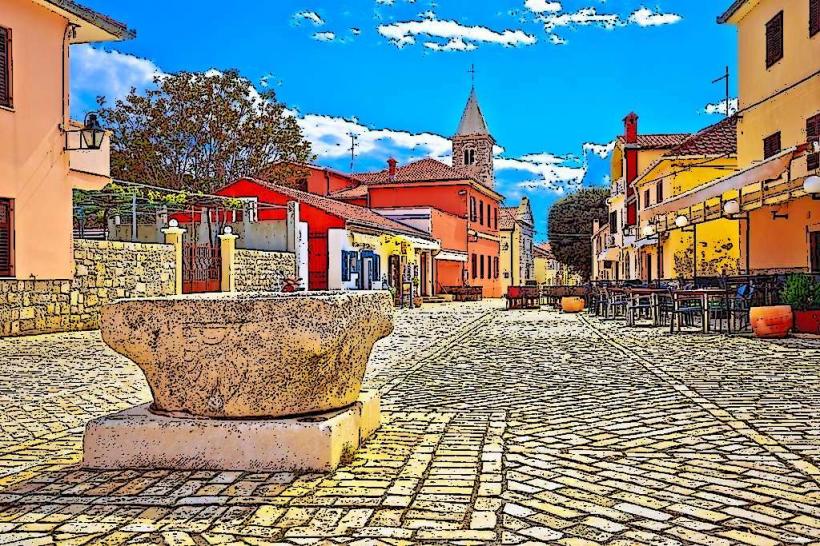
The area is an open public space with no entrance fees or physical barriers. Public restrooms are located 200 meters away near the ferry terminal. Shade is non-existent on the steps, though the surrounding park area contains trees. 5G cell signal is strong. Numerous cafes and restaurants are located within the adjacent Old Town streets, less than a 5-minute walk away.
Best Time to Visit
The acoustic output is most prominent during periods of high sea activity or when large ferries pass by, creating significant wake. The best time for photography is at sunset (the "Golden Hour") for light quality and silhouette shots. Early morning (06:00–08:00) offers the lowest crowd density and a clearer audio experience of the lower-frequency notes.
Facts & Legends
The Sea Organ received the European Prize for Urban Public Space in 2006. A unique technical detail is that the organ is tuned to five different tones and seven chords characteristic of traditional Dalmatian klapa singing. Local residents often refer to the sound as "the voice of the sea," and it is one of the few musical instruments in the world played entirely by nature without human intervention.
Nearby Landmarks
The Greeting to the Sun – 0.02km North
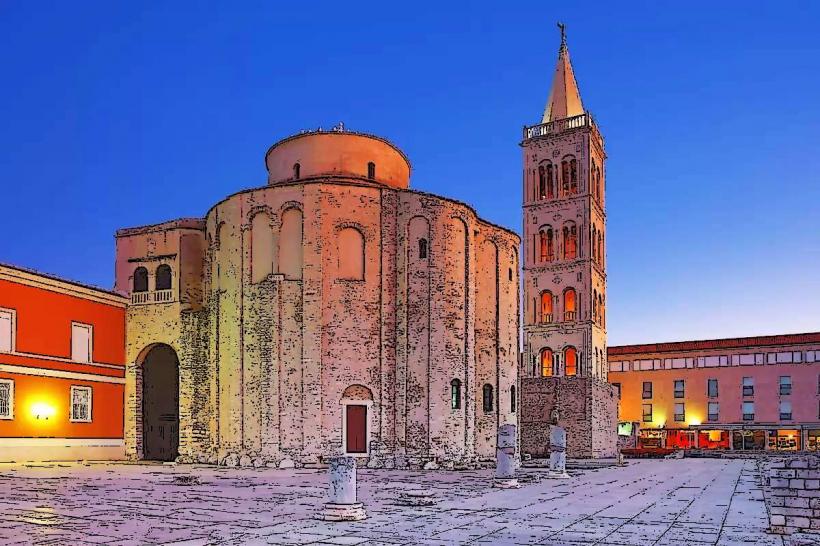
St. Donatus Church – 0.45km Southeast
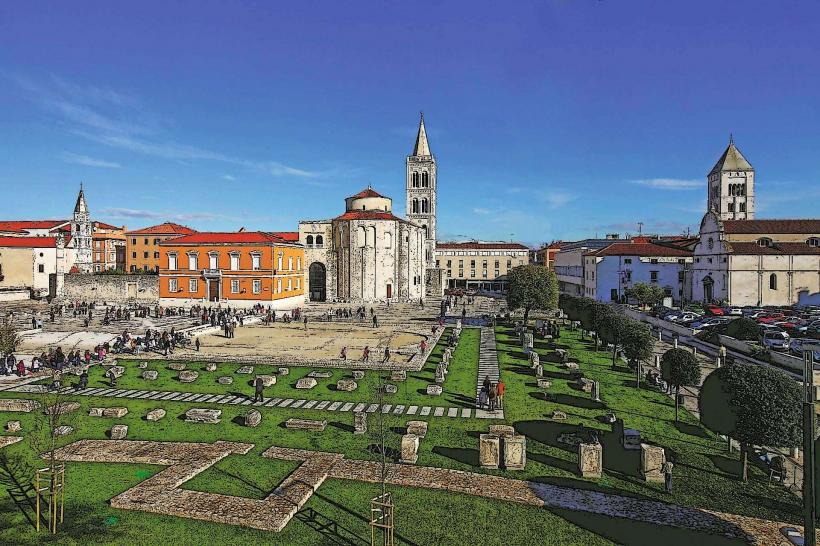
Zadar Roman Forum – 0.45km Southeast
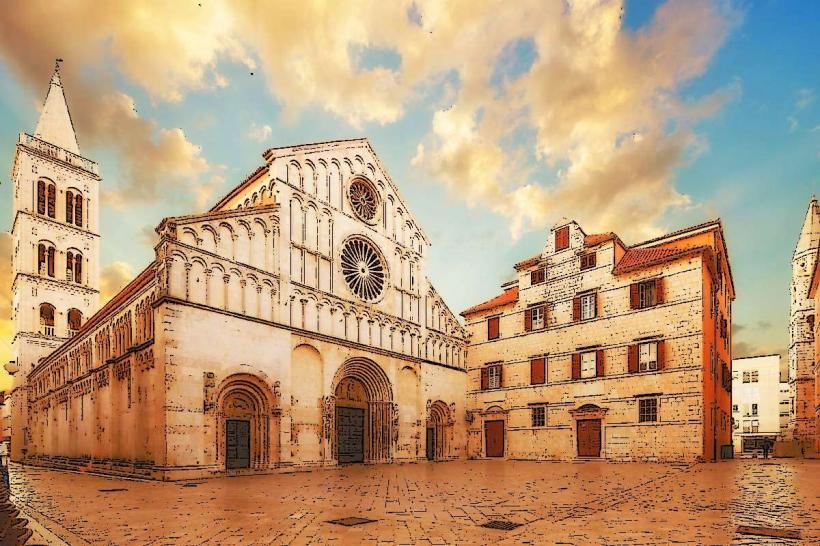
St. Anastasia's Cathedral – 0.4km Southeast
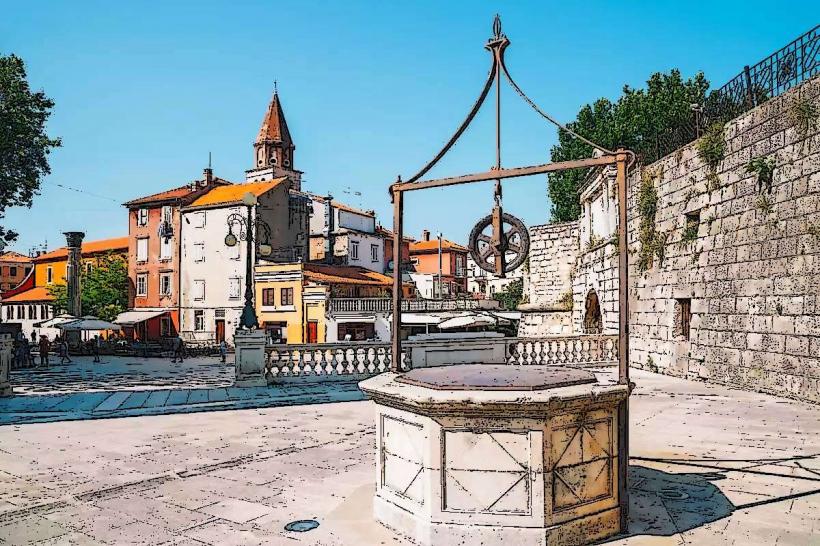
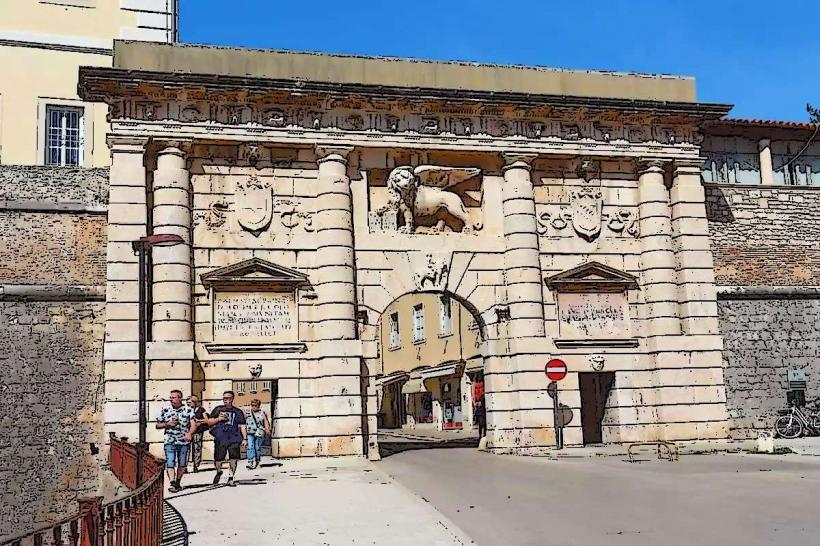
Sea Gate – 0.6km Southeast