Information
Landmark: St. Hallvards ChurchCity: Oslo
Country: Norway
Continent: Europe
St. Hallvards Church, Oslo, Norway, Europe
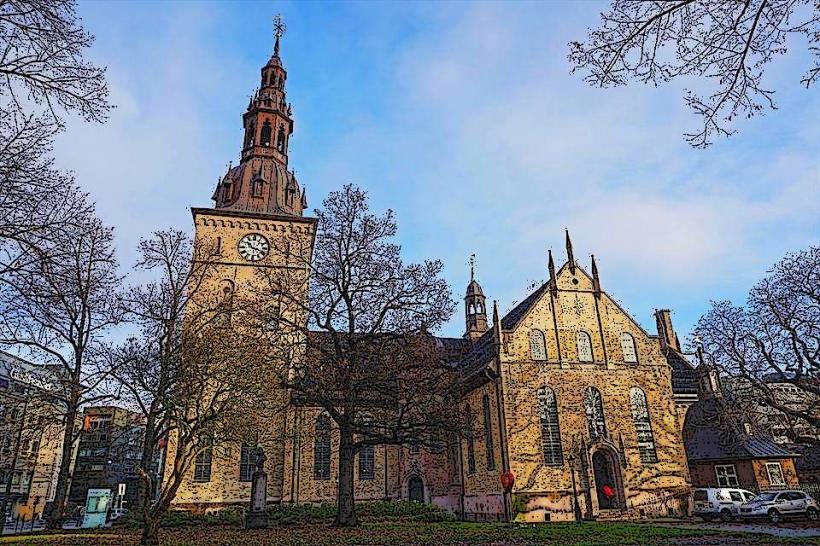
The St. Hallvards Church is a medieval cathedral ruin located in Gamlebyen (Old Town), Oslo, Norway. It served as the primary church and episcopal seat of Oslo during the Middle Ages.
Visual Characteristics
The ruins consist primarily of limestone and granite foundations, partial walls, and arched fragments. The remaining structures showcase elements of Romanesque and early Gothic architectural styles. The visible remnants include parts of the nave, choir, and transept, indicating a substantial original footprint. The stone varies in color from light grey to darker, weathered tones, with some sections revealing intricate masonry work.
Location & Access Logistics
The site is situated approximately 1.5 kilometers southeast of Oslo Central Station (Oslo S). It is accessible via Oslo gate and Ekebergveien. Public transport options include tram lines 18 and 19, which stop at St. Halvards plass, directly adjacent to the ruins. Several bus lines also serve the Gamlebyen area. Limited street parking is available on surrounding roads, but public transport is recommended due to restricted availability.
Historical & Ecological Origin
Construction of St. Hallvards Church began in the early 12th century, with its consecration occurring around 1130. The architect and builders are unknown, typical for the period. Its original purpose was to serve as the cathedral for the Diocese of Oslo and as the burial site for Saint Hallvard, the patron saint of Oslo. The church remained the city's main cathedral until it was replaced by Oslo Cathedral in 1669, after which it fell into disrepair and became a ruin.
Key Highlights & Activities
Visitors can explore the remaining stone foundations and wall sections of the medieval cathedral. The site offers an opportunity to visualize the layout of a significant religious structure from medieval Oslo. Information boards provide historical context regarding the church's role and the archaeological findings. The surrounding Middelalderparken (Medieval Park) allows for further exploration of the historical landscape.
Infrastructure & Amenities
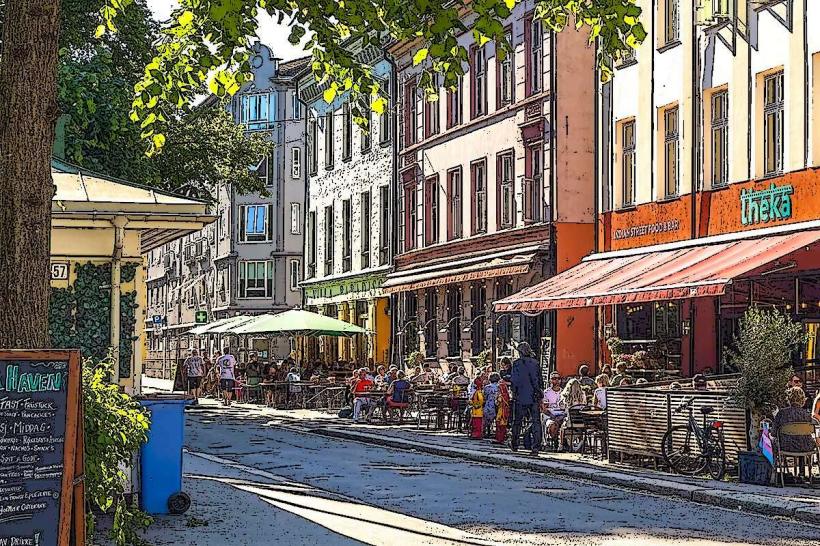
The site itself, being an open-air ruin, does not feature dedicated restrooms or permanent shade structures. Cell phone signal (4G/5G) is generally strong throughout the area. Food vendors and cafes are available within a short walking distance in the surrounding Gamlebyen district, but not directly at the ruins.
Best Time to Visit
The best time to visit for optimal weather conditions is during the summer months, from June to August. Photography is best in the morning or late afternoon when the sun is lower, providing softer light and longer shadows that highlight the architectural details of the ruins. The site is accessible during daylight hours, and no specific tide requirements apply.
Facts & Legends
St. Hallvard, the patron saint of Oslo, was a young man who, according to legend, was killed in the 11th century while attempting to protect a pregnant woman from attackers. His body, weighted with a millstone, was said to have floated across the Drammensfjord, a miracle that led to his veneration. The cathedral was built over what was believed to be his original burial site, and his relics were housed within the church until the Reformation.
Nearby Landmarks
- Middelalderparken (Medieval Park) - 0.1km East
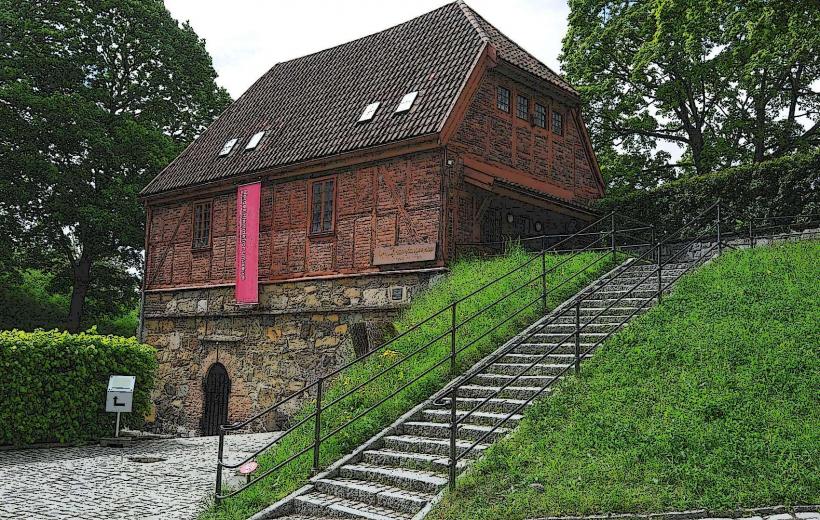
- Ladegården - 0.2km North
- Gamlebyen Church (Old Town Church) - 0.3km East
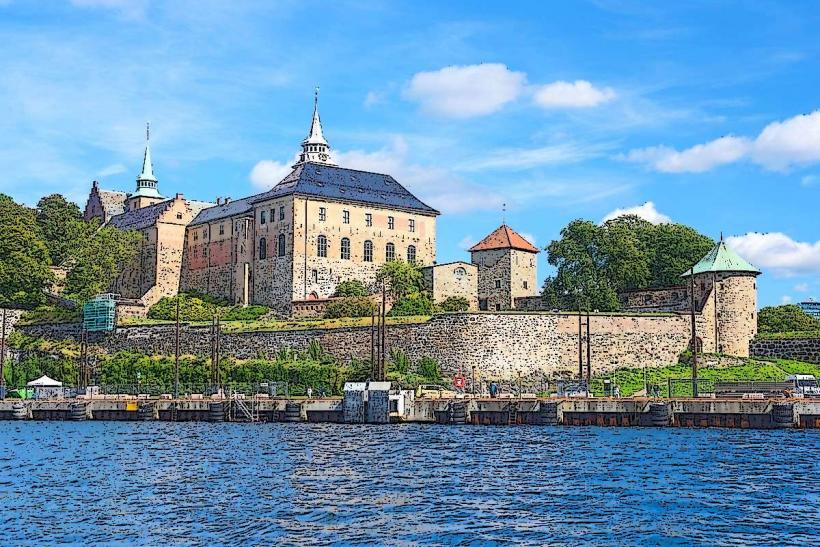
- Akershus Fortress - 1.5km West
- Munch Museum - 1.5km North