Information
Landmark: St. Louis Old CourthouseCity: St Louis
Country: USA Missouri
Continent: North America
St. Louis Old Courthouse, St Louis, USA Missouri, North America
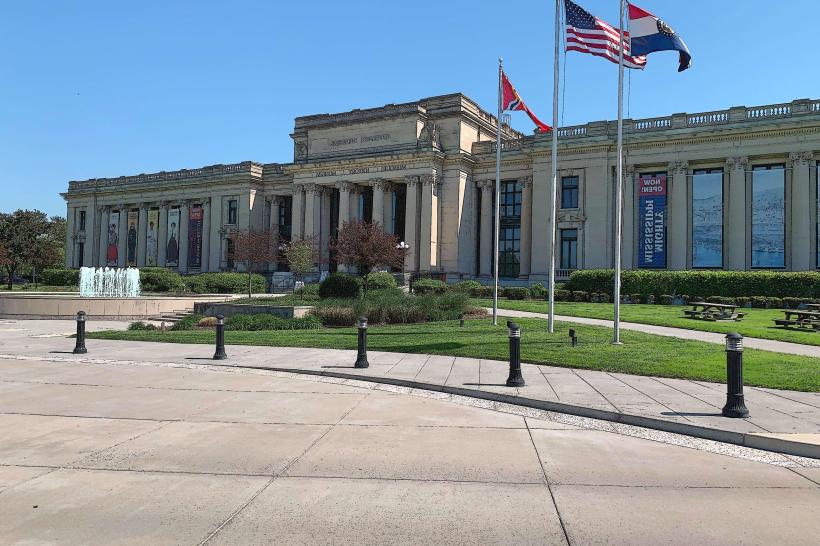
The Old Courthouse in St. Louis, Missouri, is one of the most historically and architecturally significant buildings in the American Midwest. It is part of the Gateway Arch National Park and stands as a physical testament to major legal and civil rights milestones in U.S. history, particularly the fight against slavery and the early movement for women’s suffrage.
Historical Background
The Old Courthouse was originally constructed in 1828 in the Federal style. Over the following decades, it underwent multiple expansions and redesigns, resulting in its current Greek Revival and Italian Renaissance architectural blend. The most iconic feature-the cast-iron dome-was completed in 1864, inspired by St. Peter’s Basilica in Rome and the U.S. Capitol. At the time, it was the tallest building in Missouri.
The courthouse served as the center for civil and criminal justice in St. Louis until 1930. After that, it was preserved for its historical importance.
Landmark Legal Cases
1. Dred and Harriet Scott Freedom Suits
In 1846, Dred Scott, an enslaved man, and his wife Harriet filed suit for their freedom in this very courthouse.
The Scotts argued that because they had lived for extended periods in free territories (Illinois and present-day Minnesota), they should be considered free.
Though the Missouri court initially ruled in their favor, the decision was reversed by the Missouri Supreme Court in 1852.
The case was eventually elevated to the U.S. Supreme Court, culminating in the infamous Dred Scott v. Sandford decision in 1857, which declared that African Americans could not be citizens of the United States and had no legal standing to sue.
This decision further inflamed tensions leading up to the Civil War and is widely regarded as one of the most unjust rulings in American legal history.
2. Virginia Minor Women’s Suffrage Case
In 1872, Virginia Minor, a suffragist, attempted to vote in St. Louis and was denied because she was a woman.
She sued the registrar, arguing that as a citizen under the 14th Amendment, she had the right to vote.
The court ruled against her, stating that while women were citizens, voting rights were not guaranteed by citizenship.
This case also made its way to the U.S. Supreme Court and is considered a precursor to the women’s suffrage movement that culminated in the 19th Amendment in 1920.
Architecture & Interior Design
The building is constructed of locally quarried limestone and has a cruciform floor plan. The rotunda, located beneath the dome, is the centerpiece of the interior and features an ornate design with murals painted by Carl Wimar, a German-American artist. These murals depict scenes of exploration, trade, and Native American life.
Key architectural highlights:
Dome: A massive copper dome with iron framing, completed in the Civil War era.
Courtrooms: Restored to their 19th-century appearance, they reflect different periods of legal practice.
Staircases and Balconies: Elegant ironwork and period-correct wood details.
Restoration and Renovation (2020s–2025)
The building recently underwent a major $27 million renovation, completed in spring 2025, aimed at preserving its integrity while making it accessible and educational for modern visitors.
Key restoration features:
Elevator installation for full ADA accessibility.
Improved climate control, lighting, and fire safety systems.
Four new museum-quality exhibit galleries designed to immerse visitors in themes of justice, civil rights, and American law.
Interactive features, such as mock trials and digital storytelling exhibits.
Historical preservation of original woodwork, paint schemes, and fixtures.
Current Exhibits and Experiences
The revamped Old Courthouse includes the following major galleries:
1. Dred & Harriet Scott: A Fight for Freedom
An in-depth exhibit that traces the Scotts' legal journey and its monumental consequences on American law and civil rights.
2. Designed for Justice
Showcases the architecture and functional evolution of the courthouse. Includes original blueprints, interactive design tables, and preserved judicial chambers.
3. Pathways to Freedom
Explores the African American experience in St. Louis from the early 1800s through the Civil Rights era, using oral histories, artifacts, and multimedia.
4. See You in Court
A courtroom-based interactive gallery where visitors can simulate being a judge, lawyer, or juror in historically inspired trial scenarios.
Visitor Information
Address: 11 N. 4th Street, St. Louis, MO 63102
Admission: Free
Hours: Open daily from 9:00 AM to 5:00 PM
Accessibility: Fully wheelchair accessible; elevators, tactile exhibits, and accessible restrooms included
Guided Tours: Available by National Park Service rangers; includes both educational and historical narratives
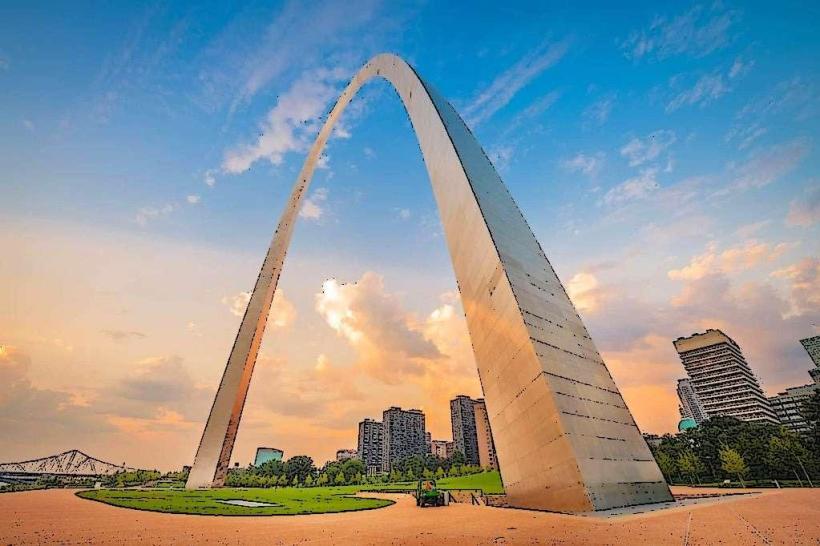
Nearby Attractions: Located within Gateway Arch National Park, just steps from the Gateway Arch, Museum at the Arch, Kiener Plaza, and Luther Ely Smith Square
Gift Shop: Offers books on civil rights history, reproduction legal documents, children’s educational material, and locally themed souvenirs
Significance Today
The Old Courthouse is not just a preserved building; it is an active symbol of justice, injustice, and the evolving meaning of freedom in the United States. Standing inside its rotunda connects visitors to struggles that helped define constitutional rights. It’s a vital part of the civil rights narrative and an educational tool for future generations.
The courthouse's restoration and new exhibits are designed to inspire reflection, encourage dialogue, and promote a deeper understanding of the American legal and moral journey.