Information
Landmark: Vodoča MonasteryCity: Strumica
Country: North Macedonia
Continent: Europe
Vodoča Monastery, Strumica, North Macedonia, Europe
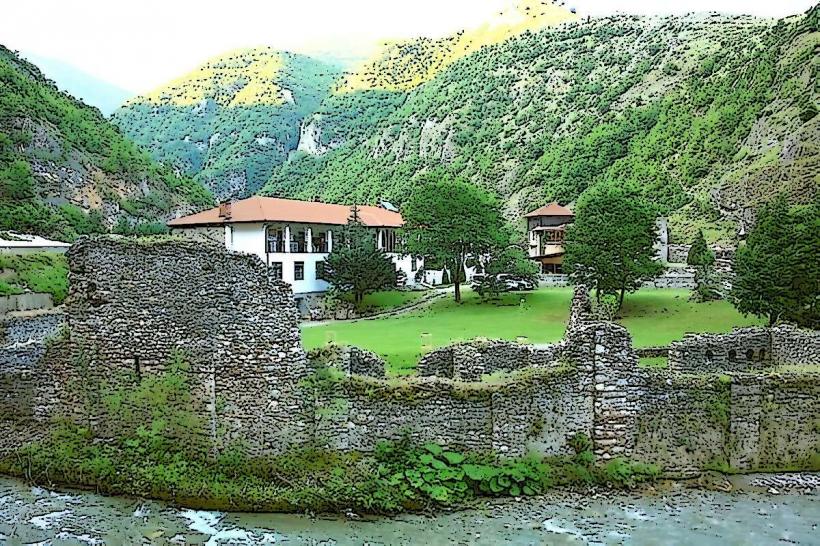
The Vodoča Monastery is an Eastern Orthodox monastery complex located in the village of Vodoča, approximately 4 kilometers west of Strumica, North Macedonia. It served as an episcopal seat and a significant spiritual center during the medieval period.
Visual Characteristics
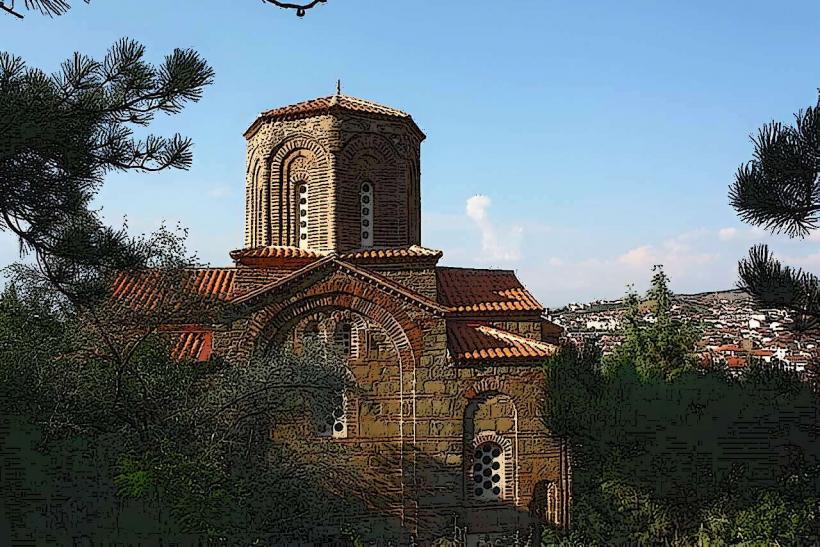
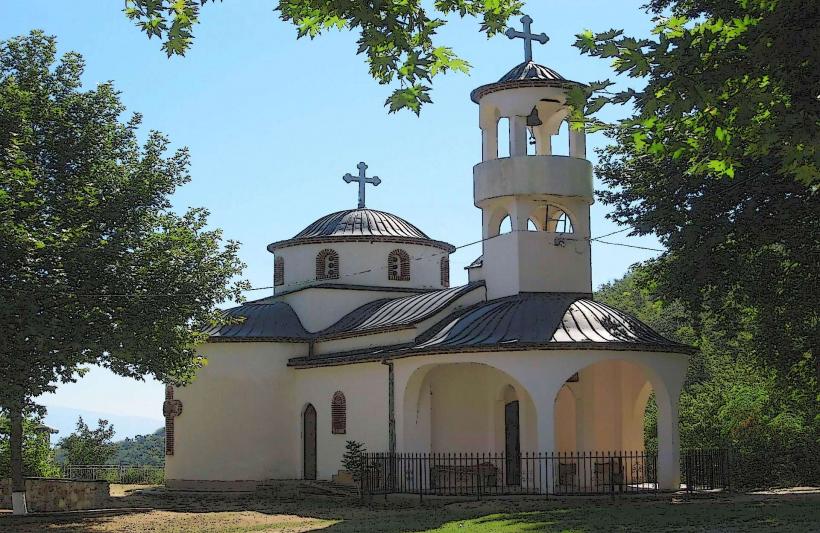
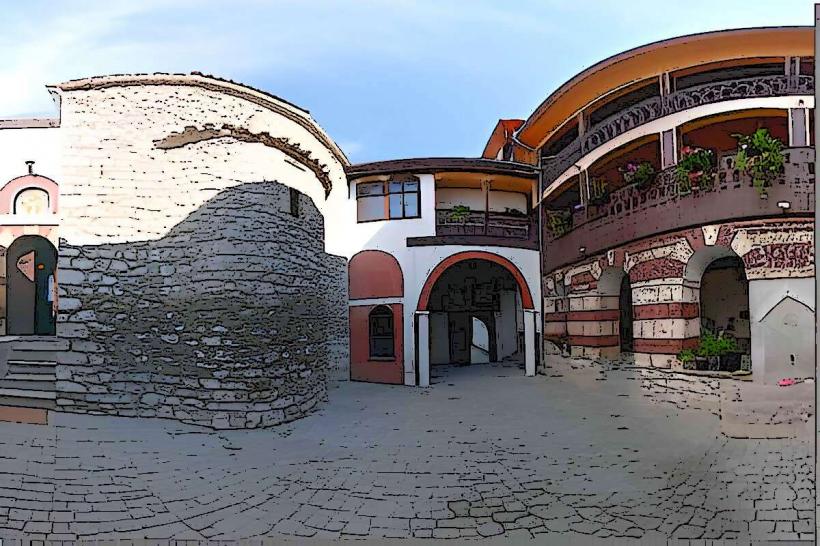
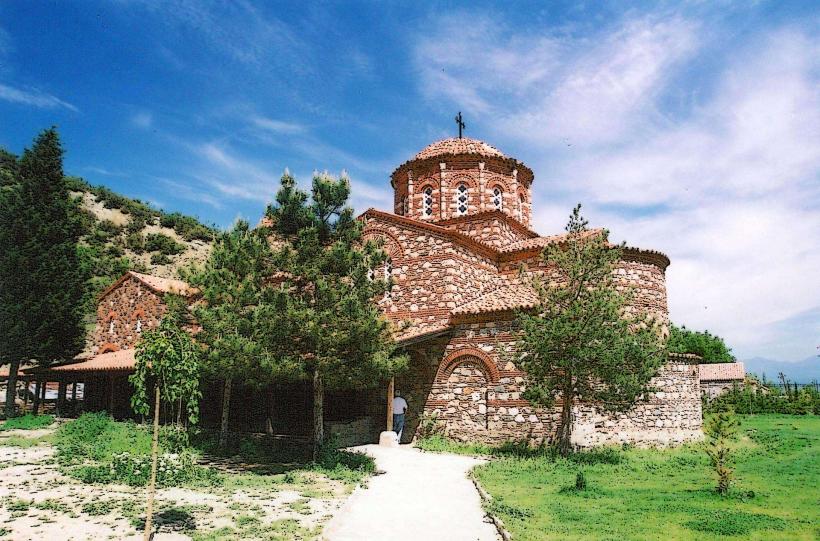
The monastery complex comprises several churches, primarily constructed from stone and brick, exhibiting a distinctive Byzantine architectural style. The main church, dedicated to Saints Leontius, is a cruciform domed basilica with a central dome and multiple smaller domes. Its exterior features alternating layers of stone and red brick, creating a striped pattern. The interior walls are extensively covered with well-preserved frescoes dating from the 11th and 12th centuries, depicting biblical scenes and saints. The complex also includes a bell tower and monastic cells, built with similar materials and design principles.
Location & Access Logistics
The Vodoča Monastery is situated in the village of Vodoča, accessible via local roads from Strumica. From the city center of Strumica, follow road R1301 west towards the village of Vodoča. The monastery is located on the northern side of the village. Travel time by car is approximately 10-15 minutes. Limited on-site parking is available for visitors. Public transport options include local bus lines from Strumica to Vodoča village, with the monastery a short walk from the main bus stop.
Historical & Ecological Origin
The monastery's origins date back to the 9th century, with significant construction and reconstruction phases occurring in the 11th and 12th centuries. It was established as an episcopal seat, serving as the center of the Strumica Diocese. The main church, dedicated to Saint Leontius, was built over the remains of an earlier basilica. The complex underwent further renovations and additions throughout the Ottoman period and into the modern era, preserving its historical and architectural integrity.
Key Highlights & Activities
Visitors can explore the various churches within the complex, focusing on the intricate medieval frescoes, particularly those in the main church of Saint Leontius. Observing the architectural details of the Byzantine construction is a primary activity. Attending religious services is possible during specific times. The monastery grounds offer a quiet environment for contemplation and historical appreciation.
Infrastructure & Amenities
Basic restroom facilities are available on the monastery grounds. Limited natural shade is provided by trees within the complex. Cell phone signal (4G/5G) is generally available. There are no dedicated food vendors directly at the monastery; however, small shops and cafes can be found in the nearby village of Vodoča or in Strumica.
Best Time to Visit
The best time to visit for comfortable weather is during the spring (April-May) and autumn (September-October) months, when temperatures are moderate. For photography, morning hours (9:00 AM - 11:00 AM) or late afternoon (3:00 PM - 5:00 PM) offer softer light for exterior shots. The monastery typically operates during daylight hours; specific opening times should be verified locally.
Facts & Legends
A notable historical fact is the monastery's role as a scriptorium, where important medieval manuscripts were copied and illuminated. The monastery's frescoes are considered some of the finest examples of Byzantine art in North Macedonia, particularly the "Lamentation of Christ" and the portraits of the Strumica bishops. A local tip for visitors is to observe the unique "blind arches" on the exterior, a characteristic feature of Byzantine architecture in the region.
Nearby Landmarks
- Veljusa Monastery (Monastery of the Most Holy Theotokos Eleusa) - 3.5km South-East
- Strumica City Center - 4km East
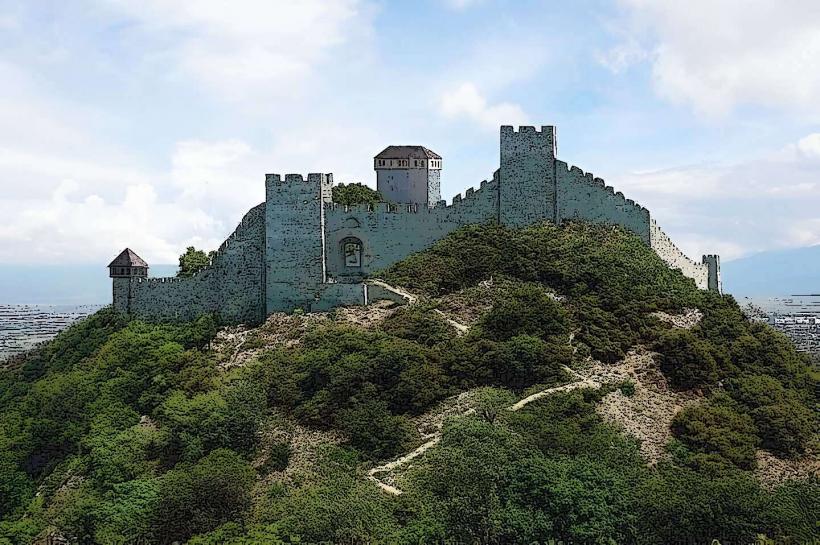
- Strumica Fortress (Carevi Kuli) - 5km East
- Smolare Waterfalls - 20km South-East (outside 5km radius, but a significant regional attraction)