Information
Landmark: Amantia Archaeological ParkCity: Vlora
Country: Albania
Continent: Europe
Amantia Archaeological Park, Vlora, Albania, Europe
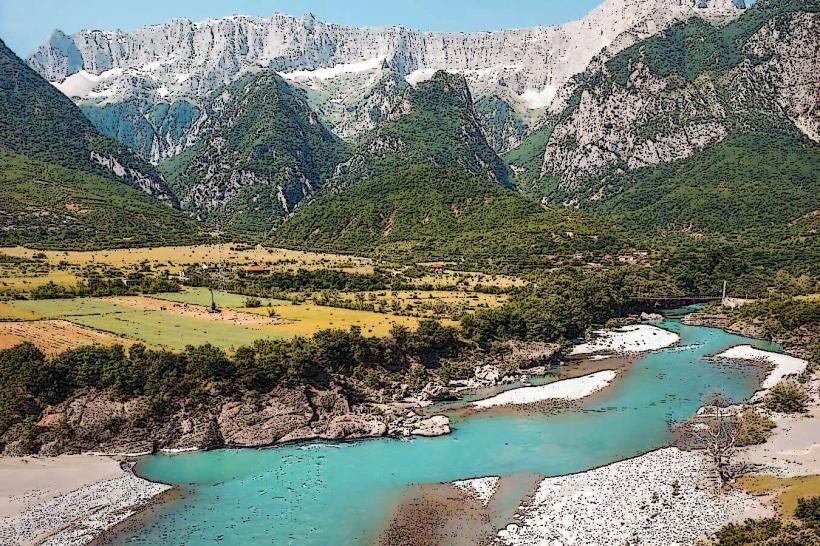
Amantia Archaeological Park (Parku Arkeologjik i Amantisë) is an ancient Illyrian city located in the Vlorë District, situated on a strategic ridge overlooking the Shushica River valley. Founded in the 5th century BC, it served as the political and economic center of the Amantes tribe.
Visual Characteristics
The site is defined by its monumental limestone architecture, specifically its Cyclopean walls and a well-preserved ancient stadium. The ruins are integrated into the rugged terrain of the Ploçë hill, featuring tiered stone seating and massive polygonal blocks. The location offers a 360-degree panorama of the Ceraunian Mountains and the interior Labëria region.
Location & Access Logistics
Amantia is located near the village of Ploçë.
By Vehicle: Access is via the road from Vlorë toward the Shushica Valley (approx. 35 km). The drive takes roughly 1 hour and 15 minutes. While the road to the valley is mostly paved, the final ascent to the park involves steep, winding segments that require careful driving.
Transit: There is no consistent public transport to the site. Visitors typically hire a taxi from Vlorë or join organized cultural tours.
Parking: Small gravel areas are available near the entrance of the archaeological zone.
Historical & Ecological Origin
Amantia was an autonomous city-state that even minted its own coins. It reached its peak during the 3rd and 2nd centuries BC. Unlike many coastal cities, it maintained a strong Illyrian identity while adopting Hellenistic architectural styles. The city remained inhabited through the Roman and Byzantine periods before being abandoned. The site is surrounded by Mediterranean oak forests and traditional grazing lands.
Key Highlights & Activities
The Ancient Stadium: The most iconic structure at the site, featuring 17 rows of stone seats on one side and 8 on the other, designed to hold approximately 4,000 spectators.
The Temple of Aphrodite: Located on the highest point of the acropolis, offering structural remains of a Doric-style religious building.
The City Gates: Well-preserved entrances that demonstrate the advanced defensive engineering of the Amantes.
The Necropolis: Ancient burial sites located outside the city walls where various Hellenistic artifacts have been unearthed.
Infrastructure & Amenities
Hours: Generally open daily from 09:00 to 16:00.
Fees: Entry is approximately 200 ALL.
Facilities: Infrastructure is minimal. There is a small ticket office, but no restaurants, shops, or developed restrooms on-site. Visitors must bring water and food. Cellular signal (4G) is functional but can be weak in certain depressions of the hill.
Best Time to Visit
The optimal months are May, June, September, and October. The site is highly exposed to the sun; midday visits in July and August can be excessively hot. For photography, late afternoon provides the best light to emphasize the textures of the Cyclopean walls and the depth of the Shushica Valley.
Facts & Legends
A verified historical fact is that Amantia was mentioned by the geographer Skylax in the 4th century BC as a major Illyrian city. Local lore suggests the city was founded by Abantes from Euboea returning from the Trojan War, though archaeological evidence primarily supports an Illyrian origin. A specific observation point is the "throne" area of the stadium, believed to be reserved for city officials.
Nearby Landmarks
Shushica River: 4.0km West
Vajzë Tumuli: 10.0km North (Ancient burial mounds)
Vlorë City: 35.0km Northwest
Mount Çika: 20.0km Southwest (as the crow flies)
Kanina Castle: 30.0km Northwest