Information
Landmark: Grama BayCity: Vlora
Country: Albania
Continent: Europe
Grama Bay, Vlora, Albania, Europe
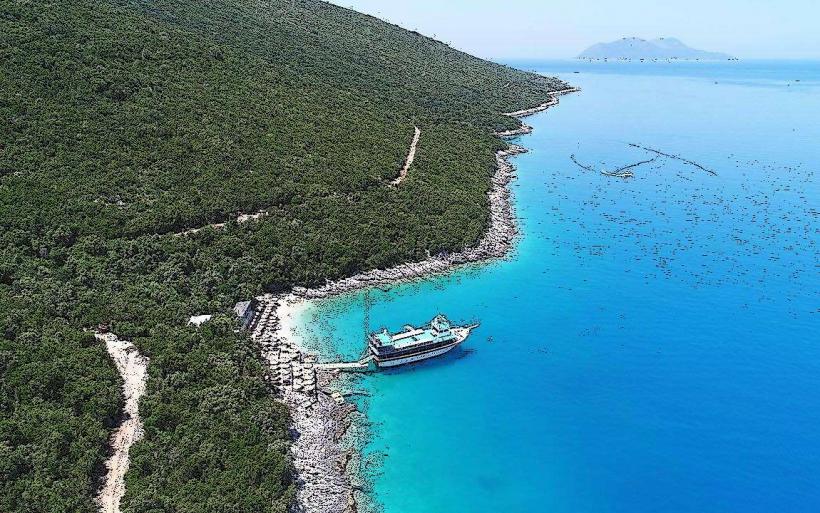
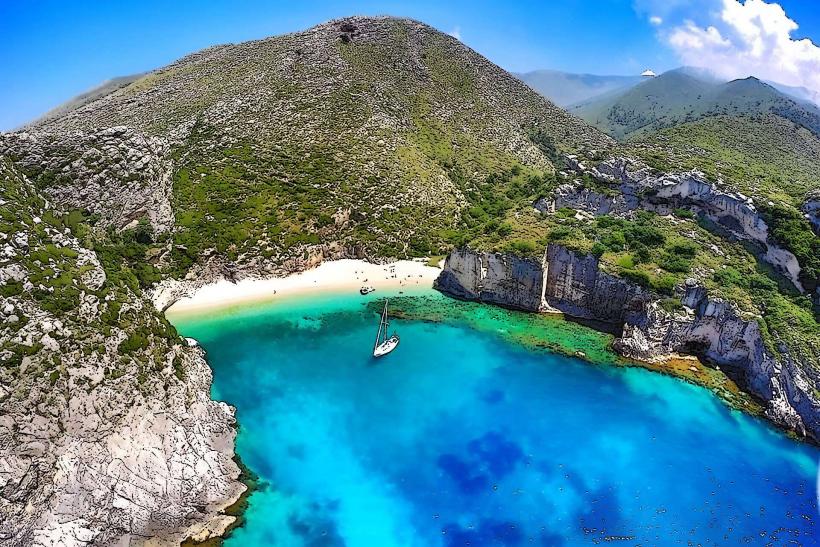
Grama Bay (Gjiri i Gramës) is a secluded cove located on the western coast of the Karaburun Peninsula in Vlorë County. It is situated within the Karaburun-Sazan Marine Park and is defined by its vertical limestone cliffs and historical significance as an ancient maritime refuge.
Visual Characteristics
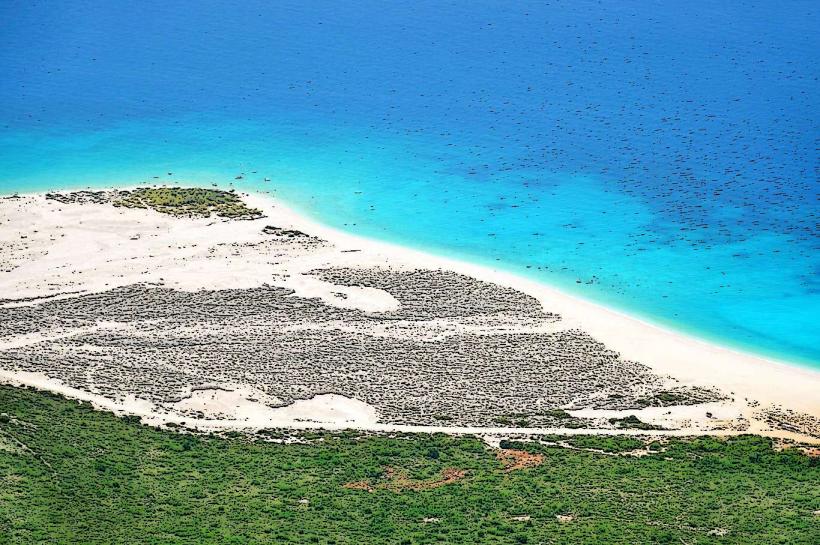
The bay is characterized by a narrow, deep-water inlet surrounded by high, white limestone walls. The water is exceptionally clear, displaying a bright turquoise color against a seabed of white pebbles and sand. The most distinct feature is the presence of hundreds of ancient and medieval inscriptions carved directly into the rock faces of the southern and eastern cliffs.
Location & Access Logistics
Grama Bay is one of the most difficult coastal sites to reach in Albania. There are no roads leading to the bay.
By Sea: The primary access is via private boat or organized water taxi from Dhërmi (approx. 35 minutes) or Vlorë (approx. 1 hour and 15 minutes).
By Land: A strenuous hiking trail exists from Palasa or the Llogara Pass, requiring 6–8 hours of trekking through rugged, unshaded terrain. This route is only recommended for experienced hikers with GPS and sufficient water.
There is no infrastructure for mooring large vessels; small boats anchor directly in the center of the cove.
Historical & Ecological Origin
The bay's name originates from the Greek word grammata (letters), referring to the rock inscriptions left by sailors over 2,000 years. These carvings date from the 3rd century BC to the late 19th century, including prayers to Poseidon, Castor, and Pollux, as well as names of Roman and Byzantine officials. The bay served as a crucial "quarantine" and storm shelter for ships navigating the dangerous Ceraunian coast.
Key Highlights & Activities
Epigraphic Observation: Viewing the historical inscriptions on the cliff faces.
Snorkeling: The deep, protected waters are home to diverse marine life and underwater rock formations.
Caving: Several small sea caves are accessible by swimming along the northern cliff line.
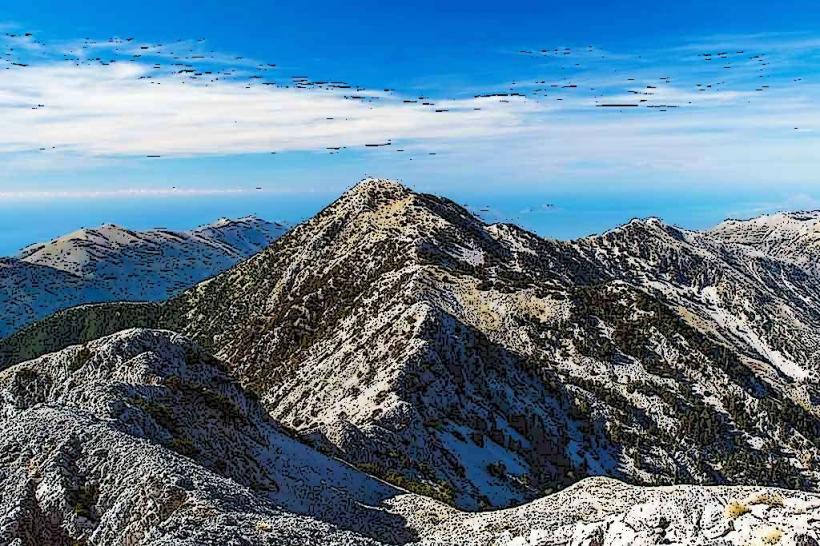
Photography: The high vantage points from the surrounding ridges offer perspectives of the "hidden" nature of the bay.
Infrastructure & Amenities
There is zero permanent infrastructure at Grama Bay. There are no restrooms, restaurants, shops, or managed trash facilities. During peak summer, a small, rustic seasonal tent may offer basic refreshments, but visitors must be entirely self-sufficient. There is no grid electricity. Cellular signal is extremely weak or non-existent inside the bay but can occasionally be caught on the surrounding ridges.
Best Time to Visit
The best time to visit is from June to September. Because the bay is small, it can feel crowded if more than three or four tour boats arrive simultaneously; arriving before 10:00 AM or after 4:00 PM is optimal. For photography, the midday sun (11:00 AM – 1:00 PM) is best to eliminate shadows from the high cliffs and capture the turquoise water color.
Facts & Legends
A verified historical fact is that one of the inscriptions mentions the Roman Emperor Gnaeus Pompeius Magnus (Pompey the Great), confirming the site's use during the Roman Civil Wars. Local legend suggests that the bay holds a "hidden spring" of fresh water accessible only through a cave, though most modern visitors rely on bottled supplies.
Nearby Landmarks
Blue Cave (Shpella e Shkallës): 2.0km South
Cape of Gjuhëzë: 15.0km North
Llogara National Park: 8.0km East (across the mountains)
Dhërmi Beach: 12.0km Southeast (by sea)
Palasa Beach: 10.0km Southeast (by sea)