Information
Landmark: Balšića TowerCity: Ulcinj
Country: Montenegro
Continent: Europe
Balšića Tower, Ulcinj, Montenegro, Europe
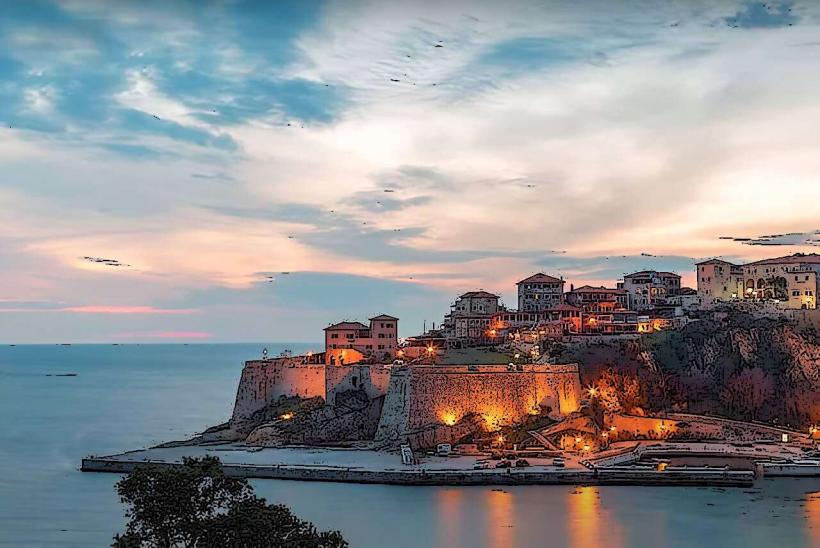
The Balšića Tower (Kula Balšića) is a medieval defensive fortification situated at the highest elevation within the Ulcinj-old-town_ulcinj" class="underline">Ulcinj Old Town (Stari Grad) citadel. It is recognized as one of the most significant architectural landmarks of the Balšić dynasty, which ruled the region during the 14th and 15th centuries.
Visual Characteristics
The tower is a robust, square stone structure characterized by thick limestone walls designed to withstand siege warfare. Its architecture features three distinct levels; the upper floor was added during the Ottoman administration, resulting in a visible fusion of medieval European and oriental masonry styles. The windows are narrow, traditionally serving as defensive loopholes. The top level provides an unobstructed 360-degree vantage point over the Adriatic Sea and the southern Montenegrin coast.
Location & Access Logistics
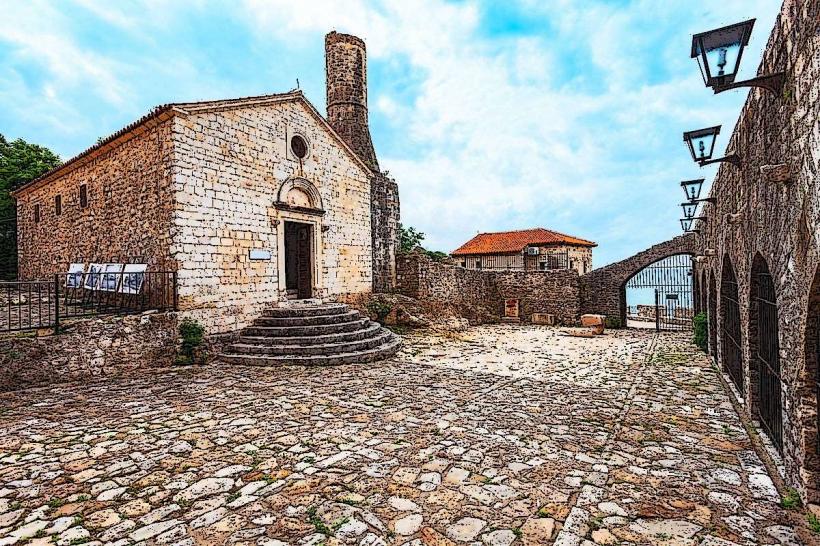
The tower is located in the upper plateau of the Ulcinj Old Town, adjacent to the Museum of Local History and the former Church-Mosque. Access is strictly pedestrian through the steep, narrow stone alleys of the fortress. Visitors typically enter via the "Upper Gate" (northern entrance) of the Old Town. It is approximately 300 meters from the city’s Small Beach (Mala Plaža). Public parking is available at the base of the fortress walls.
Historical & Ecological Origin
Constructed in the late 14th century, the tower served as a residence and defensive command center for the Balšić family. During the 17th century, under Ottoman rule, the tower was expanded and repurposed. Geologically, it is built upon the solid limestone bedrock of the Ulcinj promontory, which has provided the structural stability necessary to survive significant seismic activity, including the major 1979 earthquake.
Key Highlights & Activities
The tower currently serves as an Ethnological Museum.
Exhibitions: The interior houses collections of traditional folk costumes, crafts, and maritime artifacts unique to the Ulcinj region.
Art Gallery: The lower levels are frequently used for seasonal exhibitions of contemporary Balkan art.
Panoramic Photography: The uppermost level is the primary location for capturing wide-angle shots of the Ulcinj skyline and the open sea.
Infrastructure & Amenities
As part of the municipal museum complex, the tower is equipped with information plaques and lighting for visitors. Public restrooms are located in the adjacent museum building. 5G cellular coverage is stable throughout the site. Natural shade is minimal on the exterior, but the thick stone walls maintain a cool interior temperature during summer months.
Best Time to Visit
To avoid peak tourist crowds and high temperatures, early morning (9:00 AM – 11:00 AM) is optimal. For photography, the late afternoon provides the most favorable lighting, as the sun illuminates the western stone facade before setting over the Adriatic. The site is open year-round, following standard museum hours.
Facts & Legends
The most prominent historical association is with Sabbatai Zevi, a famous 17th-century Jewish spiritual figure who lived his final years in exile within the tower after converting to Islam; he is reportedly buried in an unmarked location nearby. A technical fact is that the tower's base contains recycled stones from the Roman period, indicating the site’s continuous occupation for over 2,000 years.
Nearby Landmarks
Ulcinj Museum (Local History) – 0.05km West
Slave Square (Trg Robova) – 0.1km South
St. Nicholas Church – 0.2km North
Small Beach (Mala Plaža) – 0.3km Southeast
Upper Gate (Old Town Entrance) – 0.1km North