Information
Landmark: Basilica di Sant AmbrogioCity: Milan
Country: Italy
Continent: Europe
Basilica di Sant Ambrogio, Milan, Italy, Europe
The Basilica di Sant'Ambrogio is one of the oldest churches in Milan and a foundational example of Romanesque architecture. It was built by Saint Ambrose, the city's patron saint, between 379 and 386 AD on a site where numerous martyrs of Roman persecutions were buried.
Visual Characteristics
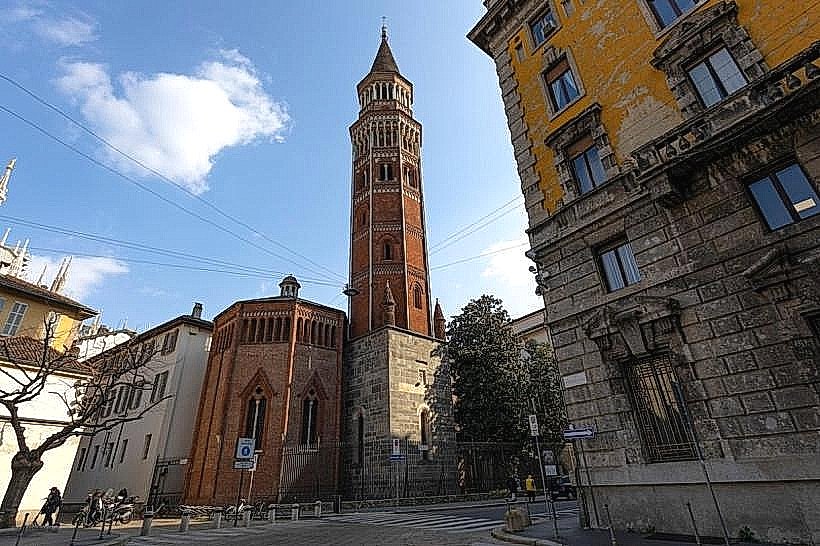
The basilica is defined by its large, arcaded atrium (the Ansperto Atrium), which serves as an entrance court. The facade is low and wide with two tiers of arches. Uniquely, the church features two bell towers: the taller 12th-century "Canons' Tower" on the north and the shorter 9th-century "Monks' Tower" on the south. The interior is characterized by robust brickwork, ribbed vaults, and a lack of a transept.
Location & Access Logistics
The basilica is located in the Sant'Ambrogio district, west of the city center.
Public Transit: Metro M2 (Green) to "Sant'Ambrogio." M4 (Blue) also serves this area.
Entry: Admission to the church is free; a ticket is required for the treasury and museum.
Logistics: Visitors must respect ongoing religious services. Photography is restricted during Mass.
Accessibility: The courtyard and main nave are accessible, though some side chapels and the crypt involve steps.
Historical & Ecological Origin
Originally named the Basilica Martyrum, it was renamed following the death and burial of Saint Ambrose. The current Romanesque structure dates primarily to the 11th and 12th centuries, built over the original 4th-century foundations. It served as the crowning site for Kings of Italy and German Emperors, who were traditionally crowned with the "Iron Crown" (now in Monza) in this location.
Key Highlights & Activities
The Golden Altar (Volvinius Altar): A 9th-century masterpiece of Carolingian goldsmithing, decorated with gold, silver, and precious stones.
The Crypt: Contains the remains of Saint Ambrose, Saint Gervasus, and Saint Protasus, visible through glass.
San Vittore in Ciel d'Oro: A 4th-century chapel known for its brilliant gold mosaics, including the oldest known portrait of Saint Ambrose.
Stilicho’s Sarcophagus: A 4th-century Roman sarcophagus located beneath the pulpit, intricately carved with biblical scenes.
Infrastructure & Amenities
The facility includes a small museum (Museo di Sant'Ambrogio) and a bookshop. 4G/5G signals are stable in the atrium but may weaken inside the thick-walled nave. The surrounding University of the Sacred Heart (Università Cattolica) area offers numerous cafes and bookstores.
Best Time to Visit
Mornings (09:00–11:00) provide the best natural light for the interior. Avoid visiting during Sunday morning services unless attending Mass. The "Oh Bej! Oh Bej!" traditional Christmas market takes place in the surrounding streets every December 7th (Saint Ambrose's Day).
Facts & Legends
To the left of the atrium stands a Roman column with two holes, known as the Devil's Column. Legend claims the holes were made by the Devil's horns during a struggle with Saint Ambrose. A verified historical feature is the "Serpent Column" inside the nave-a bronze snake believed to have been cast from the same metal as Moses' rod.
Nearby Landmarks
Leonardo da Vinci National Museum of Science and Technology: 0.3km West
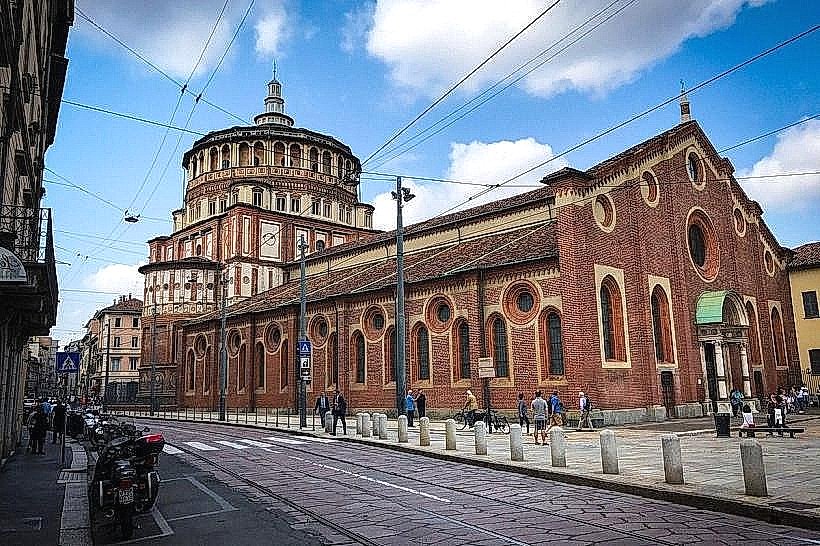
Santa Maria delle Grazie (The Last Supper): 0.6km North
Università Cattolica del Sacro Cuore: 0.05km (Adjacent)
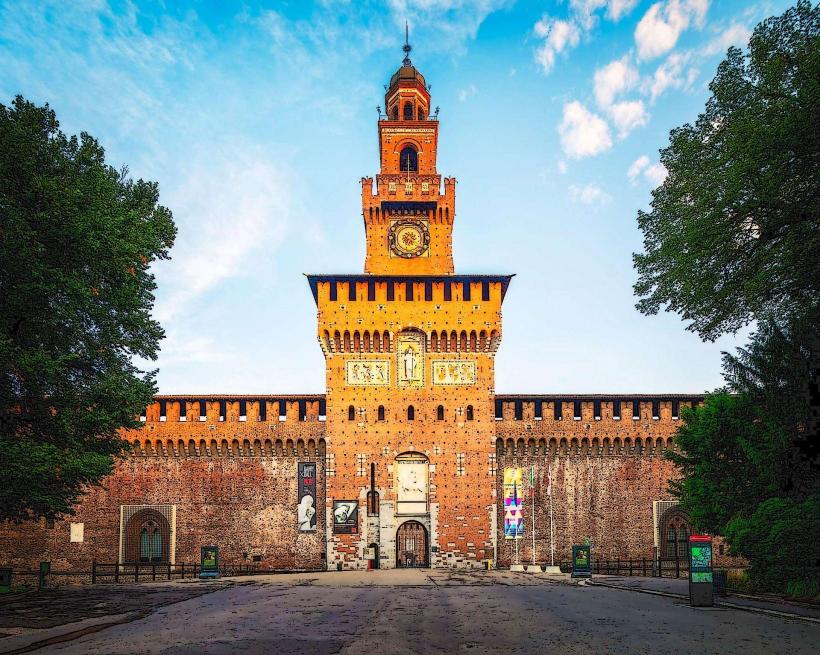
Castello Sforzesco: 0.9km North
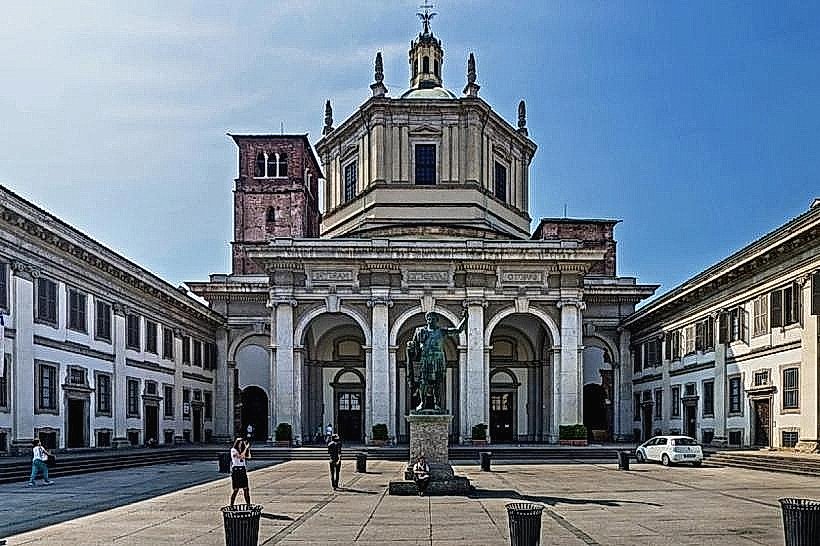
Colonne di San Lorenzo: 0.8km Southeast