Information
Landmark: BessastaðirCity: Reykjavik
Country: Iceland
Continent: Europe
Bessastaðir, Reykjavik, Iceland, Europe
Overview
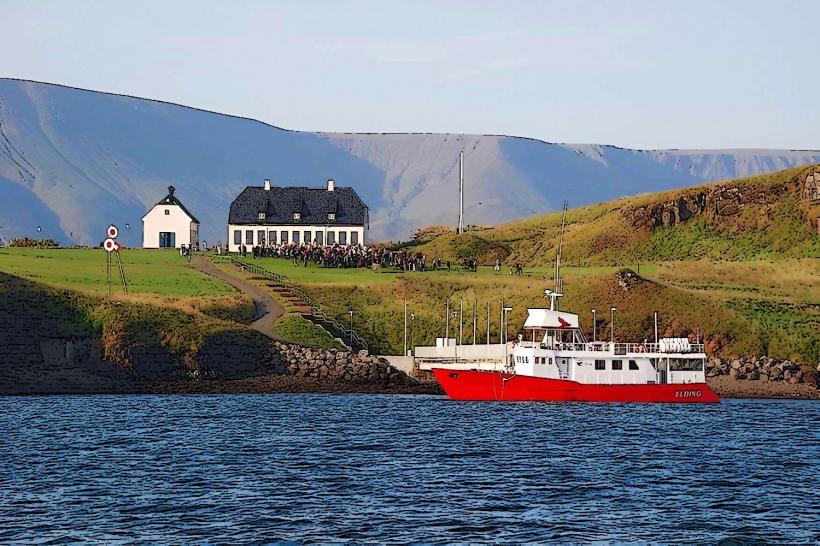
Curiously, Bessastaðir, once a center of Icelandic history, now serves as the President’s official home, its white walls standing glowing against the frosty North Atlantic sky, furthermore just outside Reykjavik, in the quiet town of Kopavogur, stands Bessastaðir, home to Iceland’s presidency since 1940-the year the nation declared itself a republic.The estate blends Iceland’s history, political importance, and stunning natural scenery-windswept cliffs and mossy fields-while giving a glimpse into the nation’s leadership and cultural roots, in turn in the early days, Bessastaðir took its name from the heritage Norse word *bær*, meaning “farm,” and from “Bessi,” thought to be the name of a notable local figure, loosely The estate traces its roots to the 13th century, when it first stood as a working farm with fields stretching toward the horizon, consequently over the years, Bessastaðir gained prominence, turning into a hub of Iceland’s political and cultural life, where decisions echoed through its stone halls.For much of its early history, Bessastaðir stayed closely tied to the Icelandic church, its miniature chapel bells carrying over the surrounding fields, along with the archbishopric of Skálholt once owned it, back when that seat was one of Iceland’s two historic dioceses.In the 1600s, the estate was sold to private owners and worked as a farm for years, its fields stretching toward the horizon, until it was finally named the official presidential residence, while in 1940, as Iceland broke from Denmark and became a republic, Bessastaðir-with its white walls and wind-swept views-was named the president’s official home.Since then, it’s been home to Iceland’s heads of state-the spot where they’ve slept, worked, and watched the northern lights arc over the roof.Ólafur Thors, Iceland’s first president, chose Bessastaðir as his residence, and over the years the whitewashed building has been adapted and expanded to fit the presidency’s needs, on top of that the main building at Bessastaðir rises two stories high, blending the clean lines of modern design with the steep, turf-roof echoes of traditional Icelandic architecture, slightly Neat gardens wrap around the home, and wide windows frame sweeping views of the hills and trees beyond, in conjunction with compared with the grand palaces you’ll find abroad, the building feels modest-a plain stone façade that quietly reflects Iceland’s egalitarian spirit.At Bessastaðir, the president not only lives but also works, signing papers in the quiet light of its stone-walled rooms, in turn from the estate, the president meets with advisors, greets visiting foreign dignitaries, and oversees the nation’s business, sometimes with the scent of fresh-cut grass drifting in from the gardens.Bessastaðir serves as the president’s official home, but they can choose to live elsewhere, also the role is mostly symbolic, and the white, wind-battered house is used chiefly for ceremonies and formal events.Grounds and Gardens: Lush gardens wrap around the estate, and from the terrace, you can perceive rolling hills fading into the distance, besides the grounds feature neat green lawns, bursts of color from flower beds, and winding paths perfect for a deliberate stroll.The estate sits just a short stroll from the water, where you can hear the gentle lap of waves, deepening the sense of calm, what’s more accessibility: The estate isn’t regularly open to visitors, but you can still wander around the Bessastaðir grounds and enjoy the nearby public spaces, where the wind carries the scent of the sea, maybe Now and then, the Icelandic Presidency hosts public events and open days, inviting visitors to wander the gravel paths, step inside select buildings, and discover the stories behind Iceland’s presidential history, at the same time as the president’s official home, Bessastaðir holds a powerful venue in Icelandic politics, standing as a quiet white landmark that embodies the nation’s identity.Honestly, In Iceland, the presidency’s mostly a ceremonial role, with the president spending more time greeting foreign leaders, representing the country abroad, and keeping watch over the nation’s constitution, alternatively still, the residence carries deep cultural and historical weight, telling the story of the nation’s path from Danish colony to independent republic-walls that have watched centuries unfold.As far as I can tell, Bessastaðir plays a central role in welcoming foreign dignitaries and heads of state, often greeting them with the warm scent of freshly brewed Icelandic coffee, at the same time over the years, the estate has hosted dignitaries from every corner of the globe, from polished ambassadors to monarchs in dim wool coats, firmly establishing itself as a key stage for diplomacy.This is where formal events unfold-banquets with clinking glasses and hushed conversations, official meetings behind closed doors-showing its region at the heart of the nation’s politics, to boot bessastaðir hosts key official events, from the president’s recent Year’s Day address to lively gatherings on national holidays like Iceland’s National Day on June 17, when flags snap in the crisp wind.The president also opens the estate for the annual Independence Day reception, where guests mingle under strings of white lights, and for other state events, consequently presidential Elections: The residence still plays a part in Iceland’s presidential races, even though the actual voting happens elsewhere-often in bustling local halls filled with the sound of shuffling ballot papers.After winning the election, the president‑elect usually stops by Bessastaðir, a quiet white‑walled residence, to mark the peaceful handover of power, not only that all year long, the estate now and then opens its gates for cultural gatherings or lively public celebrations, weaving the residence more deeply into Iceland’s heritage-like music drifting across the lawn on a summer night, generally Bessastaðir sits in a quiet spot, where rolling hills meet calm water and the countryside stretches out in every direction, as well as the area sits in peaceful, scenic surroundings, far from Reykjavik’s noisy streets, yet it’s close enough for political meetings or social gatherings to unfold in the heart of the capital, generally Public Access: People can usually wander the grounds of Bessastaðir, and on national holidays or during special events, you might even hear music drifting from the open lawns, in conjunction with you can stroll the grounds, take in the sweep of the gardens and the quiet rustle of antique trees, but the main house usually stays closed to the public.Bessastaðir isn’t just where Iceland’s president lives-it’s a living emblem of independence, pride, and steady governance, standing solid against the wind on the edge of the sea, equally important bessastaðir, with its centuries-classical history, quiet coastal setting, and striking white buildings, offers a glimpse into the values and traditions that have shaped Iceland as a republic, almost The public can’t wander its halls or step inside, but the estate still anchors the nation’s political life and stands as a quiet marker of Iceland’s path toward self-rule and cultural pride.
Author: Tourist Landmarks
Date: 2025-09-03