Information
Landmark: Church of the Holy TrinityCity: Middletown
Country: USA Connecticut
Continent: North America
Church of the Holy Trinity, Middletown, USA Connecticut, North America
Here is a detailed overview of the Church of the Holy Trinity in Middletown, Connecticut, covering its history, architecture, and cultural significance.
Overview
The Church of the Holy Trinity is a historic Episcopal church located at 381 Main Street, Middletown, Connecticut. It is a prominent example of Gothic Revival architecture, renowned for its craftsmanship, architectural detailing, and enduring presence in the city’s cultural and spiritual life. The church remains an active parish, while also hosting performing arts and community events.
Historical Background
The parish traces its roots to 1724, when the first Anglican services were held in Middletown.
In 1750, the congregation was formally established as Christ Church, and the first church building was erected on South Green in 1755.
By 1834, the parish moved to a new building on Broad Street, which later became the Russell Library.
In 1857, the parish was renamed the Parish of the Holy Trinity, reflecting its evolving identity within the Episcopal Church.
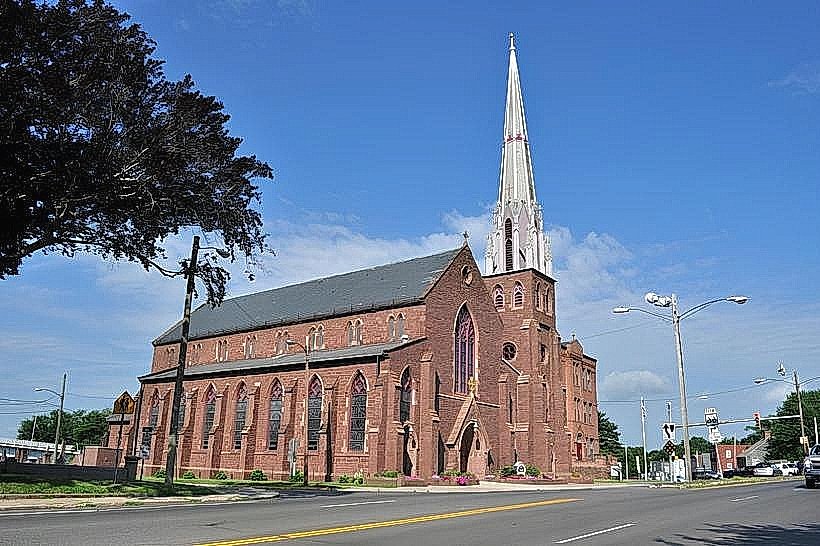
The current church building was constructed between 1870 and 1874 on Main Street, designed by architect Henry Dudley in the Gothic Revival style.
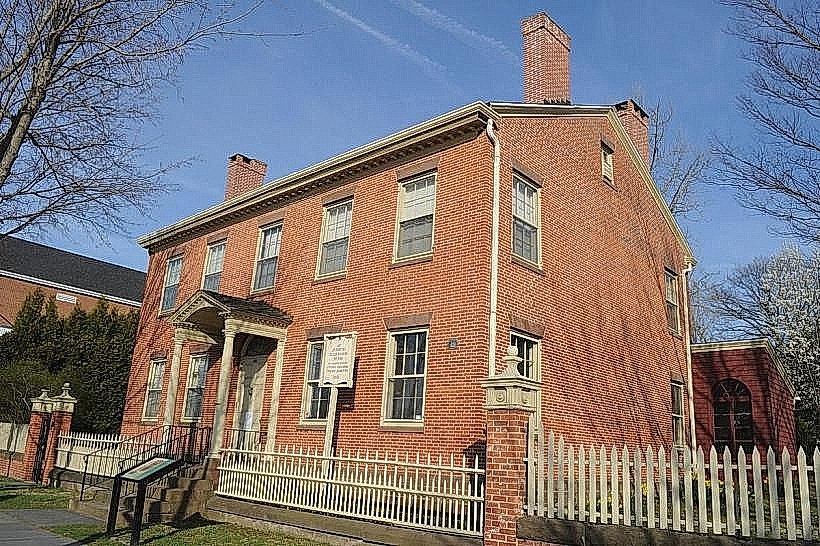
The parish’s former rectory, known as the Bishop Acheson House, was built between 1902 and 1903 in Colonial Revival style and served as the residence of rectors, including Edward Campion Acheson, who later became Bishop of Connecticut. It is now used as housing for the elderly.
Architectural Features
Exterior: Constructed from local brownstone, the church features a symmetrical façade with a prominent bell tower, pointed arches, and a large rose window above the entrance.
Interior:
The nave is supported by traceried wooden trusses resting on cast-iron posts, reflecting both structural ingenuity and Gothic Revival aesthetics.
Stained glass windows depict biblical scenes and saints, adding visual richness and color to the interior.
The altar and reredos, added around 1892 by Charles Haight of New York, display intricate woodwork and craftsmanship.
Additional Structures: The rectory, built in Colonial Revival style, complements the main church while representing early 20th-century architectural trends.
Cultural and Community Role
The church is not only a place of worship but also a cultural hub in Middletown.
It houses Trinity Stage, a performing arts venue, and Ekklesia Contemporary Ballet, supporting dance, music, and theater in the community.
The church hosts concerts, educational programs, and community events, blending spiritual and artistic engagement.
The church and rectory were listed on the National Register of Historic Places in 1979, recognizing their historical, architectural, and cultural significance.
Significance
The Church of the Holy Trinity exemplifies 19th-century Gothic Revival architecture in New England.
Its history reflects the growth and evolution of Middletown’s Episcopal community over three centuries.
The combination of worship, performing arts, and historical preservation makes it a living landmark, integrating heritage with contemporary civic life.
Visiting Information
Visitors can appreciate both the architectural details and historical context while attending services or community events.
The church offers guided tours and is accessible for educational programs, concerts, and cultural performances.
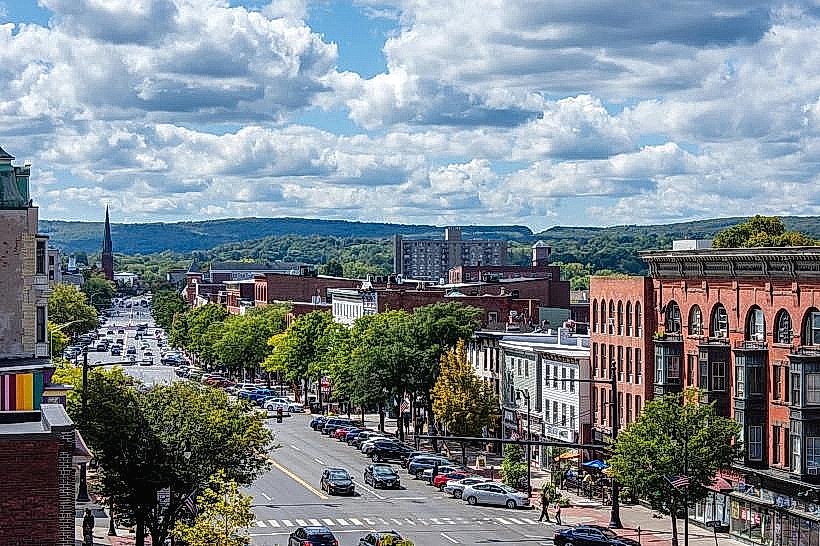
Its location on Main Street provides easy access to downtown Middletown and nearby historic sites.
The Church of the Holy Trinity stands as a cornerstone of Middletown’s architectural, cultural, and spiritual landscape. Its Gothic Revival design, combined with its ongoing role in worship and the arts, makes it a unique and enduring landmark in the city.