Information
Landmark: Convento de San Antonio de PaduaCity: Merida City
Country: Mexico
Continent: North America
Convento de San Antonio de Padua, Merida City, Mexico, North America
Overview
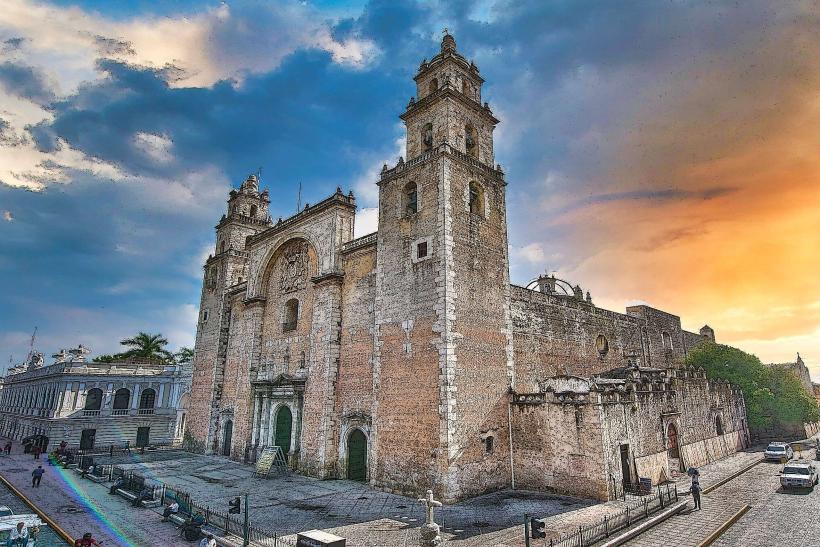
In the heart of Izamal, a sunlit town on Mexico’s Yucatán Peninsula, stands the Convento de San Antonio de Padua, a centuries-timeworn convent with weathered yellow walls, after that with its vivid yellow walls catching the sunlight and its grand, intricate design, this convent stands as one of the region’s most crucial cultural and religious landmarks.Rising from the stones of a Maya pyramid, it stands as a striking example of Spanish colonization and the deep mark it left on indigenous cultures, in addition highlights of the Convento de San Antonio de Padua: 1, in a sense The Franciscans founded the Convento de San Antonio de Padua in 1549, its stone walls still echoing the quiet of that early time, and it was built after the Spanish conquered the Maya, part of a sweeping push to bring Christianity to the local people-church bells soon rang where temples once stood.The convent rose over the crumbling stones of the Popol Vuh pyramid, also known as Itzamatul, once a sacred site for the Maya, then in many towns, the Spanish built churches and convents right on top of Maya temples, a stone-on-stone reminder of Christianity’s rule over local beliefs.The Franciscan order was central to spreading the faith across the Yucatán Peninsula, and their convent in Izamal-its yellow walls glowing in the sun-stood among the most vital in the region, in addition two.The Convento de San Antonio de Padua showcases colonial architecture shaped by Franciscan tradition, with warm stone walls that catch the late afternoon sun, simultaneously you can witness its Baroque style in the ornate carvings on the church and convent, yet it blends in touches of local architecture and the vintage Maya stonework still standing nearby.What catches your eye first is the convent’s façade, painted in dazzling yellow with crisp white trim, alternatively every wall of the building glows with a vivid yellow, a hue that’s given Izamal its nickname, “The Yellow City.” In Mexico, that color carries deep religious and cultural meaning, and it mirrors the Baroque love for rich, dramatic flair, generally The church’s bell tower rises above the convent, catching the eye from streets all over town, its bronze bell glinting in the afternoon sun, after that it enhances the convent’s grandeur, its tall stone walls standing as a clear symbol of the church’s sway over the town.As you can see, Number three, equally important at the heart of the convent lies a wide, sunlit courtyard, its edges framed by graceful stone colonnades, for the most part In the courtyard’s open-air space, Franciscan monks and visitors gathered for prayer and quiet meditation, the rustle of leaves underscoring how deeply spiritual life mattered to them and the wider community, also tall colonnades wrap around the space, enclosing it in quiet shade where one can pause and reflect, making them a central element in the convent’s design.Number four, also inside the convent, you’ll come across the Chapel of the Virgin of the Immaculate Conception, a quiet space devoted to the town’s patron saint, where candlelight flickers softly against the stone walls.The chapel carries deep religious meaning and draws Catholic pilgrims from far and wide, some pausing to light a candle before the altar, likewise it’s a striking piece of colonial-era religious art, with sunlit arches and intricate carvings that draw the eye.Inside the chapel, the Baroque altar gleams under soft light, surrounded by vivid religious paintings and intricate sculptures that echo the artistry of Spain’s colonial years, and five.As mentioned earlier, the Convento de San Antonio de Padua sits right atop the weathered stones of an ancient Maya pyramid, as a result you can still detect the Maya influence in the building’s design, from the stepped stonework to details drawn straight from pre-Hispanic architecture.You can still visit the base of the pyramid, called Popol Vuh, just steps from the convent, where sun-warmed stones line the path, moreover the convent serves as both a destination of worship and a vivid reminder of Spanish colonization, where Maya traditions met the rituals of Spanish Christianity beneath its weathered stone arches.Number six, at the same time the Convento de San Antonio de Padua stands at the heart of Izamal’s religious and cultural life, where bells ring out over sunlit plazas and traditions are kept alive.You know, The church still hums with life, holding regular Mass where candles flicker and voices rise in prayer, along with pilgrims flock to the convent, a central stop in town, to pray for the Virgin of the Immaculate Conception’s blessings, sometimes leaving fresh flowers at her altar.For centuries, Izamal has been a spiritual heart of the Yucatán, with the convent-its sun-warmed walls glowing yellow-standing at the very center of that devotion, at the same time steeped in history and drawing pilgrims from far and wide, it stands as one of the region’s most treasured landmarks, where worn stone steps echo with centuries of footsteps.Seven, besides today, Izamal is known as the “City of Three Cultures,” a name born from its mix of Maya roots, colonial charm, and the vibrant colors of modern Mexico.The convent stands as a key symbol of this cultural blending, its stone walls holding centuries of shared history, along with izamal is famous for its mustard-yellow buildings, some dating back to the colonial era with walls that catch the afternoon sun.Cobblestone streets lined with colonial facades blend seamlessly with vibrant Maya traditions, giving the town a distinctive charm that draws visitors from across the globe, equally important visitors are drawn to the Convento de San Antonio de Padua, a landmark that carries the weight of colonial history and the quiet, enduring spirit of the town, its stone walls warm under the afternoon sun, a little Just so you know, Eight, in addition at the Convento de San Antonio de Padua, the gates are open to the public, inviting you to wander through the quiet church and stroll across the sunlit courtyard.It seems, The convent’s calm, sunlit courtyards invite quiet reflection, while its deep historical and religious roots turn a visit into a rich cultural experience, on top of that you can join a guided tour to hear the convent’s story-its ties to the Maya, its location in the colonial era, and the echoes of history that still linger in its shaded courtyards.Curiously, You can also wander through the nearby Maya ruins, where weathered stones and carved symbols reveal more of the town’s past, as a result tourists and locals alike flock to the convent, drawn by its quiet gardens and worn stone steps.The dazzling yellow façade stands as a symbol of cultural pride, catching the eye and making a striking backdrop for photos, subsequently the Convento de San Antonio de Padua in Izamal stands not just as an crucial location of worship, but as a striking reminder of Spanish colonization and the rich, centuries-deep history woven into the Yucatán Peninsula-its yellow walls glowing under the midday sun.With its breathtaking stonework, deep ties to Maya heritage, and role as a living spiritual hub, this landmark draws anyone eager to feel the region’s history and culture in visitor, meanwhile blending colonial arches with indigenous designs, the convent welcomes visitors into a quiet courtyard where the air feels cool and still, offering an experience that’s both rare and deeply rewarding.
Author: Tourist Landmarks
Date: 2025-09-22