Information
Landmark: Denver Performing Arts ComplexCity: Denver
Country: USA Colorado
Continent: North America
Denver Performing Arts Complex, Denver, USA Colorado, North America
The Denver Performing Arts Complex is a multi-venue performing arts center located in downtown Denver, Colorado. It is one of the largest performing arts complexes in the United States.
Visual Characteristics
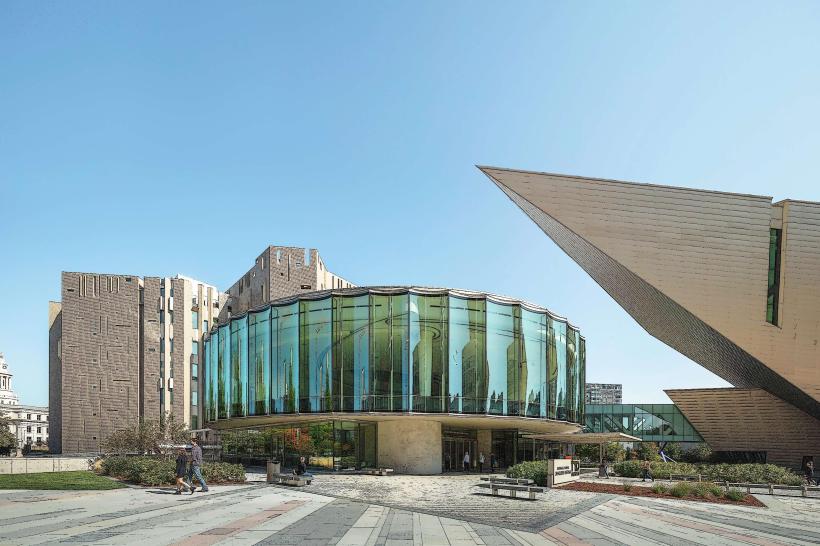
The complex comprises multiple structures, primarily constructed from concrete and glass. The main venues, such as the Boettcher Concert Hall and the Ellie Caulkins Opera House, feature modern architectural designs with large, geometric forms. Exterior colors are predominantly neutral, with concrete facades and glass curtain walls. The complex is integrated into the urban fabric, with varying heights across its different theaters and administrative buildings.
Location & Access Logistics
The Denver Performing Arts Complex is situated in the central business district of Denver, bordered by Arapahoe Street, Curtis Street, 13th Street, and Speer Boulevard. It is approximately 1.6 km (1 mile) from the Colorado State Capitol Building. Parking is available in the Denver Center Garage, accessible from Speer Boulevard and 13th Street. Public transportation options include numerous RTD bus routes that stop along 16th Street Mall and nearby streets, as well as the light rail system with a station at 16th & California. The Free MallRide shuttle also serves the area.
Historical & Ecological Origin
Construction of the Denver Performing Arts Complex began in the 1970s, with the initial phase, including the Boettcher Concert Hall, opening in 1978. The complex was developed as part of a city initiative to revitalize the downtown area and establish a central hub for cultural activities. The site was previously occupied by various commercial and industrial buildings.
Key Highlights & Activities
The complex hosts a variety of performances including opera, ballet, symphony concerts, Broadway tours, and theatrical productions. Specific venues within the complex include the Boettcher Concert Hall (symphony), Ellie Caulkins Opera House (opera and ballet), Temple Hoyne Buell Theatre (Broadway and other touring shows), and the Seawell Ballroom. Visitors can attend scheduled performances, take backstage tours (when available), and utilize the outdoor Sculpture Park.
Infrastructure & Amenities
Restrooms are available within each venue. Shaded areas are present in the outdoor Sculpture Park and within the lobbies of the venues. Cell phone signal (4G/5G) is generally reliable throughout the complex. Food and beverage services are available for purchase within the venues during performances, and numerous restaurants and cafes are located in the surrounding downtown area.
Best Time to Visit
The best time to visit is during the scheduled performance season, typically from September through June, to experience the full range of programming. For photography of the exterior architecture, late afternoon light offers favorable illumination. Specific performance times vary daily.
Facts & Legends
The Denver Performing Arts Complex is built over a former underground parking garage that was deemed structurally unsound and subsequently demolished. The current complex was constructed on the site of this failed project, symbolizing a rebirth of the area's cultural infrastructure.
Nearby Landmarks
- Denver Art Museum: 0.3km Southwest
- Colorado Convention Center: 0.4km Southeast
- 16th Street Mall: Adjacent (Northwest)
- City and County Building: 0.6km West
- Larimer Square: 0.8km Northeast