Information
Landmark: DolomitesCity: Milan
Country: Italy
Continent: Europe
Dolomites, Milan, Italy, Europe
The Dolomites (Dolomiti) are a mountain range in the northern Italian Alps, located approximately 280–350 km northeast of Milan. They are a UNESCO World Heritage site known for their vertical pale-colored peaks, deep valleys, and unique carbonate rock.
Visual Characteristics
The range is defined by "Dolomite" rock (magnesium-rich limestone), which creates jagged, serrated ridges and sheer vertical walls. The mountains are famous for the Enrosadira phenomenon, where the peaks turn vibrant shades of pink, orange, and violet at sunrise and sunset. The landscape alternates between high-altitude lunar plateaus and lush alpine meadows.
Location & Access Logistics
The Dolomites cover several provinces: Belluno, South Tyrol, and Trentino.
From Milan by Car: 3.5 to 4.5 hours via the A4 and A22 motorways.
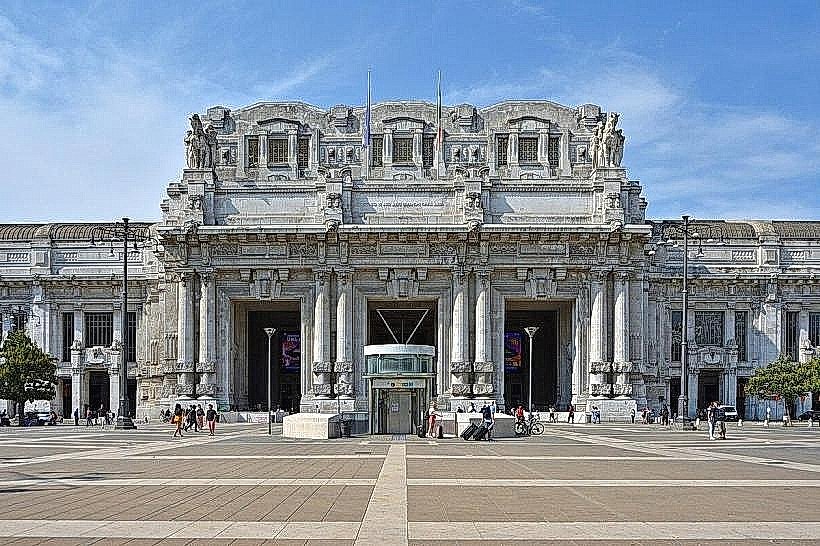
From Milan by Train: Take a high-speed train (Frecciarossa or Italo) from Milano Centrale to Bolzano or Trento (approx. 3 hours). From these hubs, local buses or car rentals provide access to specific valleys.
Main Hubs: Cortina d'Ampezzo (East), Val Gardena (West), and Val di Fassa (Central).
Historical & Geological Origin
Formed from Triassic coral reefs submerged in the Tethys Ocean 250 million years ago, the mountains were uplifted during the Alpine orogeny. Historically, the region was a frontline during World War I; the mountains are still scarred with "via ferrata" (iron paths), tunnels, and trenches used by Italian and Austro-Hungarian troops.
Key Highlights & Activities
Tre Cime di Lavaredo: Three distinctive battlement-like peaks that are the icon of the range.
Lago di Braies: A turquoise alpine lake famous for its wooden boathouse and reflections of the Croda del Becco.
Seceda Ridge: A dramatic cliff edge in Val Gardena offering views of the Odle Group.
Sella Ronda: A world-famous circular ski and cycling route around the Sella Massif.
Great Dolomites Road: A scenic driving route between Bolzano and Cortina d'Ampezzo.
Infrastructure & Amenities
The region features high-density infrastructure, including world-class cable cars and a network of Rifugi (mountain huts) offering lodging and high-altitude dining. 5G/4G coverage is excellent in the valleys and near lift stations but can be absent in deep glacial basins. The area is bilingual (Italian and German), with Ladin spoken in several valleys.
Best Time to Visit
Winter (Dec–March): Premier global skiing (Dolomiti Superski).
Summer (June–Sept): Peak hiking, climbing, and mountain biking season.
Shoulder Season: Many lifts and rifugi close in May and October/November.
Nearby Landmarks
Bolzano: 280 km NE of Milan (Home of Ötzi the Iceman).
Cortina d'Ampezzo: 400 km NE of Milan (Host of 1956 and 2026 Winter Olympics).
Lake Garda: 140 km E of Milan (Largest Italian lake, at the base of the mountains).
Venice: 160 km S of the Eastern Dolomites.