Information
Landmark: Emperor's BridgeCity: Niksic
Country: Montenegro
Continent: Europe
Emperor's Bridge, Niksic, Montenegro, Europe
Overview
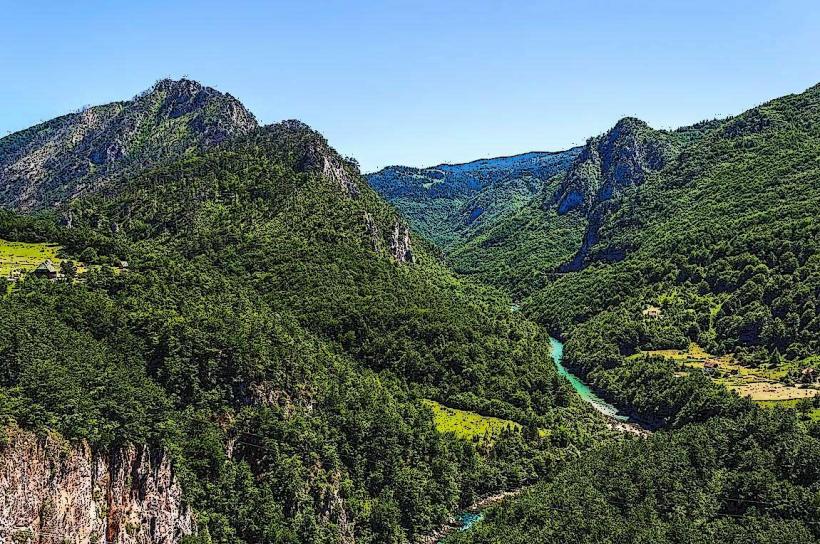
The Emperor’s Bridge, known locally as Cara Most, is a centuries-historic Ottoman stone bridge just outside Mojkovac in northern Montenegro, its worn arches echoing the footsteps of travelers long gone, not only that this bridge stands among the region’s most significant historical landmarks, prized for its cultural heritage and its graceful stone arches.From what I can see, The Emperor’s Bridge stretches over the swift, green waters of the Tara River, one of Montenegro’s most celebrated waterways, standing as a proud reminder of the region’s Ottoman heritage, likewise the bridge went up in the 16th century, under the rule of the Ottoman Empire, which at the time held sway over much of the Balkans, from bustling markets to quiet riverside towns.Historians think the Ottoman sultan of the day commissioned it, though they don’t always agree on which ruler’s seal should be stamped on the story, to boot the name “Emperor’s Bridge,” or Cara Most, likely comes from its link to the Ottoman sultans-“cara” means “emperor” in Turkish, more or less I think, It once anchored the empire’s trade and roam routes, carrying goods and riders across the swift, frosty waters of the Tara River, at the same time it made trek and trade easier, carrying goods from the quiet inland farms to the salty air of the coast, relatively Standing on key trade routes, the bridge became a vital link in Ottoman-era infrastructure, its stone arch rising solid and weathered over the water, to boot a wide central arch rises at the heart of the bridge, flanked by smaller ones that curve gracefully on either side.The arch’s curve is a hallmark of Ottoman bridge design, blending graceful beauty with the solid strength needed to hold steady over rushing water, to boot crafted from local stone, the bridge melts into the hills and trees around it.It stretches about 20 meters across the Tara River, its single arch lifting nearly 12 meters above the green, rushing water, in addition built with precision, the Emperor’s Bridge shows how Ottoman engineers mastered the art of creating sturdy, practical spans over rugged ground; today, it still stands in Montenegro as a striking symbol of their architectural legacy.The bridge embodies the Ottoman imprint on the region-not just in its arches and stonework, but in the traditions and trade it once fostered, likewise for centuries, it stood through shifting tides of history, from the empire’s height to the upheavals of the Balkan Wars and the shadow of World War I. You know, The Emperor’s Bridge still stands as proof of Ottoman craftsmanship, built to endure shifting rivers and harsh winds, subsequently over the years, it’s also slipped into local folklore, whispered about in stories on winter nights.Over the centuries, the bridge has inspired local legends-stories of weary travelers, bustling traders, even armored warriors making their way across its worn stone path, to boot today, despite its great age, the Emperor’s Bridge still stands strong, a well-preserved monument to the region’s history and culture, slightly often Like many structures from its era, the bridge is weathered by years of sun, rain, and wind, besides still, it draws crowds to the Tara River Canyon, a UNESCO site where sheer cliffs plunge into turquoise water.Tucked into a scenic corner of northern Montenegro, the bridge sits among rugged mountains and shadowy green forests, making it a favorite spot for photos and quiet sightseeing, subsequently today, travelers can saunter right up to the Emperor’s Bridge and take in the view.The bridge makes a quiet, scenic pause for travelers taking in the region’s wild beauty, from the clear rush of the Tara River to its canyon-one of the deepest in Europe, therefore the area around it offers hiking trails, white-water rafting, and quiet nature walks where you can hear the river rush by, making it an ideal spot for eco-tourism.The Emperor’s Bridge, or Cara Most, stands as a striking historical and architectural landmark in Montenegro, a proud symbol of its Ottoman heritage, likewise with its graceful stone arches, rich history, and a backdrop of the winding Tara River, it stands as a rare and treasured piece of Montenegro’s cultural heritage.Today, the bridge stands as a testament to the region’s rich past, drawing travelers who come to admire the rugged mountains and clear, rushing rivers of northern Montenegro.
Author: Tourist Landmarks
Date: 2025-08-31