Information
Landmark: Holy Trinity CathedralCity: Port of Spain
Country: Trinidad and Tobago
Continent: North America
Holy Trinity Cathedral, Port of Spain, Trinidad and Tobago, North America
Holy Trinity Cathedral is an Anglican cathedral located in Port of Spain, Trinidad and Tobago.
It serves as the seat of the Bishop of Trinidad and Tobago.
Visual Characteristics
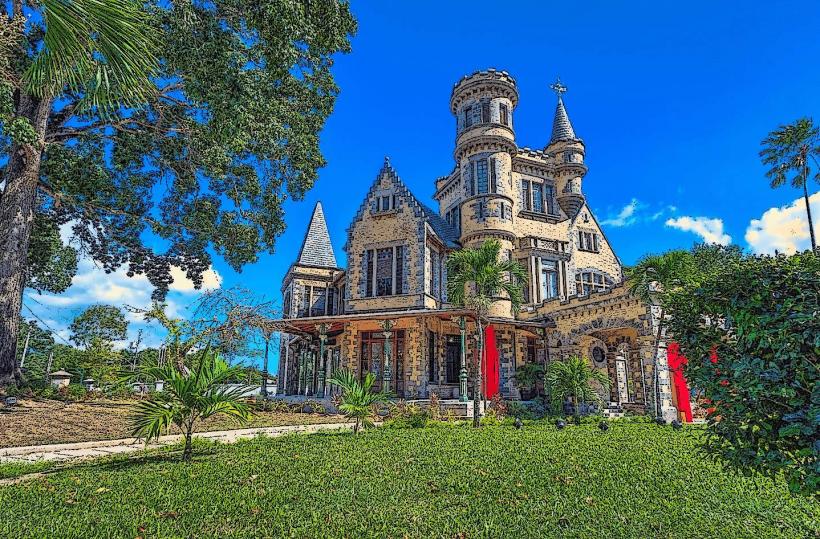
The cathedral is constructed primarily of red brick with white stone dressings. It features a cruciform plan with a central tower topped by a spire. The architectural style is predominantly Gothic Revival, characterized by pointed arches, ribbed vaults, and stained-glass windows.
Location & Access Logistics
The cathedral is situated at the intersection of Abercromby Street and Hart Street in downtown Port of Spain. It is approximately 0.5km south of the Queen's Park Savannah. Parking is available on surrounding streets, though it can be metered and limited during business hours. Public transport routes serving the downtown area stop within a short walking distance.
Historical & Ecological Origin
Construction of Holy Trinity Cathedral began in 1816 and was completed in 1823. It was designed by architect John Fuller. The original purpose was to serve as the principal church of the Anglican Diocese of Trinidad and Tobago.
Key Highlights & Activities
Visitors can observe the architectural details of the Gothic Revival style. The interior features a pipe organ and various memorial plaques. Services are held regularly.
Infrastructure & Amenities
Restrooms are available within the cathedral complex. Shade is provided by the building structure and surrounding trees. Cell phone signal (4G/5G) is generally good in this urban area. Food vendors and restaurants are located on nearby streets.
Best Time to Visit
For optimal interior lighting and fewer crowds, visiting during weekday mornings between 9:00 AM and 11:00 AM is recommended. The best months for weather in Trinidad and Tobago are generally from January to May, characterized by lower humidity and less rainfall.
Facts & Legends
A notable historical detail is that the cathedral was consecrated by Bishop Coleridge in 1823, and the spire was added later in 1850. It has withstood several earthquakes throughout its history.
Nearby Landmarks
- President's House (0.3km Northwest)
- Royal Botanical Gardens (0.4km North)
- National Museum and Art Gallery (0.6km West)
- Red House (Parliament Building) (0.7km Southwest)