Information
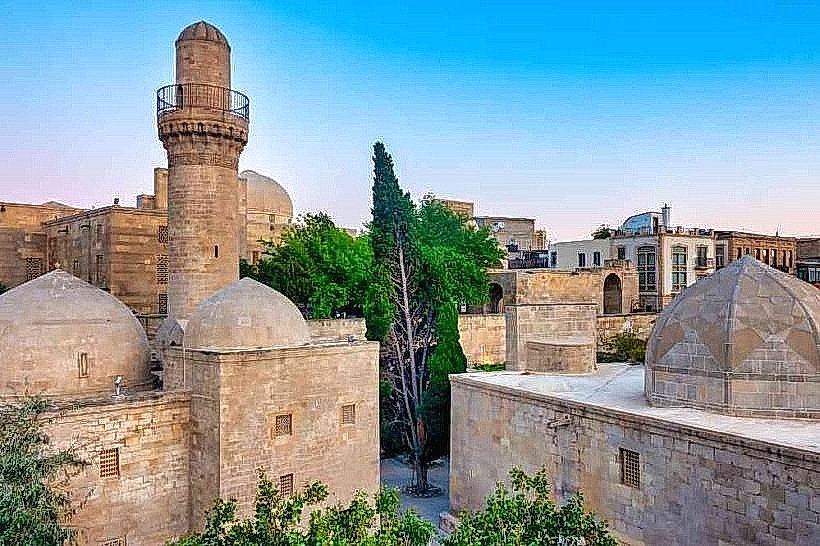
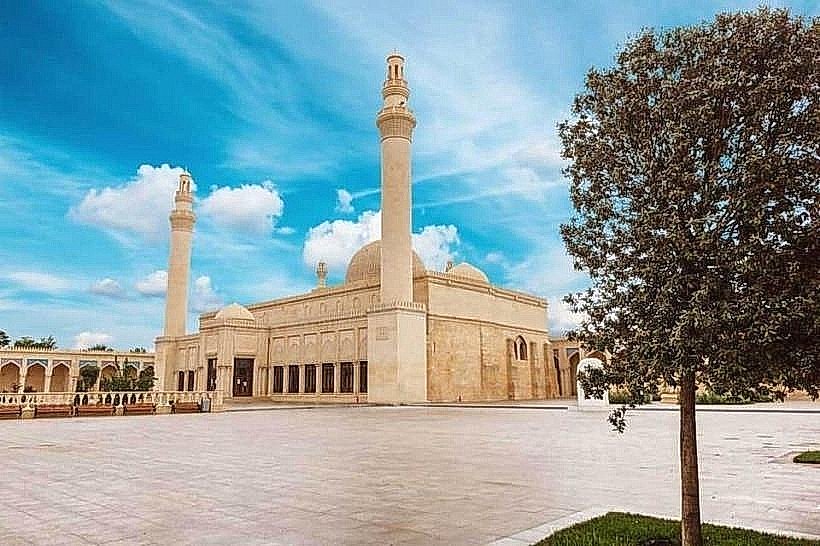
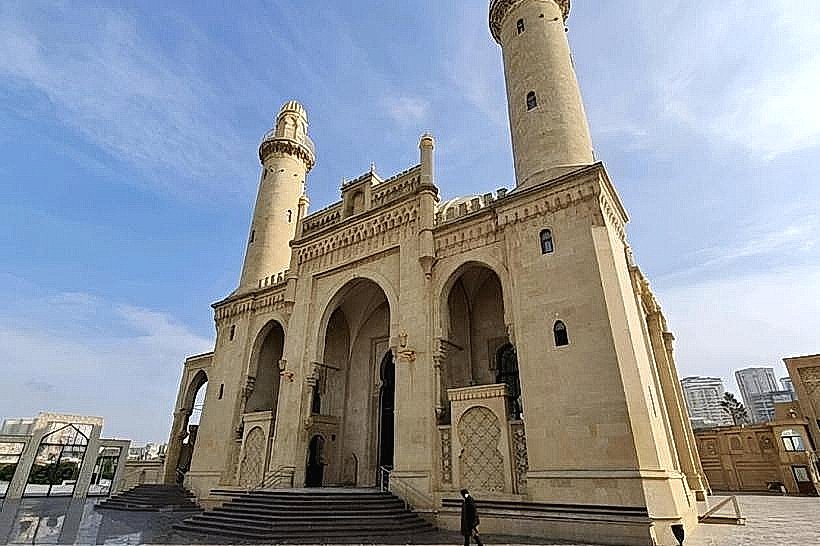
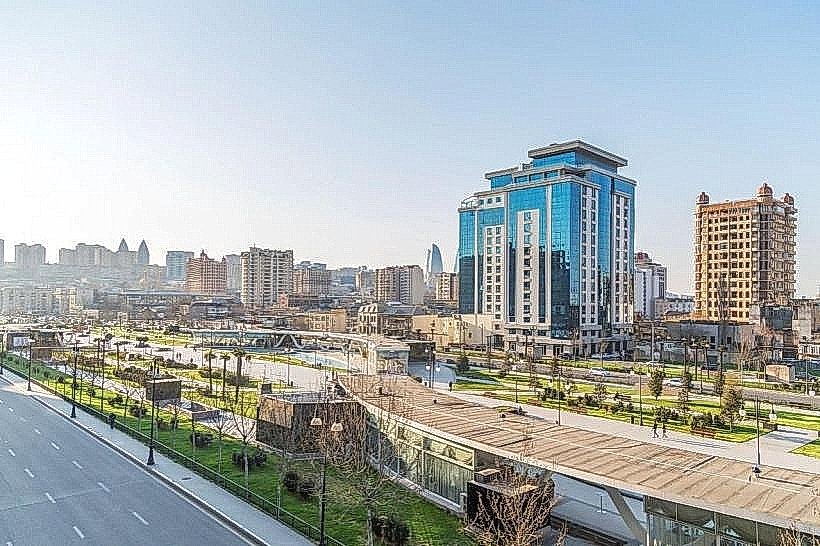
Landmark: Juma Mosque of BakuCity: Baku
Country: Azerbaijan
Continent: Asia
Juma Mosque of Baku, Baku, Azerbaijan, Asia
The Terry Bison Ranch Railroad is a heritage railway operating on the Terry Bison Ranch near Cheyenne, Wyoming.
Visual Characteristics
The railroad features a narrow-gauge track. The primary locomotive is a steam engine, painted black with red accents. Passenger cars are open-air, wooden benches with a canvas roof for shade. The surrounding landscape consists of rolling plains with sparse vegetation and a prominent dirt track.
Location & Access Logistics
The ranch is located approximately 25 miles south of Cheyenne, Wyoming. Access is via Interstate 25 South, taking Exit 1 for Highway 85 South. Continue on Highway 85 South for approximately 10 miles. Turn right onto County Road 204 (marked for Terry Bison Ranch). Follow County Road 204 for approximately 3 miles to the ranch entrance. Parking is available on-site at the main ranch buildings. No public transport services reach the ranch directly.
Historical & Ecological Origin
The Terry Bison Ranch was established in 1891 by William F. Cody (Buffalo Bill) as a cattle ranch. The railroad was later introduced to facilitate ranch operations and provide tourist experiences. The land is part of the High Plains ecological region, characterized by semi-arid grassland.
Key Highlights & Activities
The main activity is a 1.5-hour train tour across the ranch. During the tour, passengers can observe and feed bison from the train. The train stops at a designated feeding area. Photography of the bison and landscape is permitted from the train.
Infrastructure & Amenities
Restrooms are available at the ranch headquarters before and after the train ride. Limited shade is provided by the canvas roofs on the train cars. Cell phone signal is intermittent to non-existent on the ranch property. Food vendors are located at the ranch headquarters, offering snacks and meals.
Best Time to Visit
The train operates daily from May through October. Departures are typically at 10:00 AM, 12:00 PM, and 2:00 PM. Mid-morning offers good lighting for photography. Weather is generally mildest from June to September.
Facts & Legends
The ranch is home to a herd of over 3,000 bison, making it one of the largest private bison herds in North America. A unique aspect of the tour is the opportunity to feed the bison directly from the train, a practice that has been a staple of the experience for decades.
Nearby Landmarks
- Cheyenne Frontier Days Old West Museum (20km North)
- Wyoming State Capitol Building (22km North)
- Nelson Museum of the West (23km North)
- Big Boy Steam Engine 4004 (25km North)