Information
Landmark: Kaprun CastleCity: Zell am See
Country: Austria
Continent: Europe
Kaprun Castle, Zell am See, Austria, Europe
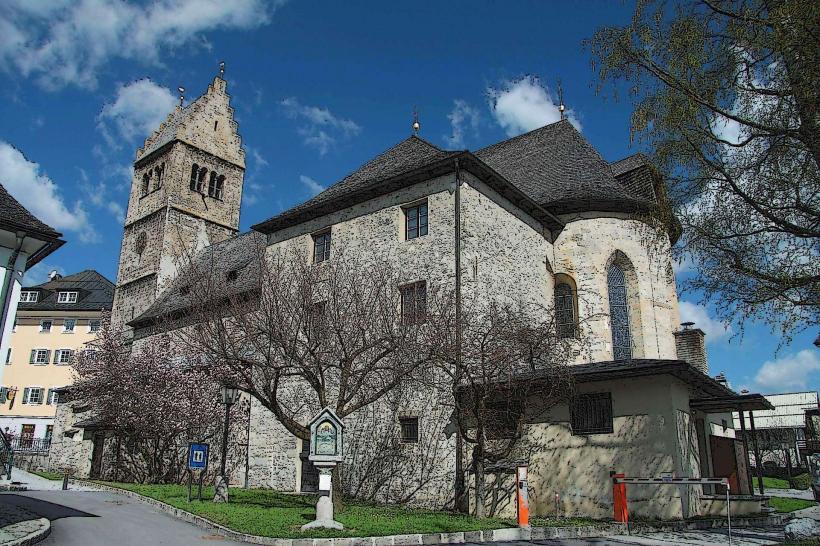
Kaprun Castle (Burg Kaprun) is a medieval fortress situated on a prominent rock spur at the eastern edge of Kaprun, approximately 8km south of Zell am See. It serves as a primary cultural venue for the Pinzgau region.
Visual Characteristics
The fortress is a classic high-medieval structure featuring a massive Romanesque keep (Donjon), high defensive walls, and a central courtyard. The exterior is constructed from rough-hewn local stone, primarily grey schist and limestone. The castle’s silhouette is defined by its crenelated towers and a heavy timber-roofed residential wing. Inside, the "Knights' Hall" features heavy wooden beams and historical masonry.
Location & Access Logistics
The castle is located at Schloßstraße 55, Kaprun. It is accessible by car via the B311 and Kapruner Straße, with a dedicated parking lot located at the base of the castle hill. From the parking area, a short but steep paved path leads to the main gate. Public transit access is via Bus Line 660 (Kaprun Maiskogelbahn stop), followed by a 15-minute walk.
Historical & Ecological Origin
Built in the 12th century, likely by the counts of Falkenstein or Peilstein, the castle was first documented in 1281. It served as a strategic defensive point controlling the entrance to the Kaprun Valley. Geologically, it sits on a stable rock outcrop that resisted glacial erosion. After centuries of decay, the "Association for the Preservation of Kaprun Castle" acquired and extensively renovated the site starting in 1975.
Key Highlights & Activities
The castle is a major venue for medieval festivals, concerts, and the annual "Burgfest Kaprun" in July, which features jousting and period markets. The interior rooms and courtyard are available for private events and weddings. Guided tours are conducted primarily during the summer season, focusing on the castle's defensive architecture and its role during the peasant uprisings.
Infrastructure & Amenities
The site includes public restrooms and a small tavern (Burgschenke) that operates during events. 5G cellular coverage is available, though signal strength may decrease within the thick-walled keep. The main courtyard provides some shade from the high walls, but the exterior ramparts are fully exposed. The castle is only partially wheelchair accessible due to steep historical staircases and uneven stone flooring.
Best Time to Visit
The exterior is best viewed in the late afternoon when the sun illuminates the western walls against the backdrop of the Hohe Tauern mountains. Public access to the interior is generally restricted to scheduled event days or guided tours (typically May through September). For photography, the winter months provide a stark contrast between the dark stone and snow-covered ramparts.
Facts & Legends
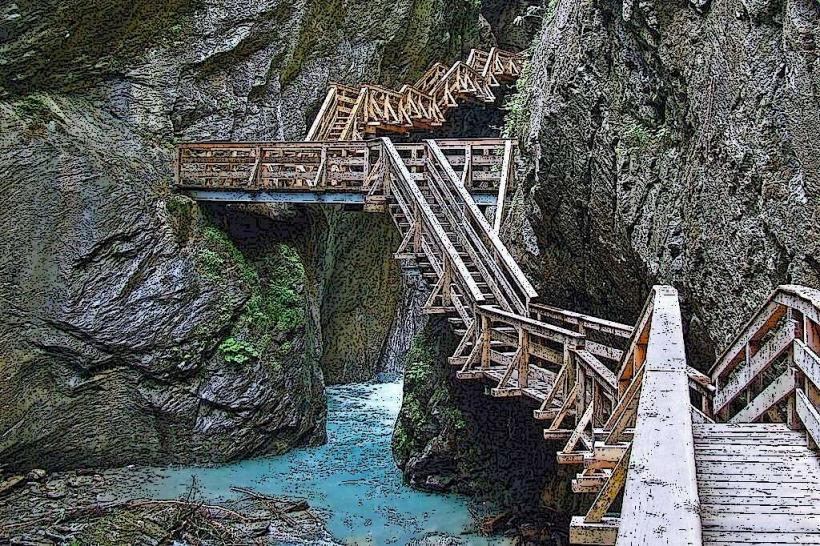
A local legend claims the castle is connected to the Sigmund Thun Gorge via a secret tunnel, though no archaeological evidence exists. A verified historical fact is that the castle was used as an armory for the Salzburg archbishops during the 16th century. Its survival is largely attributed to the local community's volunteer efforts in the late 20th century to prevent the ruins from being demolished.
Nearby Landmarks
Sigmund Thun Gorge – 2.5km Southwest
Maiskogel Family Mountain – 1.2km West
Tauern Spa Kaprun – 2.0km North
Vötter's Vehicle Museum – 0.8km West
St. Margareta Church – 1.0km West