Information
Landmark: Maastricht UndergroundCity: Maastricht
Country: Netherlands
Continent: Europe
Maastricht Underground, Maastricht, Netherlands, Europe
Maastricht Underground refers to the extensive network of man-made subterranean tunnels and quarries located primarily within the St. Pietersberg (Mount Saint Peter) hill on the southern edge of Maastricht. These include the North Caves (Grotten Noord), the Zonneberg Caves, and the Casemates (Kazematten).
Visual Characteristics
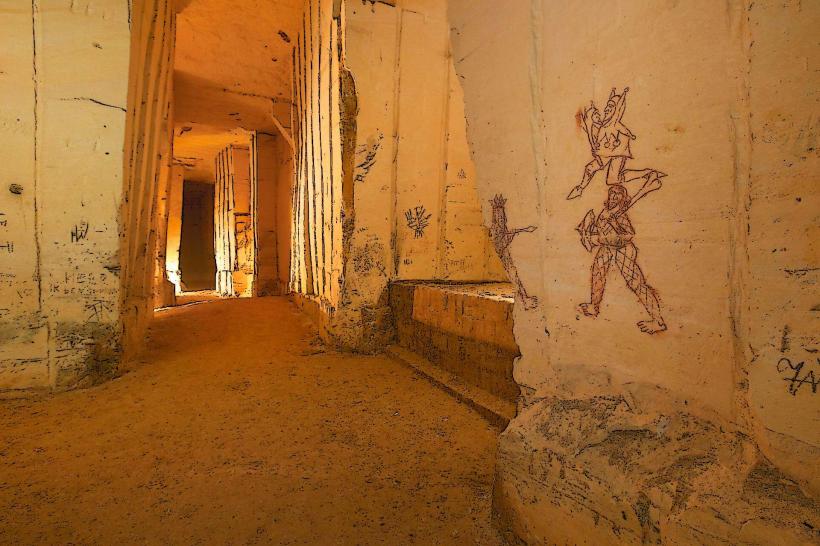
The underground landscape is defined by vast, echoing galleries carved out of yellow marl (soft limestone). The walls are characterized by distinctive saw marks and are covered in historical charcoal drawings, inscriptions, and murals ranging from the 16th century to modern times. The temperature remains a constant 11 degrees Celsius (52°F) with high humidity, and the environment is entirely devoid of natural light.
Location & Access Logistics
The primary entry points are located at Luikerweg 80 (Fort Sint Pieter/North Caves) and Slavante 1 (Zonneberg). These sites are approximately 3km south of Maastricht city center. Access is strictly via guided tours, as the 8,000-tunnel labyrinth is dangerous for solo exploration. From Maastricht Centraal, take Bus line 10 or 12 to the "Sint Pietersberg" stop. Limited paid parking is available at the foot of the hill.
Historical & Ecological Origin
The tunnels were created over several centuries by "block breakers" who quarried marl for building stone. During World War II, the network served as a massive bomb shelter for 30,000 citizens and a secret vault for Dutch national treasures, including Rembrandt’s The Night Watch. Ecologically, the caves are a critical winter hibernation site for several species of bats, including the rare Geoffroy’s bat.
Key Highlights & Activities
Guided "Cave Robber" tours for children and historical tours for adults are the primary activities. Highlights include the "Night Watch" vault, the charcoal mural of a Mosasaur (prehistoric sea reptile), and the underground museum. Exploring the Casemates-a separate military tunnel system beneath the city walls-offers insight into 18th-century siege warfare.
Infrastructure & Amenities
Reception centers at the entrance provide ticket desks and small souvenir shops. Public restrooms are available at the Chalet Bergrust or Buitengoed Slavante restaurants near the cave entrances, but there are no facilities inside the tunnels. 5G/4G signals drop completely upon entry. Stout footwear and a jacket are mandatory due to the terrain and constant low temperature.
Best Time to Visit
The caves are an ideal "all-weather" attraction, providing a cool retreat in summer and a dry environment in winter. Advanced booking is essential, especially during school holidays and weekends. Morning tours generally have smaller group sizes.
Facts & Legends
A verified historical fact is the "Evacuation Plan" of WWII, which included an underground bakery and hospital that were fully functional but never used to their full capacity. Local legend speaks of "The Ghost of the Marl Caves," though most documented disappearances were actually due to explorers losing their light source and becoming disoriented in the pitch-black tunnels.
Nearby Landmarks
Fort Sint Pieter (0.1km North)
Saint Peter’s Museum Toren Museum (0.3km North)
Mount Saint Peter Nature Reserve (Adjacent)
Buitengoed Slavante (0.5km Southeast)
Andre Rieu’s Castle (1.5km Northwest)