Information
Landmark: Mount ApoCity: Davao City
Country: Philippines
Continent: Asia
Mount Apo, Davao City, Philippines, Asia
Mount Apo is a dormant stratovolcano and the highest peak in the Philippine archipelago, standing at 2,954 meters (9,692 feet) above sea level. It is widely considered the "Grandfather of Philippine Mountains."
Visual Characteristics
The mountain features a flat-topped silhouette with three distinct peaks. Its terrain is geologically diverse, characterized by ancient volcanic craters, sulfuric vents (solfataras) emitting white steam, massive boulder faces, and high-altitude grasslands. The summit area contains a 200-meter-wide crater with a small lake, while the foothills are covered in dense tropical hardwood forests and mossy woodlands.
Location & Access Logistics
Location: Straddles the boundaries of Davao City, Davao del Sur, and Cotabato province in Mindanao.
Jump-off Points:
Sta. Cruz/Digos (Davao del Sur): Popular for the "Boulder Face" and steep technical climbs.
Kidapawan (North Cotabato): Known for hot springs and lake views; generally a more gradual ascent.
Davao City: The primary gateway for air travelers via Francisco Bangoy International Airport.
Entry: A climbing permit is mandatory. Guided treks are strictly required and often limited by a daily quota to preserve the park.
Closure: The mountain typically closes for three months (June 1 to August 31) annually for "rehabilitation" to allow the ecosystem to recover.
Historical & Cultural Origin
For the indigenous Lumad tribes (including the Bagobo-Tagabawa and Manobo), the mountain is known as Apo Sandawa and is considered a sacred ancestral domain. They believe it is the home of the deity Mandarangan. The first recorded successful ascent by a non-native was in 1880, led by Joaquin Rajal, then-Spanish governor of Davao.
Key Highlights & Activities
Summiting: Conquering the highest point in the Philippines is a "rite of passage" for local mountaineers.
Lake Venado: A scenic high-altitude alpine lake (approx. 2,200m) that serves as a major campsite and reflection point.
Boulder Face: A challenging scramble over massive white volcanic rocks and sulfur vents on the Sta. Cruz trail.
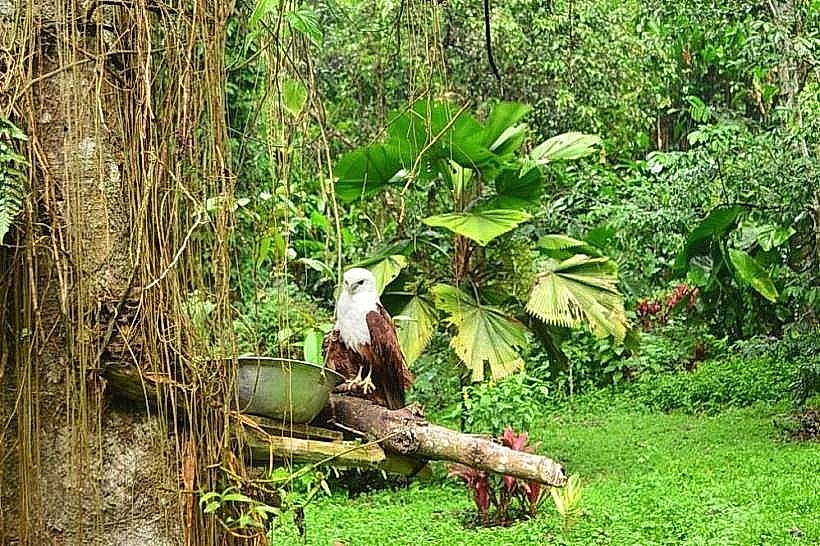
Wildlife Observation: The mountain is a critical sanctuary for the critically endangered Philippine Eagle (Pithecophaga jefferyi).
Infrastructure & Amenities
There is no permanent infrastructure at the summit. Camping is restricted to designated areas like Lake Venado or specific trail camps. Basic amenities (toilets, water sources) are available at specific base camps. Geothermal power plants (Mt. Apo 1 and 2) operate on the mountain's lower flanks, utilizing its volcanic heat.
Best Time to Visit
The dry season (November to May) is the optimal period for trekking, providing clearer visibility and safer trail conditions. March and April are the peak months for climbers.
Facts & Legends
Age: The rock is estimated to be from the Pliocene-Quaternary age.
Volcanic Status: While it has no recorded history of eruption, it is classified as a potentially active volcano due to its active solfataras.
Name: "Apo" translates to "grandfather" or "elder" in many Philippine languages, denoting respect.
Nearby Landmarks
Philippine Eagle Center (Malagos): 130 km from the mountain (Davao City side).
Lake Agco: Known for its "mud therapy" and hot springs in the Kidapawan area.
Tudaya Falls: One of the tallest waterfalls in the region, located at the foot of the mountain in Sta. Cruz.
Davao City Center: Approximately 32 km northeast.