Information
Landmark: Myrtle Hill CemeteryCity: Rome City
Country: USA Georgia
Continent: North America
Myrtle Hill Cemetery, Rome City, USA Georgia, North America
Myrtle Hill Cemetery in Rome, Georgia, is a historic and scenic burial ground perched atop one of the city's seven hills at the confluence of the Etowah and Oostanaula rivers, where they form the Coosa River. Established in 1857, the cemetery is one of the oldest and most significant in Georgia. With over 20,000 graves across six terraced levels, it serves not only as a place of rest but also as a site of historical memory, heritage, and reflection. The cemetery’s landscape design, Civil War history, notable burials, and commemorative monuments make it both a local landmark and a destination of national interest.
1. Historical Overview
Myrtle Hill was originally the site of Fort Stovall, a Confederate fortification used during the Civil War to protect Rome. In 1857, the land was repurposed for use as a public cemetery, chosen for its elevation and picturesque location, which was ideal in an era when floods often threatened lower-lying graveyards. It quickly became the principal cemetery for the region.
During the Civil War, Rome’s strategic rivers and manufacturing capabilities made it a valuable asset. Union forces occupied the city in 1864, and the surrounding hills-including Myrtle Hill-played a role in defensive operations. Several Civil War veterans from both the Union and Confederate sides are buried here, alongside civilians and local leaders of the 19th and 20th centuries.
2. Design and Landscape
Myrtle Hill Cemetery reflects the 19th-century “rural cemetery movement”, a trend emphasizing naturalistic landscaping, terraced burial plots, winding paths, and ornamental trees. The cemetery is divided into multiple levels carved into the hillside, connected by historic stone steps and walkways. Views from the upper terraces overlook downtown Rome and the river confluence, offering a peaceful and contemplative setting.
Over 35 species of trees grow in the cemetery, many of which are rare or non-native to Georgia. The diversity of flora adds to its charm and significance as a site for both ecological interest and reflection. Visitors can explore tree tours and educational guides available onsite or digitally.
3. Notable Burials
● Ellen Axson Wilson
First Lady of the United States (1913–1914), wife of President Woodrow Wilson.
Born in Savannah, Georgia, and raised in Rome, she was known for her artistry and social reform work.
Buried at Myrtle Hill upon her death in 1914, making her the only U.S. First Lady interred in Georgia.
● Charles W. Graves
Known as "America’s Known Soldier," Charles Graves was a World War I infantryman choosed to represent all known U.S. war dead after the war.
His body was returned from France in 1922 as part of a national memorial effort.
After public debate and his mother’s wishes, he was reinterred at Myrtle Hill in 1923, where a monument honors him and all veterans.
● Nathan Bedford Forrest Monument
While Forrest himself is not buried here, the cemetery contains a Confederate monument that honors him and the soldiers under his command. It reflects the Lost Cause memorialization typical of early 20th-century Southern cemeteries.
● Augustus R. Wright
A Georgia politician and Confederate congressman who played a notable role in antebellum and Civil War-era state politics.
● John W. Maddox
A U.S. Congressman and local judge who helped shape policy in Georgia and at the national level during the late 1800s.
4. Veterans Plaza and Commemorative Monuments
One of the most prominent areas of Myrtle Hill is Veterans Plaza, located near the Tomb of America’s Known Soldier. This section of the cemetery features:
A bronze Doughboy statue representing World War I soldiers.
Thousands of engraved bricks commemorating veterans from all branches and conflicts.
Informational signage detailing the life and sacrifice of Charles Graves and the larger meaning of his designation.
5. Cultural and Civic Role
Myrtle Hill serves not only as a cemetery but as an educational and civic space. Every October, the city hosts the “Where Romans Rest” historical tour, where volunteers in period costume portray significant individuals buried there. These tours illuminate the lives of Rome’s past residents and their contributions to local and national history.
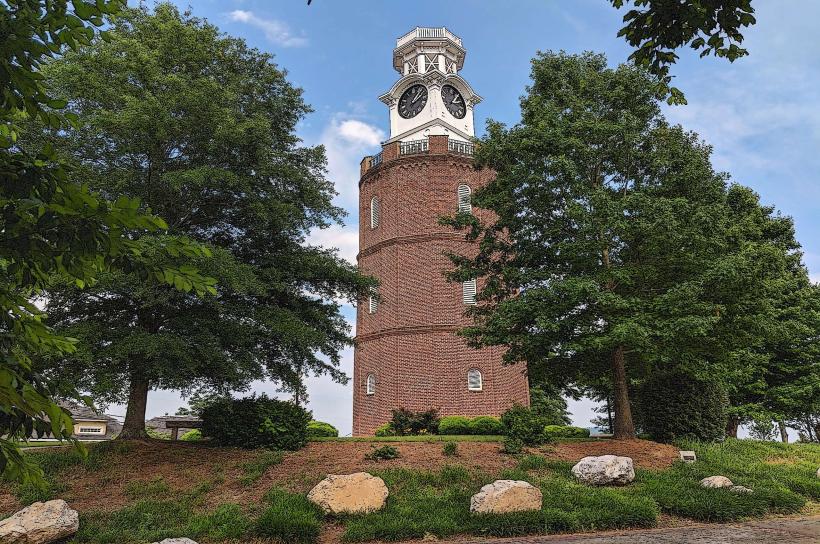
The cemetery is also a part of Rome’s Heritage Trail System, which connects it to other historic sites such as the Clock Tower, Chieftains Museum (home of Major Ridge), and downtown Rome via pedestrian paths and interpretive signage.
6. Visiting and Access
Location: South Broad Street at Myrtle Street, near downtown Rome.
Access: Open year-round to the public during daylight hours.
Parking: Available along Myrtle Street and at adjacent lots including those near the Kingfisher Trailhead and mausoleum entrance.
Mobile App: A GPS-enabled app offers a self-guided tour of key graves, trees, monuments, and historical points, enhancing the visitor experience.
Photography and Events: Visitors often engage in historical photography and attend educational events and seasonal tours.
7. Atmosphere and Symbolism
Myrtle Hill is more than a resting place-it is a landscape of memory, layered with personal stories, community identity, and national history. The architectural variety of headstones, family mausoleums, military memorials, and garden-style terraces makes walking the grounds a richly contemplative experience.
Monuments here often bear Victorian and Gothic influences, with angel sculptures, urns, obelisks, and weeping willows common among 19th-century graves. The cemetery evokes a sense of time’s passage, dignity, and remembrance.
Summary:
Myrtle Hill Cemetery stands as one of Georgia’s most historically layered and visually captivating burial sites. With its blend of scenic beauty, historic depth, and educational value, it remains a vital part of Rome’s cultural heritage. It honors not only those buried there but also the evolving story of a Southern city shaped by war, politics, art, and public memory.