Information
Landmark: North Dakota State CapitolCity: Bismarck
Country: USA North Dakota
Continent: North America
North Dakota State Capitol, Bismarck, USA North Dakota, North America
The North Dakota State Capitol in Bismarck is the most distinctive and recognizable landmark in the state, often called the “Skyscraper on the Prairie.” Rising above the flat plains, this 21-story Art Deco tower stands as both the center of state government and a symbol of North Dakota’s identity - a blend of modern progress, simplicity, and frontier endurance.
Historical Background
The current Capitol building was completed in 1934, replacing the original 1884 structure that was destroyed by fire in 1930. Designed by architects Joseph Bell DeRemer and W. F. Kurke, the building reflects a modernist Art Deco style, emphasizing vertical lines, geometric patterns, and minimal ornamentation.
The construction coincided with the Great Depression, so the design intentionally avoided lavish embellishments, embodying both efficiency and resilience. When it opened, the Capitol was considered a bold departure from traditional domed statehouses, symbolizing North Dakota’s forward-looking spirit.
Architecture and Design
The Capitol Tower, standing 241 feet high, is the tallest building in North Dakota. Its clean lines and limestone façade reflect a restrained elegance typical of the 1930s. Inside, the Art Deco detailing continues with marble floors, bronze doors, stylized lighting fixtures, and decorative motifs representing agriculture and industry - the foundations of North Dakota’s economy.
Key features include:
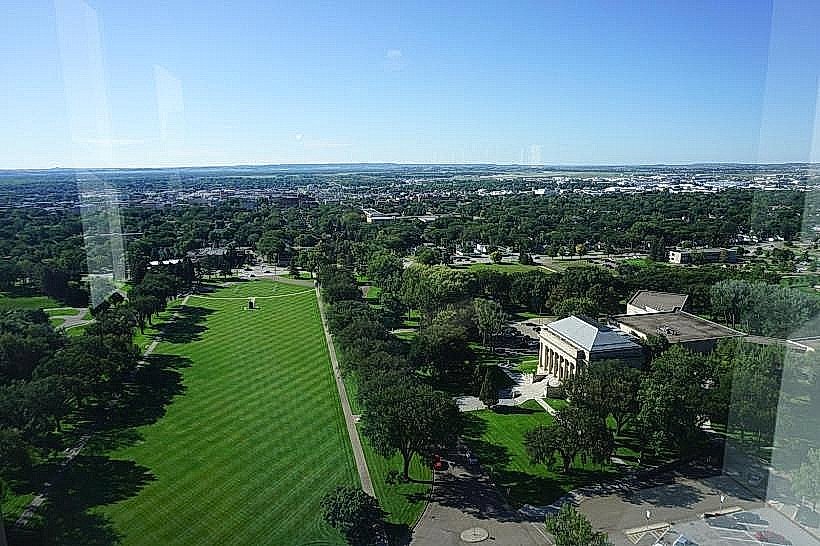
Observation Deck: Located on the 18th floor, offering sweeping panoramic views of Bismarck, the Missouri River Valley, and the surrounding prairie.
Memorial Hall: The grand central space with tall windows and marble pillars, used for ceremonies and public gatherings.
Legislative Wing: Houses the chambers for the North Dakota Senate and House of Representatives.
Capitol Grounds: Spread across 132 acres, the landscaped grounds include monuments, walking paths, and historic markers.
The Capitol’s tower design - rare among statehouses - gives it a vertical elegance and a commanding presence visible for miles across the prairie.
Cultural and Historical Significance
The Capitol complex represents more than government - it’s a symbol of North Dakota’s heritage and aspirations. The tower’s design emphasizes practicality and progress, while the surrounding grounds commemorate the state’s history through memorials and monuments.
Highlights on the Capitol grounds include:
The Pioneer Family Monument: Honoring the courage and perseverance of early settlers.
Law Enforcement Memorial: Dedicated to officers who served and sacrificed.
Floral Clock: A seasonal floral display, one of Bismarck’s most photographed landmarks.
Governor’s Residence: Located nearby, designed in a contemporary architectural style.
Together, these elements create a space that merges civic pride, reflection, and historical memory.
Visitor Experience
Visiting the North Dakota State Capitol offers a mix of history, architecture, and scenic exploration:
Guided Tours: Available year-round, explaining the building’s history, architecture, and the legislative process.
Observation Deck: Visitors can ride to the top to view the wide expanse of the Missouri River Valley and Bismarck’s skyline.
Capitol Grounds Walks: Peaceful paths wind through monuments, trees, and landscaped lawns, ideal for walking and photography.
Seasonal Events: The Capitol hosts annual events such as holiday tree lighting, outdoor concerts, and civic celebrations.
The site’s balance of grandeur and simplicity creates an atmosphere that feels both monumental and approachable.
Overall Impression
The North Dakota State Capitol is a masterpiece of Art Deco architecture and civic symbolism, representing the state’s resilience, modernity, and connection to its landscape. Its soaring tower, elegant interiors, and spacious grounds offer visitors a rich experience that combines government, design, and heritage. Standing tall over the prairie, it remains one of Bismarck’s most iconic and inspiring landmarks - a true “beacon on the plains.”