Information
Landmark: Old Icelandic Parliament SiteCity: Thingvellir
Country: Iceland
Continent: Europe
Old Icelandic Parliament Site, Thingvellir, Iceland, Europe
The Old Icelandic Parliament Site, known as Þingvellir, is a historical and geological location where the Althing, Iceland's national parliament, was established in 930 AD. It is situated within Thingvellir National Park in southwestern Iceland.
Visual Characteristics
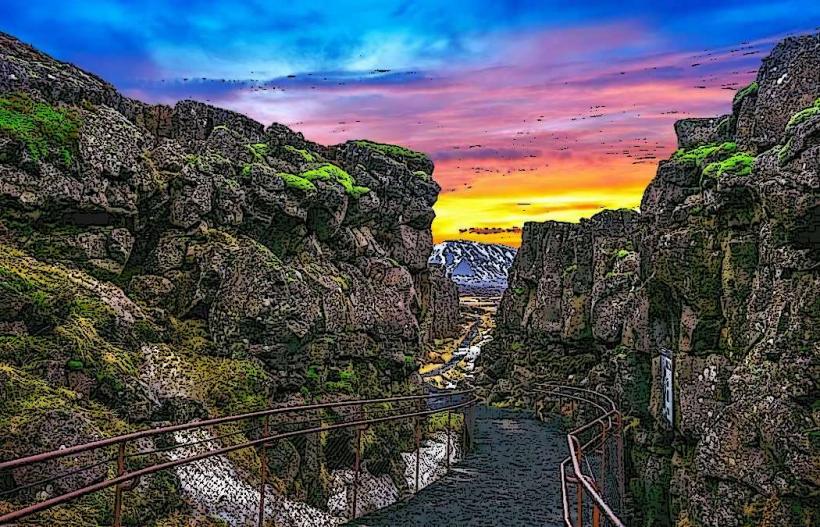
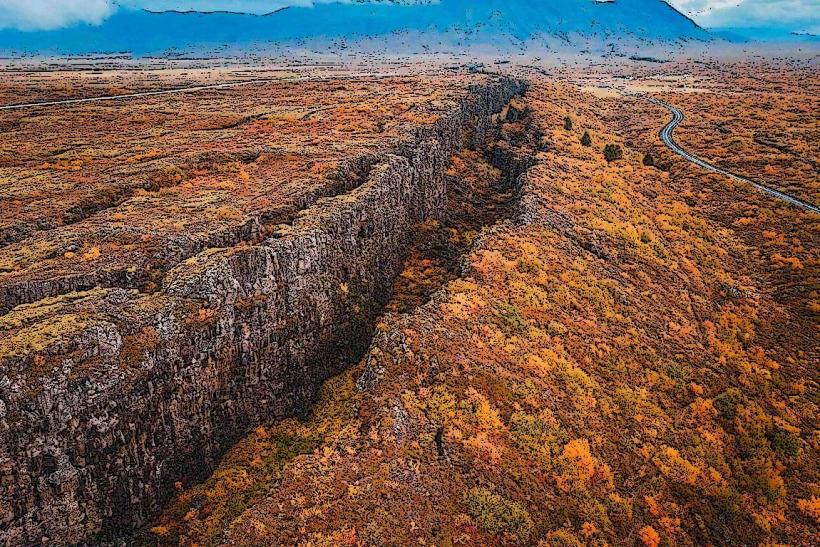
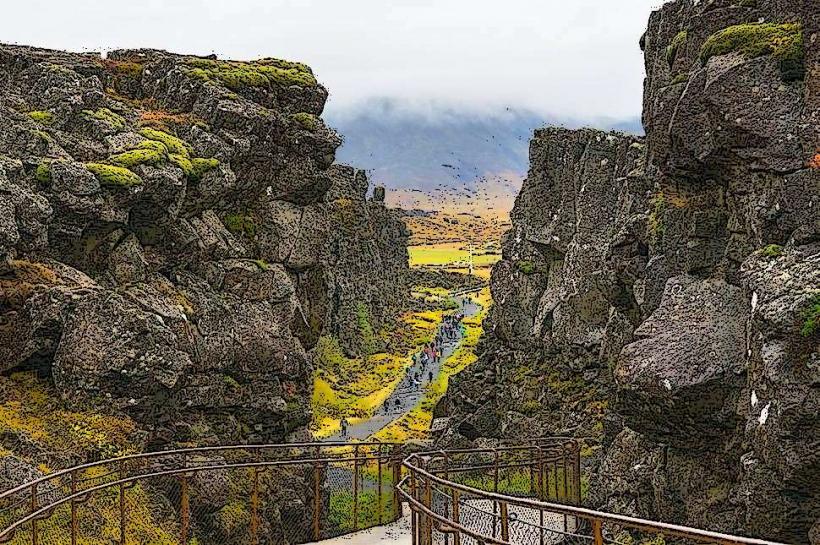
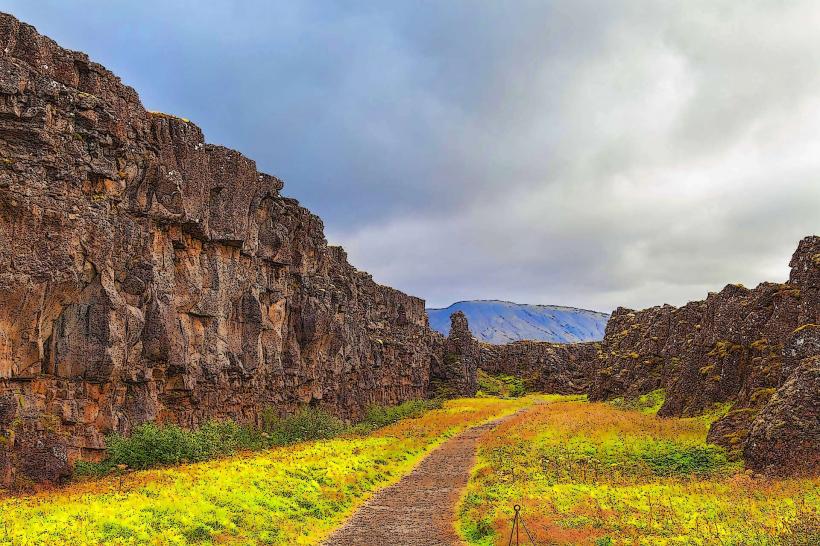
The site is defined by a prominent rift valley, a result of the diverging North American and Eurasian tectonic plates. Key features include the Almannagjá Gorge, a deep fissure characterized by sheer rock walls, and the Öxará river, which flows into Þingvallavatn lake. The landscape comprises ancient lava fields, low-lying vegetation, and the Lögberg (Law Rock), a natural rock formation historically used for law proclamations. Water within the fissures exhibits exceptional clarity.
Location & Access Logistics
Thingvellir National Park is located approximately 45 km northeast of Reykjavík. Primary access is via Route 36 (Þingvallavegur). Multiple designated parking lots are available throughout the park, with fees typically applied per vehicle. Public transportation options are limited; most visitors utilize rental cars or organized tour buses.
Historical & Ecological Origin
The Althing was founded in 930 AD, establishing one of the world's oldest parliamentary institutions. Geologically, the site is a rift valley, part of the Mid-Atlantic Ridge, where the North American and Eurasian tectonic plates are actively separating. This geological process has created visible fissures and fault lines, including Almannagjá. The area is recognized as a UNESCO World Heritage site due to its significant cultural and geological attributes.
Key Highlights & Activities
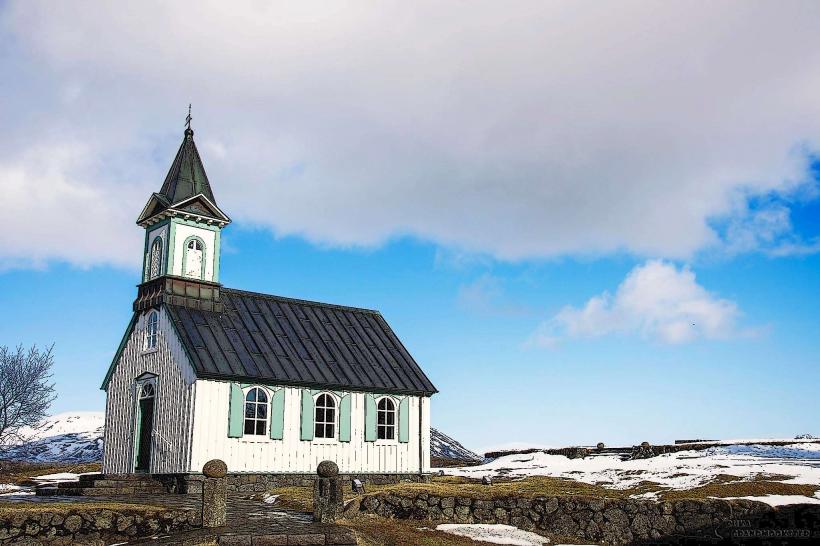
Walking through the Almannagjá gorge to the Lögberg. Diving or snorkeling in the Silfra Fissure, noted for its clear glacial water. Visiting the Þingvellir Church and the adjacent historical farm. Hiking various trails that traverse the rift valley and lava fields. Fishing in Þingvallavatn lake, which requires a valid permit.
Infrastructure & Amenities
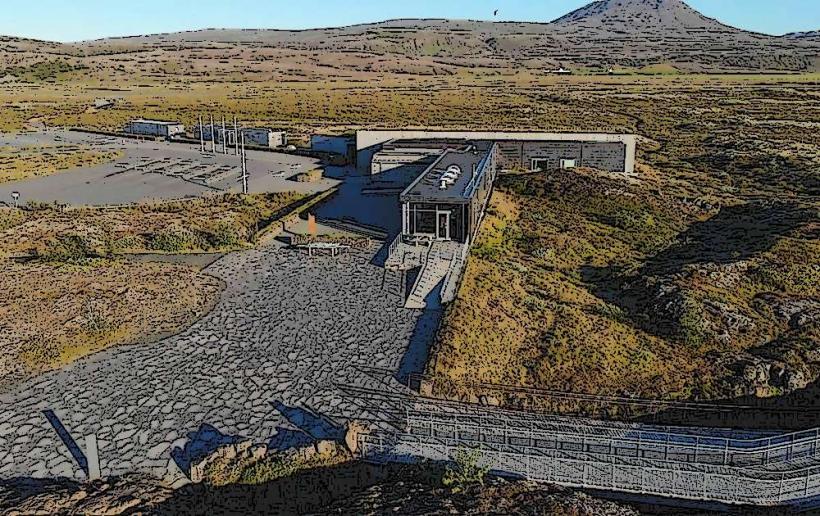
Restrooms are available at the main visitor centers and select parking areas. Natural shade is minimal due to the low-lying vegetation. Cell phone signal (4G/5G) is generally reliable across the primary visitor zones. A small café and souvenir shop are located at the visitor center, offering light refreshments.
Best Time to Visit
The summer months, from June to August, offer the mildest weather conditions and extended daylight hours. For photography, early morning or late afternoon provides softer light, particularly beneficial for capturing the gorges and lake. Diving and snorkeling in Silfra are feasible year-round, with water temperatures consistently ranging from 2-4°C.
Facts & Legends
The Drekkingarhylur (Drowning Pool) within the Öxará river was historically used for the execution of women accused of crimes such as infanticide. This historical practice stands in stark contrast to the site's foundational role in the development of democracy.
Nearby Landmarks
- Öxarárfoss waterfall: 0.5km North
- Silfra fissure: 1.5km South
- Þingvallavatn lake: 0.1km East (shoreline)
- Þingvellir Church: 0.3km West