Information
Landmark: Parque Nacional Nevado Tres CrucesCity: Arica
Country: Chile
Continent: South America
Parque Nacional Nevado Tres Cruces, Arica, Chile, South America
Parque Nacional Nevado Tres Cruces is a protected area located in the Atacama Region of northern Chile. It encompasses a significant portion of the Andes mountain range.
Visual Characteristics
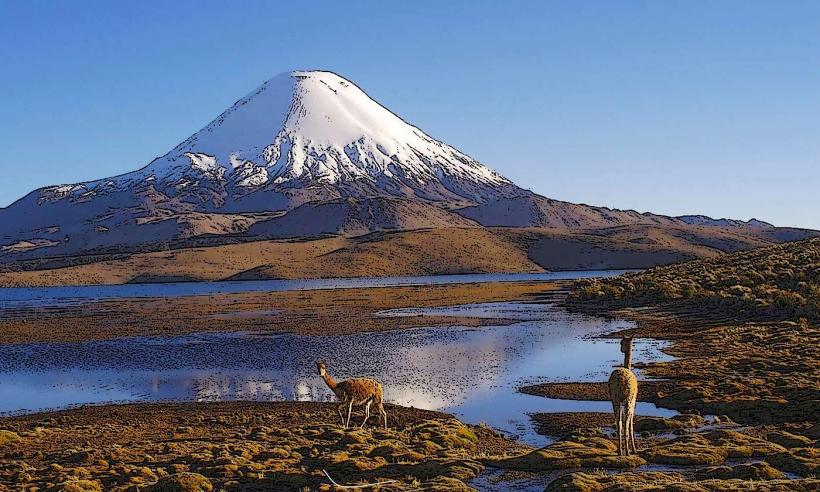
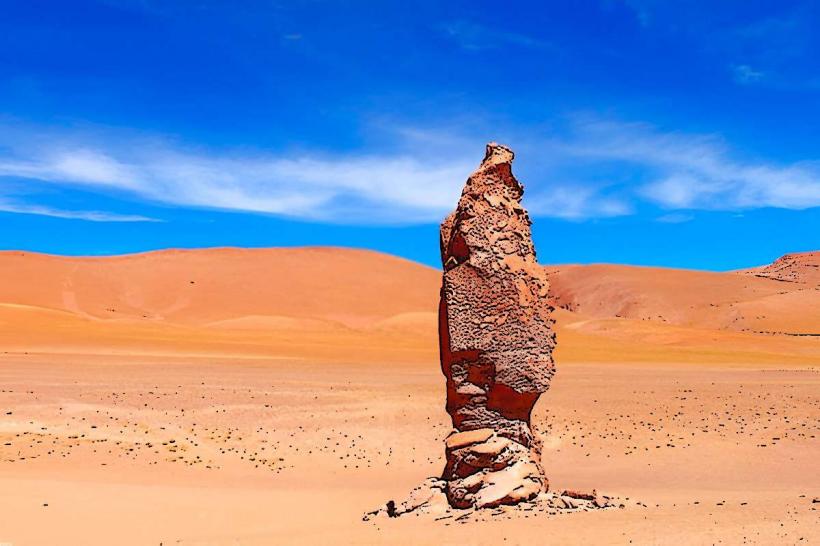
The park's landscape is dominated by high-altitude desert terrain, characterized by arid slopes, volcanic formations, and extensive salt flats. The Nevado Tres Cruces massif, a prominent stratovolcano, features snow-capped peaks year-round. Vegetation is sparse, consisting primarily of hardy grasses and shrubs adapted to extreme conditions. The dominant rock types include andesite and rhyolite.
Location & Access Logistics
The park is situated approximately 150 kilometers east of Arica. Access is via Route 11-CH (Pan-American Highway) heading east, then transitioning to unpaved roads. The final approach to key areas within the park requires a 4x4 vehicle due to rough terrain. No public transport services operate directly within the park. Parking is available at designated trailheads and viewpoints, but is informal and unmanaged.
Historical & Ecological Origin
The geological origin of the Nevado Tres Cruces massif is volcanic, with its formation dating back to the Quaternary period. The park's ecological classification is high-Andean desert, characterized by extreme aridity, high solar radiation, and significant diurnal temperature fluctuations. The area has been shaped by volcanic activity and glacial erosion over millennia.
Key Highlights & Activities
Hiking is possible on designated trails, such as the ascent towards the base of Nevado Tres Cruces. Observation of high-altitude fauna, including vicuñas and Andean condors, is a primary activity. Photography of the volcanic landscapes and salt flats is recommended. Access to Laguna Verde requires a high-clearance vehicle.
Infrastructure & Amenities
Basic infrastructure is minimal. There are no developed restrooms or shade structures within the park. Cell phone signal is generally absent. No food vendors or services are available inside the park boundaries. Visitors must carry all necessary supplies, including water and food.
Best Time to Visit
The best months for visiting are from December to March, during the Chilean summer, when road conditions are most favorable. Daytime temperatures can range from 5°C to 15°C. Nights are significantly colder, often dropping below freezing. High winds are common throughout the year. Sunrise and sunset offer distinct lighting for photography, with the sun's angle creating long shadows across the volcanic slopes.
Facts & Legends
A notable geological feature is the Laguna Verde, a salt lake whose color can shift from turquoise to emerald green due to mineral content and algal blooms. Local folklore speaks of ancient spirits guarding the mountain peaks.
Nearby Landmarks
- Parque Nacional Lauca (30km Northwest)
- Putre (60km West)
- Salitreras de Humberstone (120km Southwest)
- Arica (150km West)