Information
Landmark: Piazzale MichelangeloCity: Florence
Country: Italy
Continent: Europe
Piazzale Michelangelo, Florence, Italy, Europe
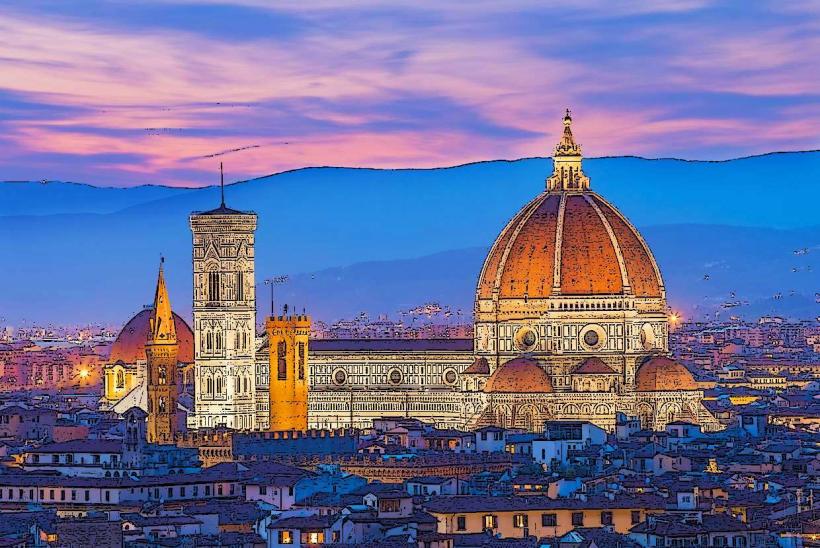
Piazzale Michelangelo is a large, panoramic square located on a hill on the south bank of the Arno River in the Oltrarno district of Florence. Designed as a dedicated observation point, it provides the city’s primary vantage point for viewing the historical center, the Cathedral, and the surrounding Tuscan hills.
Visual Characteristics
The square is a wide, paved terrace featuring a bronze replica of Michelangelo’s David and four allegorical figures from the Medici Chapels at its center. The perimeter is defined by a stone balustrade overlooking the city. Behind the central monument stands a neoclassical loggia designed to house a museum of Michelangelo’s works, which now functions as a restaurant. The ground is paved with traditional stone slabs and is often occupied by mobile vendor stalls.
Location & Access Logistics
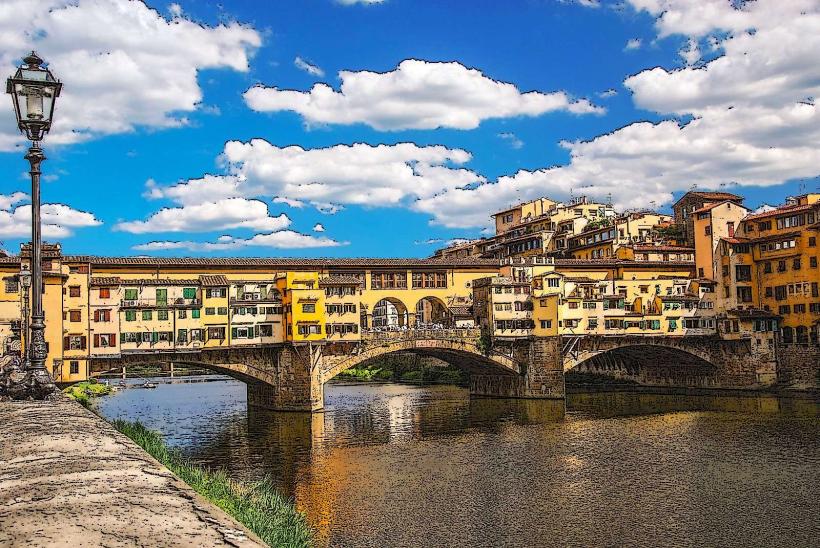
The square is situated on Viale Michelangelo, approximately 1.5km southeast of the Ponte Vecchio. It is accessible by foot via the steep "Rampe del Poggi" stone staircases starting from Piazza Poggi in the San Niccolò neighborhood. Public transport is available via bus lines 12 and 13, which connect the square to the Firenze Santa Maria Novella railway station and the city center. Limited paid parking is available on the square, though it is frequently at capacity.
Historical & Ecological Origin
Built in 1869, the piazza was designed by architect Giuseppe Poggi during the urban renewal period known as Risanamento, when Florence was the capital of Italy. The project involved the creation of the Viali di Circonvallazione, a series of boulevards encircling the city. Poggi designed the square specifically as a monument to Michelangelo, intending for the loggia to display copies of the artist's masterpieces.
Key Highlights & Activities
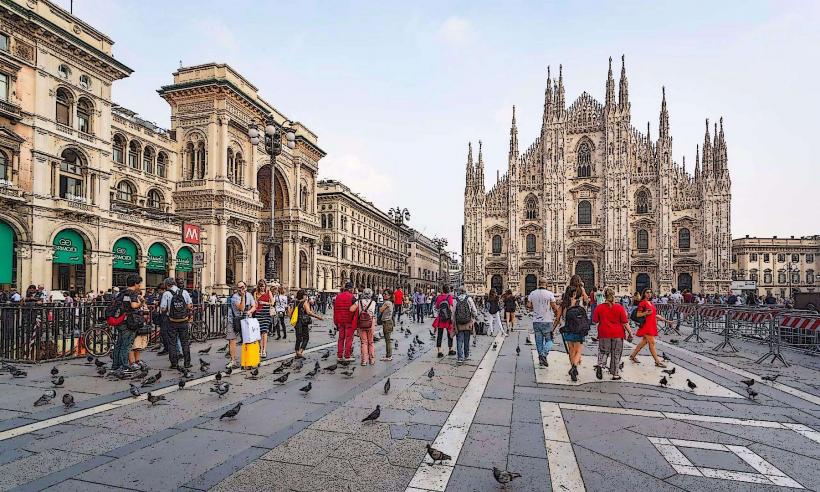
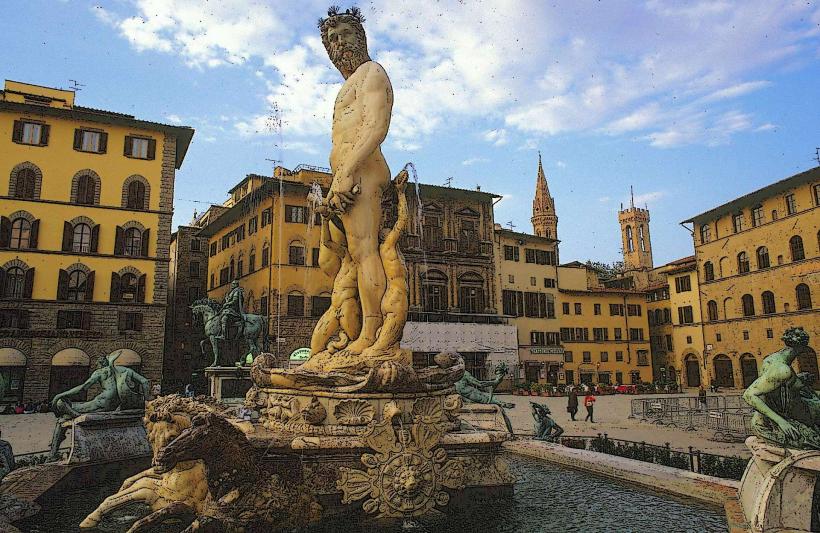
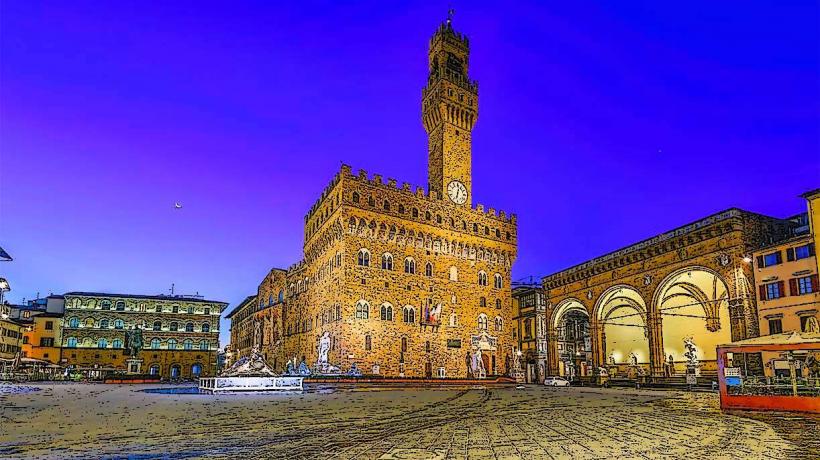
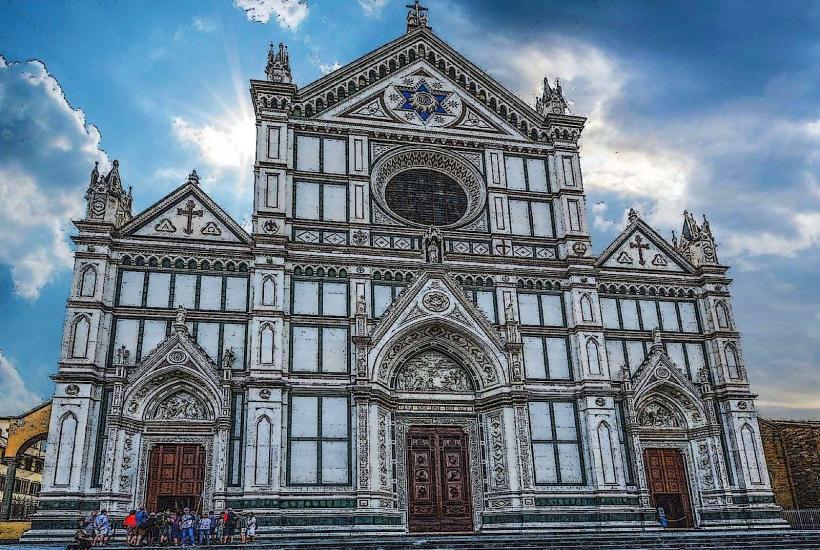
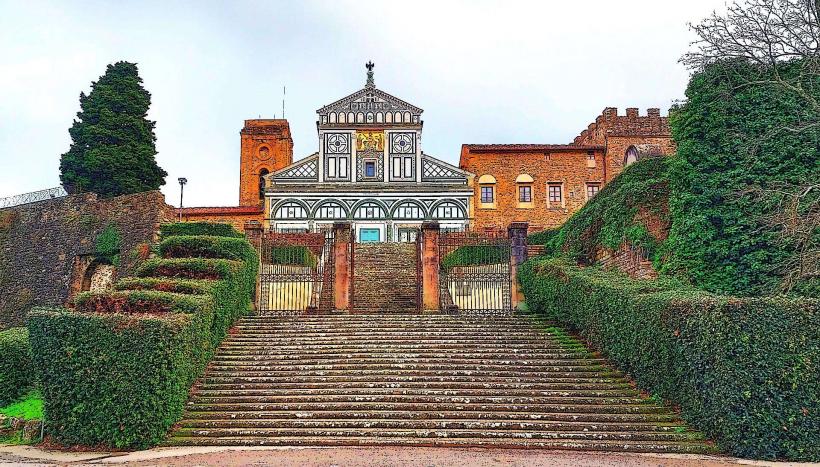
The primary activity is panoramic viewing and photography of the Florentine skyline, particularly the Duomo, Palazzo Vecchio, and Santa Croce. Visitors can access the nearby Rose Garden (Giardino delle Rose) or continue an uphill walk to the Basilica of San Miniato al Monte. The square serves as a central hub for street performers and local artisans.
Infrastructure & Amenities
The site features 4G/5G cellular coverage throughout the terrace. Infrastructure includes public restrooms (located near the loggia), stone benches for seating, and several permanent and mobile food vendors. The loggia building houses a full-service restaurant and cafe. There is minimal shade on the main terrace, with most cover restricted to the restaurant areas and surrounding trees at the perimeter.
Best Time to Visit
Optimal conditions for photography occur during the "golden hour" before sunset, as the sun sets behind the city to the west, illuminating the monuments. Sunrise offers a similar perspective with fewer tourists. The square is most densely populated between 17:00 and 20:00. Clear days following rain provide the highest visibility of the distant Apennine Mountains.
Facts & Legends
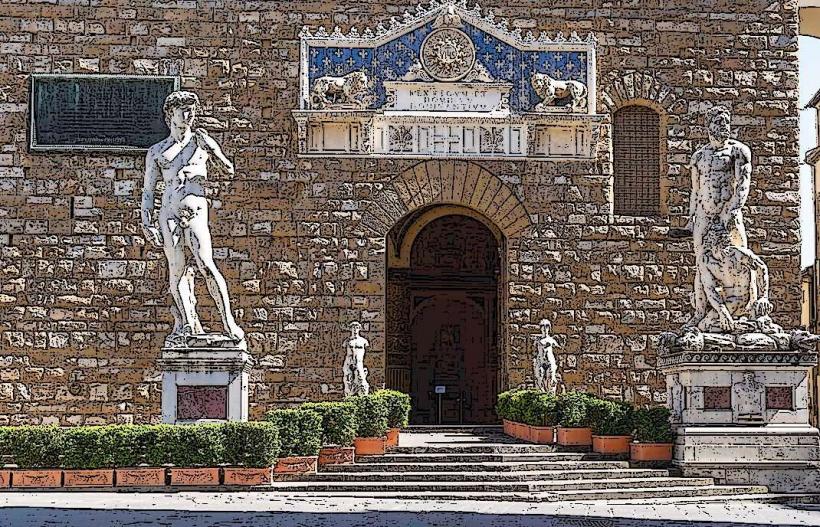
A common misconception is that the central David is an original; it is a bronze cast completed in 1873, which required nine pairs of oxen to transport it from the city center to the hill. A historical oddity is the neoclassical loggia, which was intended to be a museum dedicated to Michelangelo but never fulfilled its original purpose, transitioning instead to commercial use shortly after its completion.
Nearby Landmarks
San Miniato al Monte: 0.4km South
Giardino delle Rose (Rose Garden): 0.1km West
Porta San Niccolò: 0.3km North
Giardino dell'Iris (Iris Garden): 0.05km East
Forte di Belvedere: 1.0km West