Information
Landmark: Sathgumbad MosqueCity: Khulna
Country: Bangladesh
Continent: Asia
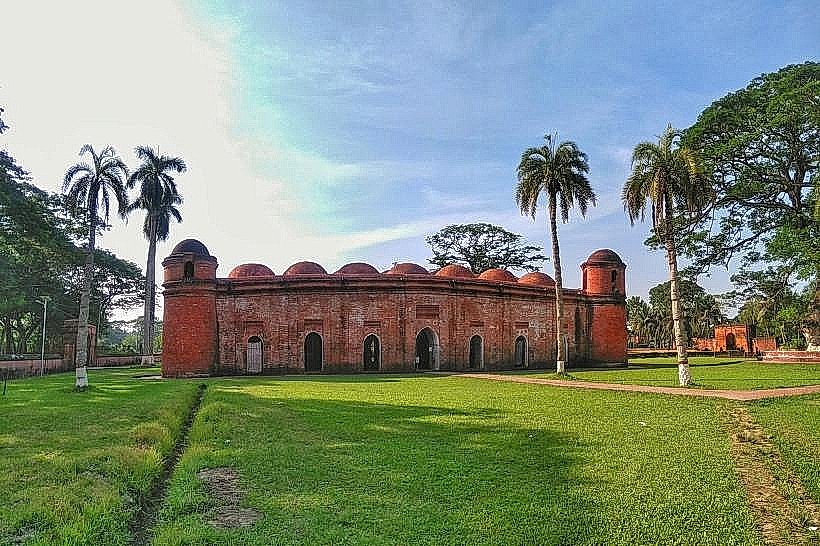
Sathgumbad Mosque, Khulna, Bangladesh, Asia
Sathgumbad Mosque is a historical mosque located in the Bagerhat District of Khulna Division, Bangladesh. It is a significant example of Sultanate architecture in the region.
Visual Characteristics
The mosque is constructed primarily from brick. It features a large central dome, supported by four smaller domes at the corners. The exterior walls are adorned with terracotta ornamentation, though much of it has eroded over time. The structure has a rectangular plan with multiple arched entrances.
Location & Access Logistics
Sathgumbad Mosque is situated approximately 5 kilometers south of Bagerhat town. Access is typically via local roads from Bagerhat. Private vehicles can reach the site, and parking is available on-site. Public transport options to Bagerhat town are available from Khulna city, followed by a local rickshaw or auto-rickshaw to the mosque.
Historical & Ecological Origin
The mosque was built during the reign of Sultan Nasiruddin Mahmud Shah in the 15th century. It is attributed to Khan Jahan Ali, a Sufi saint and ruler. The original purpose was for congregational prayer and religious activities.
Key Highlights & Activities
Visitors can observe the architectural features of the mosque. Photography of the exterior and interior is permitted. The surrounding area offers opportunities for quiet contemplation.
Infrastructure & Amenities
Basic restroom facilities are available near the site. Shade is provided by the mosque structure itself. Cell phone signal is generally available. Food vendors are typically found in the nearby town of Bagerhat.
Best Time to Visit
The best time of day for photography is during the early morning or late afternoon when the sunlight provides optimal illumination on the brickwork. The dry season, from October to March, offers the most pleasant weather conditions for visiting.
Facts & Legends
A local legend suggests that the mosque was intended to have 77 domes, but only 7 are visible externally, with the rest being internal or part of the roof structure. This is a common misconception; the mosque actually has 77 domes in total, including the central one and the smaller ones.
Nearby Landmarks
- Shat Gombuj Masjid (Shrine of Khan Jahan Ali) - 0.2km North
- Nine-Domed Mosque - 0.8km North
- Chunakhola Mosque - 1.5km Northeast
- Bibiana Mosque - 2.0km North
- Rani's Dighi - 0.3km West