Information
Landmark: Shat Gombuj Mosque (Sixty Dome Mosque)City: Khulna
Country: Bangladesh
Continent: Asia
Shat Gombuj Mosque (Sixty Dome Mosque), Khulna, Bangladesh, Asia
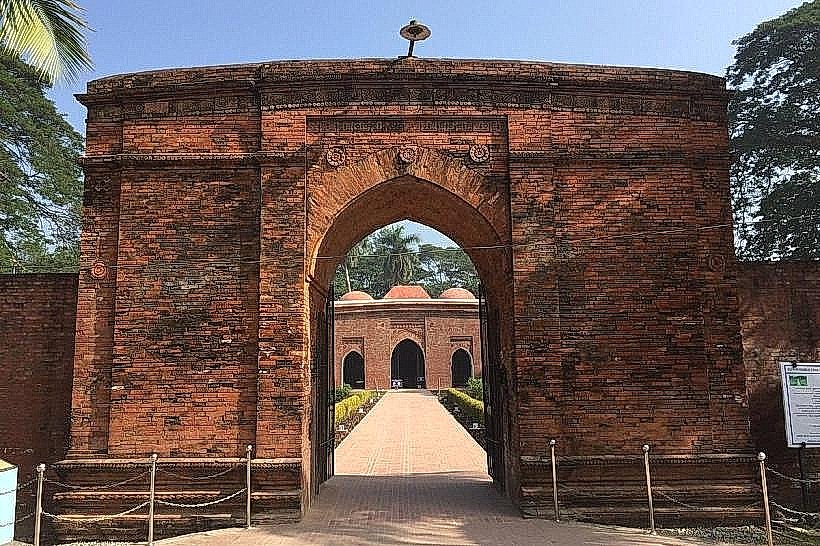
The Shat Gombuj Mosque, also known as the Sixty Dome Mosque, is a historical Islamic religious structure located in Bagerhat, Khulna Division, Bangladesh.
Visual Characteristics
This mosque is constructed primarily from brick. It features a large, rectangular prayer hall with a series of domes, historically numbering sixty, though some have been lost to time. The exterior walls are thick and punctuated by arched openings. The interior is supported by numerous stone columns.
Location & Access Logistics
The mosque is situated approximately 6 kilometers south of the city of Bagerhat. Access is typically via local roads from Bagerhat town. Auto-rickshaws and local buses are available from Bagerhat to reach the vicinity of the mosque. Parking is available on-site, though it is informal.
Historical & Ecological Origin
Construction of the Shat Gombuj Mosque is attributed to Khan Jahan Ali, a Sufi saint and ruler, and is believed to have been completed in the 15th century. Its original purpose was as a congregational mosque and a center for religious and administrative activities during Khan Jahan Ali's rule.
Key Highlights & Activities
Visitors can observe the architectural details of the mosque, including its numerous domes and interior columns. Photography of the structure is permitted. Walking the grounds surrounding the mosque is also a common activity.
Infrastructure & Amenities
Basic restroom facilities are available near the site. Shade is provided by trees in the surrounding area. Cell phone signal (4G) is generally available. Food vendors are typically present outside the mosque complex, offering local snacks and beverages.
Best Time to Visit
The optimal time for visiting is during the cooler months, from October to March. Mid-morning or late afternoon provides favorable lighting conditions for photography, avoiding the harshest midday sun.
Facts & Legends
A local legend suggests that the mosque was originally intended to have 77 domes, but the architect ran out of funds before completing the planned number. The name "Shat Gombuj" translates to "Sixty Dome Mosque," reflecting the commonly perceived number of domes.
Nearby Landmarks
- Khan Jahan Ali Mausoleum (0.8km North)
- Nine Dome Mosque (1.2km North)
- Chunakhola Mosque (2.5km North-West)
- Bibi Begni Mosque (3.0km North)