Information
Landmark: Schloss BenrathCity: Dusseldorf
Country: Germany
Continent: Europe
Schloss Benrath, Dusseldorf, Germany, Europe
Overview
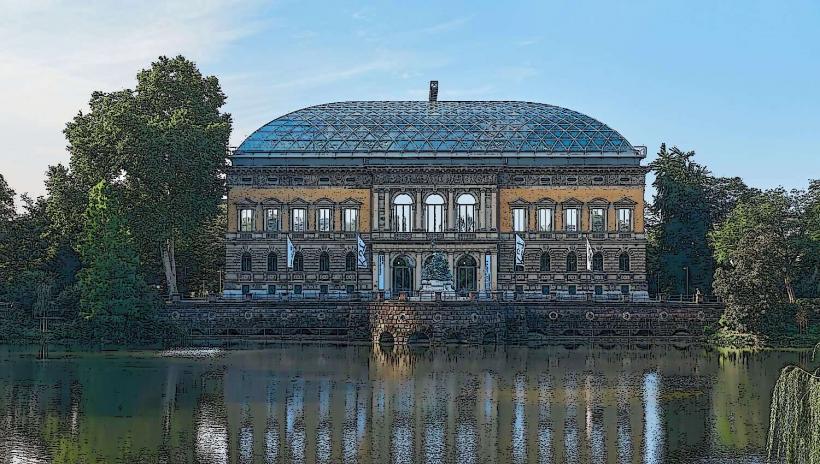
Schloss Benrath-better known as Benrath Palace-stands among Düsseldorf’s most stunning landmarks, its pink façade holding centuries of history, also in the city’s south, the palace rises in ornate curves and gold-trimmed balconies, a dazzling showcase of Rococo style and a must-visit for anyone drawn to history, culture, or art, occasionally Schloss Benrath, or Benrath Palace, sits in Düsseldorf’s Benrath district, about 13 kilometers south of the city center, right beside the leafy paths of Benrath Park, moreover built between 1755 and 1770, it was designed by Franz Wilhelm Rabaliatti at the request of Elector Palatine Charles Theodore as a Rococo-style summer retreat, its ornate details and balanced layout reflecting the elegance of the era.Originally, Charles Theodore envisioned it as a quiet pleasure palace, far from the formalities of court life in Mannheim, along with he built the palace as part of his plan to create a modern, elegant home that matched the refined tastes of the 18th century.Over the years, Schloss Benrath has served many roles-from a royal hunting lodge echoing with hoofbeats to a military barracks in later times, not only that today, it remains a cultural and architectural landmark, its baroque gardens spilling with neat rows of lavender and its symmetrical design centered on a grand hall flanked by two stately wings.As it turns out, The pink-and-white palette, paired with ornate Rococo flourishes, makes the area feel light and airy-like sunlight caught on silk-an ideal setting for unhurried pleasures, meanwhile at the front, a grand central block stands out, crowned by a portico and intricate carved motifs.Broad lawns and quiet parkland wrap around the building, giving it a wide-open, peaceful feel-you might hear birdsong drifting through the air, to boot the palace itself has two wings: the north holds a museum about the palace, while the south showcases a museum of natural history.Honestly, Both areas showcase a mix of permanent displays and changing exhibits, at the same time inside the palace, rooms are dressed in 18th‑century style, with worn velvet chairs, original period pieces, and a curated collection of art and decorative objects.Honestly, You’ll find highlights like the grand ballroom, intimate private rooms, and several elegant salons, to boot inside, gilded woodwork catches the light, stucco ceilings sweep overhead, and fine wallpaper recalls the lavish taste of the Rococo era.Mind you, Beyond the palace, an expansive French-style park stretches out with clipped lawns, tidy hedges, and bursts of color from perfectly arranged flower beds, alternatively it’s a peaceful spot to wander, with gardens kept so neat you can smell the freshly clipped hedges.Interestingly, At the heart of it all, a grand fountain sends water dancing into the air, giving the area a lively pulse, equally important the English garden feels softer and wilder, a quiet counterpoint to the precise lines of the French-style design, and it’s perfect for a unhurried amble or a moment on a bench.A modest bridge arches over the lake, adding balance and charm to the view, what’s more alongside the palace, you’ll also find the Museum of Garden Art.The museum traces the story of garden design, highlighting how rigid, formal layouts gave way to the softer, English-style landscapes of the 18th and 19th centuries, not only that inside, you can notice worn brass tools, sepia-toned photographs, and detailed models of renowned gardens from across the globe.The Museum of Natural History sits in the palace’s southern wing, therefore inside, you’ll find exhibits on botany, geology, and zoology-pressed leaves under glass, glittering rock samples, and other wonders of the natural world, somewhat The museum offers a vivid inspect at the region’s plants and wildlife, and even those from far-off lands, equally important one standout in the palace grounds is the Orangery, where the scent of citrus lingers as tropical trees wait out the winter frosty.The orangery showcases the lavish curves and symmetry of Baroque design, hinting at the grandeur the palace’s royals once knew, like sunlight spilling across polished marble, simultaneously schloss Benrath welcomes visitors all year; the gardens are always free, while museum hours vary.Most museums open around 10 a.m, in addition and close by 6 p.m, but holiday or event hours can change-always check ahead, somewhat You can stroll the park for free, yet stepping inside the museums will cost you a ticket, while a single ticket covers both the palace and the museums, and it’s usually easy on the wallet-kids, students, and groups get discounts.If you’re curious to dig deeper into the palace’s history, architecture, and treasures, guided tours are on offer, equally important if you’d rather explore at your own pace, audioguides are on hand, letting you linger over a carved doorway or quiet garden path.Getting there’s simple too-buses and trams stop just a short hike from the palace and its grounds, in turn visitors arriving by car will find parking on site.Throughout the year, Schloss Benrath comes alive with concerts, theater performances, and garden tours, from music echoing in the grand hall to quiet walks among blooming roses, alternatively the palace hosts rotating art exhibitions and special events celebrating history, art, and culture.Around Christmas, it comes alive with themed festivities-glowing markets, warm spiced scents, and twinkling lights spilling across the gardens and gilded rooms, in turn schloss Benrath stands as a remarkable venue where graceful Rococo architecture meets lush greenery and richly curated museums.Whether you’re drawn to its rich history, captivated by fine art, or just want a quiet stroll past roses glistening with morning dew, Schloss Benrath has something for every visitor, as well as if you want to soak in Düsseldorf’s royal past and admire the sweeping elegance of 18th-century European architecture, this is the region to be-think gilded balconies and grand stone facades catching the afternoon light.
Author: Tourist Landmarks
Date: 2025-08-25