Information
Landmark: St. Mary's ChurchCity: Bergen
Country: Norway
Continent: Europe
St. Mary's Church, Bergen, Norway, Europe
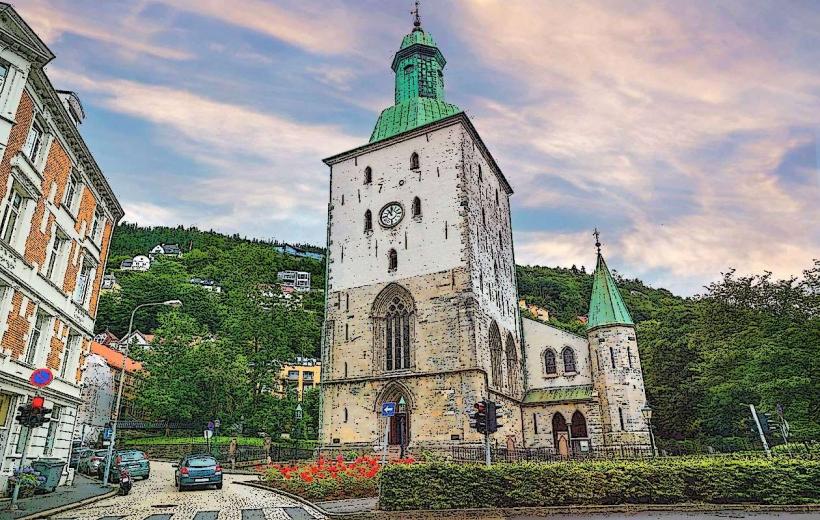
St. Mary’s Church (or Mariakirken) is one of the oldest and most significant churches in Bergen, Norway. It is a well-preserved medieval church with rich historical and architectural value, making it an important landmark in the city. Located in the heart of Bergen’s historic district, St. Mary’s Church stands as a testament to the city’s medieval past and its religious history.
1. History and Origins
- Construction: St. Mary’s Church was built in the early 12th century during the reign of King Sigurd I (Sigurd the Crusader). The church was constructed as part of the Bergenhus Cathedral complex, but over time it became the city’s main parish church.
- Medieval Significance: St. Mary’s Church was originally part of a larger ecclesiastical complex and was likely founded around the time when Bergen began to grow as a trading and religious hub. It is believed that the church was closely linked to the Hanseatic merchants who played a major role in the city’s economy during the medieval period.
- Hanseatic Era: The church holds particular significance for the Hanseatic merchants, who were the dominant group in Bergen during the Middle Ages. The church was not only a place of worship but also a site where merchants gathered for religious services, and it served as an important cultural center in the city.
2. Architecture and Design
- Romanesque Style: The church is built in the Romanesque style, a style characterized by solid stone construction, thick walls, and rounded arches. St. Mary’s Church is a prime example of this architectural style and retains many original medieval features.
- The stone structure is particularly well-preserved, and its simple yet grand design reflects the medieval approach to religious buildings. The church is constructed using locally sourced granite, which adds to its timeless appearance.
- Interior: The interior of St. Mary’s Church retains much of its medieval charm, with stone columns, arched vaults, and a wooden ceiling that highlights the simplicity and strength of the Romanesque design. The church has been maintained with minimal alterations, allowing visitors to experience its medieval atmosphere.
- Altarpiece and Decorations: Inside the church, there is a beautiful altarpiece and other historical decorations that date back to the medieval period. The altarpiece is a central feature of the church and serves as a reminder of the importance of religious rituals in medieval Bergen.
- Wooden Ceiling and Pewter Floor: A notable feature of St. Mary’s Church is its wooden ceiling, which is decorated with intricate carvings. The pewter floor inside the church, which is not commonly found in Norwegian churches, adds an extra layer of historical interest.
3. Historical Significance
- Role in the Community: St. Mary’s Church served as the primary parish church for Bergen’s citizens for many centuries. It was a focal point for worship, community gatherings, and religious celebrations, including important events like weddings and funerals. The church has always been deeply intertwined with the life of the city, reflecting the role of religion in shaping its social and cultural fabric.
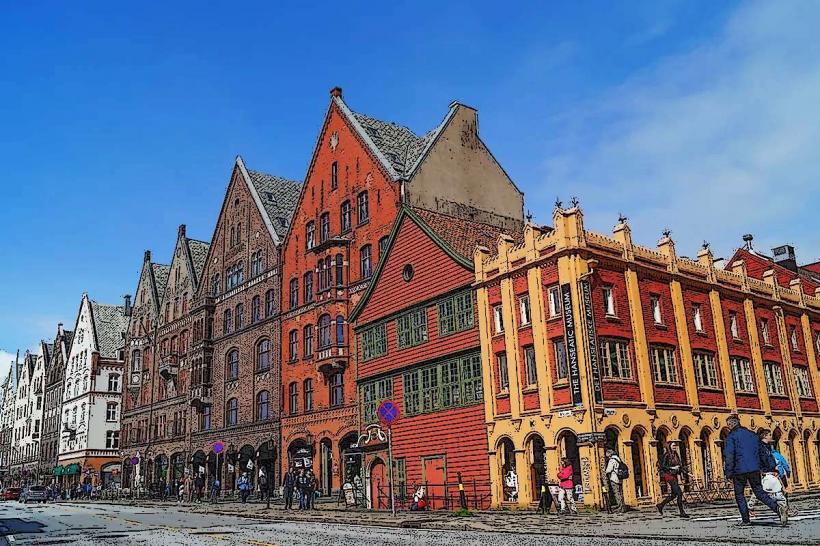
- Hanseatic Merchants’ Influence: St. Mary’s Church was particularly important to the Hanseatic merchants who lived and worked in Bergen during the Middle Ages. The church was their spiritual center, and many merchants are believed to have attended services here. The church’s proximity to the Hanseatic Wharf (Bryggen) underscores its importance to the merchant community.
- Role in Bergen’s Religious History: Over the centuries, the church has been a central religious institution for the city, and it continues to play an important role in Bergen’s Christian community. It is still an active church today, hosting regular services and events for the local population.
4. Restoration and Preservation
- Restoration Efforts: Like many medieval churches, St. Mary’s Church has undergone various restoration projects to preserve its structure and interior. It has been carefully maintained over the centuries to ensure that it remains a functional church while also retaining its historical and architectural integrity.
- Recent Restoration: More recent restoration work, particularly in the 20th century, focused on preserving the church’s interior and ensuring the stability of its stonework. Much of the original architecture, including the Romanesque elements, has been maintained or carefully restored, preserving the church's historical value.
5. Visitor Experience
- Opening Hours and Admission: St. Mary’s Church is open to visitors throughout the year, although the hours may vary depending on the season and any scheduled services or events. Admission to the church is usually free, but donations are often encouraged to support the church’s preservation.
- Services and Events: In addition to being a tourist attraction, St. Mary’s Church is an active place of worship. It hosts regular church services, as well as special events such as weddings, concerts, and festivals. Visitors can also attend services to experience the church’s spiritual and communal role in Bergen.
- Cultural and Historical Exhibits: The church often hosts exhibitions that highlight its history and role in Bergen’s past. These exhibitions provide visitors with insights into the church's medieval origins, its connection to the Hanseatic period, and its place in Bergen's religious and cultural heritage.
6. Conclusion
St. Mary’s Church is an essential part of Bergen’s historical and cultural identity. Its medieval Romanesque architecture, historical significance, and deep connection to the city’s past make it a must-see destination for anyone interested in the history of Bergen and Norway. Whether you are a history enthusiast, a religious visitor, or a tourist seeking to explore the cultural landmarks of Bergen, St. Mary’s Church offers a glimpse into the city’s medieval life and serves as a reminder of Bergen's rich spiritual and cultural heritage.